























Lincoln Lawyer Season 4: cast, story twist, and why a Bosch crossover still hasn’t happened

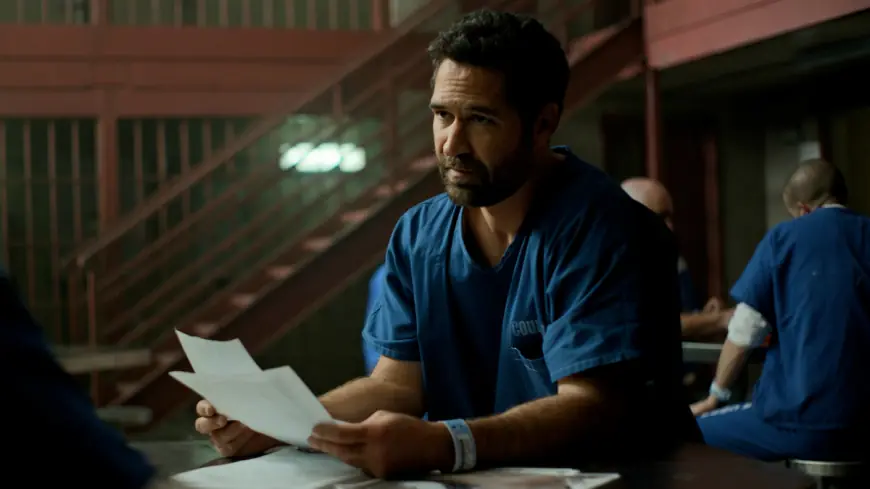
Season 4 of The Lincoln Lawyer has pushed the legal thriller into its most personal corner yet, flipping the series format by putting Mickey Haller on the defensive in the most literal way possible. The ten-episode season is now out as of Thursday, Feb. 5, 2026 (ET), and it’s already reshaping expectations for what comes next—thanks to a high-stakes courtroom arc, major cast continuity, and a cliffhanger that introduces a surprise new family connection.
Season 4 story: Mickey Haller becomes the client
The core hook of Season 4 is a role reversal: Mickey Haller is accused of murder after a body is found in the trunk of his car, forcing him to defend himself while dealing with the constraints and politics of jail. That shift is more than a plot stunt—it changes how the show uses its supporting cast. Instead of Mickey driving every beat from the field, his team has to do more of the legwork, gather evidence, and pressure-test leads while he fights to keep his practice, reputation, and freedom intact.
The season adapts The Law of Innocence (the sixth novel in the book series), which is one reason the pacing feels tightly engineered: the case is a single engine pulling everything—court strategy, witness credibility, and the question of who set Mickey up.
Lincoln Lawyer Season 4 cast: who’s back and who’s new
Manuel Garcia-Rulfo returns as Mickey Haller, and the show keeps its core ensemble intact:
-
Becki Newton as Lorna Crane
-
Jazz Raycole as Izzy Letts
-
Angus Sampson as Cisco Wojciechowski
-
Elliott Gould as David “Legal” Siegel
-
Krista Warner as Hayley Haller
A key change this year is that Neve Campbell’s Maggie McPherson appears throughout the season, which matters because the self-defense premise naturally drags Mickey’s personal life back into the case. Campbell’s larger presence gives the season more emotional ballast—co-parenting tension, history, and the awkward reality of being allies in a crisis.
On the new side, one of the headline additions is Constance Zimmer as prosecutor Dana “Death Row” Berg, who brings an aggressive, high-control energy that matches the season’s higher stakes.
The Season 4 ending: the twist that points forward
The finale’s loudest piece of setup is a surprise reveal: Cobie Smulders appears as Allison, introduced as Mickey’s sister in a last-minute twist that also functions as a near-direct replacement for a book element the show can’t easily use on screen.
The moment plays as both a cliffhanger and a structural pivot. It adds a new personal thread to a series that often keeps Mickey’s family life at the edges, and it signals that the next chapter won’t be “back to normal.” Even if Season 4’s legal storm passes, Mickey’s world is now bigger—and more complicated—than it was when the season began.
Bosch TV series connection: same author, different on-screen rules
Fans of the books often ask the same question: if The Lincoln Lawyer and Bosch share the same universe on the page, why don’t the shows cross over?
In the novels, Mickey Haller and detective Harry Bosch are half-brothers, and their relationship becomes a major story tool. On screen, that’s been much harder to replicate because the adaptations live in different corporate ecosystems, which makes a character crossover far more complicated than it sounds.
That’s why the Season 4 “new sister” reveal is such a big tell. It offers the narrative function of a close family counterpart—someone who can challenge Mickey, help him, and pull him into deeper personal history—without requiring an on-screen Bosch appearance.
Manuel Garcia-Rulfo: why he’s central to the show’s tone
Garcia-Rulfo’s version of Mickey is built less like a swaggering courtroom superhero and more like a resilient, improvising professional—someone who can look cornered and still find a path out. Season 4 leans into that strength. The jail setting forces a smaller performance: listening, calculating, and reacting to shifting facts instead of dominating every room.
It’s also why the season lands even when it becomes procedural-heavy. A self-defense storyline can turn into pure legal mechanics; Garcia-Rulfo keeps it character-first, so the tension feels personal rather than purely technical.
What’s next after Season 4
The most concrete forward signal is that the series has already been renewed for another season, expected to draw from Resurrection Walk (the seventh novel). That choice fits the Season 4 aftermath: Mickey’s experience being accused and confined naturally pushes him toward stories about wrongful convictions and the limits of the system.
The question isn’t whether the show can top the “Mickey in jail” hook. It’s whether it can use the fallout—plus Allison’s arrival—to deepen the series without losing the brisk, case-driven momentum that made it a hit.
Sources consulted: Tudum, TV Guide, Deadline, Esquire