
























Brigadier Rachel Matjeng faces tender scrutiny as Madlanga inquiry digs into “Cat” Matlala ties

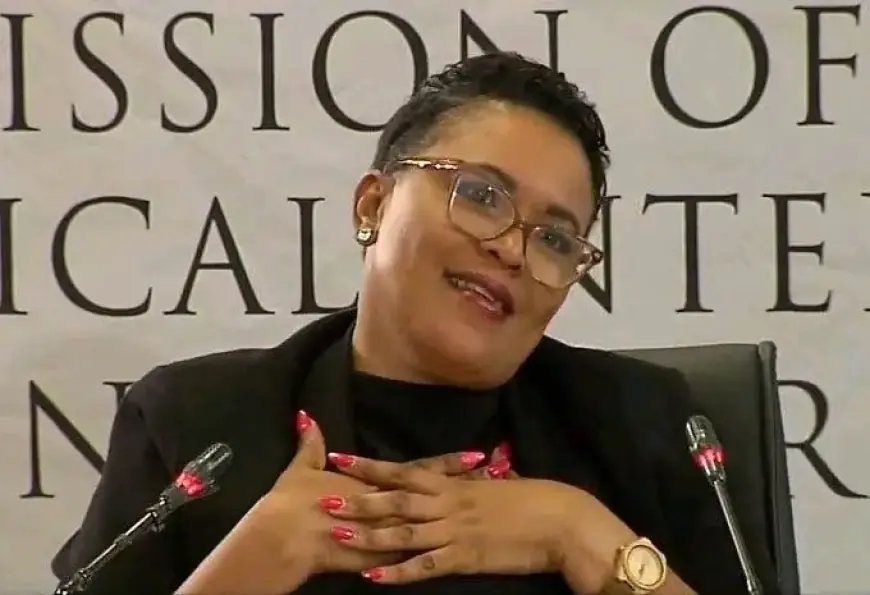
Brigadier Rachel Matjeng, a senior South African Police Service forensic-services official, is under intense scrutiny after confirming an on-and-off romantic relationship with alleged underworld figure Vusimuzi “Cat” Matlala while her unit oversaw the implementation of a major police medical-services tender linked to his business interests. Her testimony at the Madlanga Commission of Inquiry on Thursday, February 5, 2026 (ET) has sharpened the focus on conflict-of-interest controls inside policing and the paper trail of payments and gifts that investigators say raise red flags.
Matjeng has denied influencing the tender outcome and has insisted that money and gifts she received were personal, not tied to her official duties. The inquiry has pressed her on why she remained involved after the contract was awarded and on deposits routed through a friend’s business account.
Brigadier Rachel Matjeng and the tender spotlight
Matjeng serves as section head for quality management in criminal record and crime scene management within the forensic services division, a role that intersects with standards, compliance, and oversight. The tender at the center of the current testimony is a large-value contract to provide health services to police employees, awarded in 2024 and later cancelled amid allegations of procurement irregularities.
The commission is testing whether Matjeng’s proximity to the tender’s beneficiary created an undisclosed conflict, whether she attempted to recuse herself in time, and whether her relationship shaped operational decisions once the contract moved from award to execution.
Relationship timeline and what she told the inquiry
Matjeng told the inquiry the relationship began in 2017 and continued “on and off,” including long stretches without contact. She described Matlala in positive personal terms and said he never asked her for favors that could jeopardize her career.
Under questioning, she acknowledged that she eventually became aware of allegations against him as they emerged. She also described asking others to check his criminal record, with mixed feedback, and conceded that her knowledge evolved as claims about him escalated toward arrest.
Gifts, cash deposits, and the Osizweni Butchery account
A major point of contention is the flow of money. Matjeng agreed that Matlala “showered” her with gifts and cash, but framed it as a boyfriend-girlfriend dynamic that predated the tender and continued independently of it. The inquiry has challenged that distinction, particularly because some deposits were allegedly made after the tender was already secured.
Matjeng told the commission that when Matlala sent money, he sometimes wanted it deposited into an account not registered in her name, in part to avoid detection at home. She said she provided details for a friend’s business account, Osizweni Butchery, and described at least one episode in September 2023 where R100,000 was deposited but, she claimed, never released to her due to a separate dispute between Matlala and the business.
The inquiry has also examined deposits alleged to total hundreds of thousands of rand in 2025, including sums characterized by investigators as possible “gratification.” Matjeng has rejected that framing and maintained she did not receive the funds.
Recusal claim and the “superior knew” allegation
Matjeng’s defense rests heavily on process: she says she did not participate in bidding or awarding, and that once the tender landed with a Matlala-linked company she tried to step back from any role connected to implementation. She told the inquiry her superior refused her request to recuse, a claim that—if substantiated—would widen the spotlight to management controls and disclosure culture above her.
She also told the inquiry that a superior was aware she was working with a tender tied to her romantic partner. That assertion, if proven, would raise questions about whether the conflict was tolerated, minimized, or mishandled internally.
Key numbers and dates in focus
| Item | Detail (approx.) |
|---|---|
| Relationship start | 2017 |
| Tender size discussed publicly | R350 million (also cited as R360 million in some coverage) |
| Tender awarded | 2024 |
| Deposit cited in testimony | R100,000 (September 2023) |
| Deposits questioned for 2025 | R38,000 and multiple R100,000 payments alleged |
Differences in the tender value cited publicly reflect variations in how the contract total is described across briefings and coverage, rather than a confirmed new figure announced by the inquiry.
What happens next: criminal referrals and credibility tests
Matjeng is among a group of officials referenced publicly as having been referred for criminal investigation on a prima facie basis connected to the tender saga. The inquiry’s next steps will likely sharpen two questions: whether the payments and routing methods point to personal support or quid pro quo, and whether Matjeng’s claimed attempts to recuse were timely, documented, and escalated through proper channels.
For the wider policing system, the testimony has revived a familiar concern: even when a tender is formally awarded through procurement channels, implementation oversight can become the pressure point—especially when personal relationships overlap with vendors and large public contracts.
Sources consulted: eNCA, TimesLIVE, Sowetan, YFM