























2026 Winter Olympics: Milano Cortina Opens February 6 as Italy Prepares a Multi-City Games With New Sport, Tight Travel Logistics, and High-Stakes Star Power

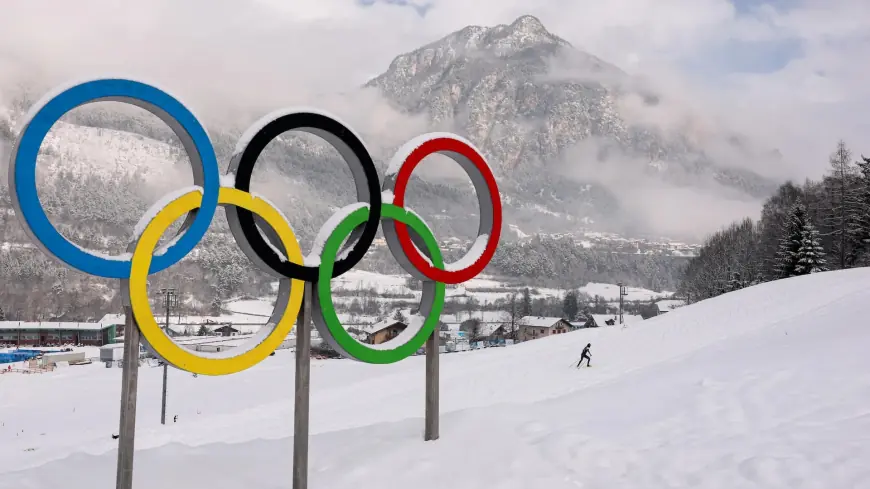
The 2026 Winter Olympics begin Friday, February 6, 2026 ET, launching a two-week, multi-city event spread across northern Italy that is designed to feel less like one Olympic “park” and more like a connected set of regional festivals. The Games run through February 22, 2026 ET, with the Opening Ceremony set for Milan’s San Siro and the Closing Ceremony scheduled for the Arena in Verona.
This is the first Winter Games in years where the biggest story is not just the medal race, but the shape of the Olympics themselves: multiple clusters of venues, longer travel lines between events, and a deliberate pitch that blends major-city arenas with Alpine resort backdrops.
What’s happening: dates, locations, and how the Games are set up
Milano Cortina 2026 is being staged across several venue clusters rather than a single compact footprint. Milan anchors many indoor events, while mountain competitions are spread across resort towns and valleys including Cortina d’Ampezzo, Livigno, Bormio, Antholz-Anterselva, and Val di Fiemme. Verona hosts the Closing Ceremony.
That geography is a feature, not a bug, for organizers: it showcases multiple regions and reduces the need to build one enormous new central complex. But it also changes the fan experience. For visitors and broadcasters alike, the Games will feel like a relay race between destinations, with transportation and scheduling becoming part of the story each day.
The new headline sport: ski mountaineering debuts
A major on-ice and on-snow update arrives with ski mountaineering’s Olympic debut. The discipline blends uphill climbing on skis with rapid downhill descents, demanding endurance, technical transitions, and tactical pacing. The event slate is built around three medal opportunities: men’s sprint, women’s sprint, and mixed relay.
Why it matters: new sports are one of the few reliable ways the Olympics can refresh attention without changing the core identity of the Games. Ski mountaineering also signals a broader trend in winter sport toward events that look closer to what recreational athletes actually do in the mountains, while still rewarding elite-level speed and precision.
Behind the headline: what’s really at stake for Milano Cortina
Context: a different kind of Olympics economics
Winter Games host plans have faced years of scrutiny over costs and “white elephant” venues. Milano Cortina’s spread-out model leans heavily on existing arenas and established resort infrastructure. If it works smoothly, it strengthens the argument that future Olympics can be staged more sustainably by using what already exists and distributing events across regions.
Incentives: why everyone is pushing for a smooth opening week
Organizers want proof that multi-cluster logistics can deliver the same magic as a compact Games. Local governments want the tourism surge without the long-term maintenance burden of oversized new builds. Sponsors want uninterrupted, high-visibility moments without operational mishaps dominating headlines. Athletes want predictable travel, training access, and course conditions, because small disruptions can affect performance.
Stakeholders: who benefits, who carries the risk
Host communities benefit from packed hotels, restaurants, and global attention. Transportation networks and security planners carry the risk: if transit falters or congestion hits, it can ripple across schedules and fan satisfaction. Athletes in events that require constant course access (freestyle skiing, alpine, sliding sports) are especially sensitive to any disruptions.
Second-order effects: what a successful Games could change
If Milano Cortina delivers, more future bids may copy the “regional cluster” blueprint. If it struggles, the model may be treated as a cautionary tale, pushing future hosts back toward tighter footprints or smaller event scopes.
Stars, storylines, and why freestyle skiing may define the vibe
Even in a logistics-heavy Olympics, star power still drives day-to-day momentum. Freestyle skiing, staged in Livigno, is poised to be one of the signature spectacles, with athletes pushing technical boundaries that keep rising every Olympic cycle. That includes headline names like Eileen Gu, whose return comes with the usual medal expectations plus questions about form, risk appetite, and how aggressively athletes will chase difficulty in finals.
More broadly, the Games are expected to feature 16 winter sports and a dense calendar of medal events that can swing narratives quickly. In Winter Olympics, a single day can produce a new hero, a sudden injury scare, or a weather-driven reshuffle that changes everything.
What we still don’t know
Several uncertainty points will shape the first week:
-
How smoothly inter-city transportation performs once crowds hit peak volume
-
Whether course conditions and weather create meaningful schedule changes
-
Which events become the “signature” social conversation drivers
-
How quickly athletes adapt to the travel-and-venue rhythm compared with more compact Olympics
What happens next: 5 realistic scenarios to watch
-
A smooth, cinematic opening week
Trigger: transportation holds, venues run on time, and early marquee events deliver clean highlights. -
A logistics-heavy first news cycle
Trigger: congestion or schedule changes dominate attention before competition takes over. -
Ski mountaineering becomes the breakout new-sport winner
Trigger: compelling finishes and easily understood drama pull casual viewers in. -
Freestyle becomes the defining highlight reel
Trigger: multiple medal events feature bold difficulty and big-name clashes. -
The Games reset expectations for future hosts
Trigger: organizers prove that a spread-out Olympics can still feel cohesive, or reveal friction that future hosts will avoid.
Why it matters
Milano Cortina 2026 is both a sporting event and a test of the Olympics’ next format: can the Games stay huge without becoming financially and logistically overwhelming? The answer will come not only from medal tables, but from the daily experience of moving people, staging competitions across regions, and sustaining momentum from February 6 through February 22, 2026 ET.