























“Quint” and “Quint-essential” Surge Online as a Daily Puzzle Theme Sends People Hunting for Five-of-a-Kind Meaning

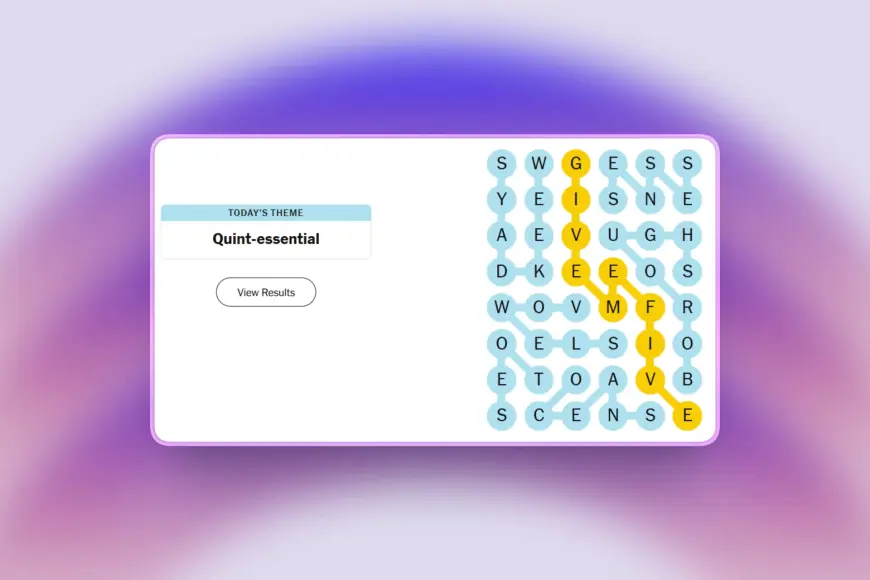
Search interest in the terms “quint” and “quint-essential” jumped on Thursday, February 5, 2026 ET, driven by a daily word puzzle theme that pushed players toward five-part patterns, sets of five, and the kind of clue that rewards lateral thinking. The phrasing is a clever double play: “quint” signals five, while “quint-essential” riffs on “quintessential,” a word that means the purest, most characteristic example of something.
In other words, the clue wasn’t just about vocabulary. It was designed to steer solvers toward groups where “five” is the organizing principle, and to do it in a way that feels like a wink rather than an instruction manual.
What “quint” means, and why it’s suddenly everywhere
“Quint” comes from the idea of five. You’ll see it in words like quintet, quintuple, and quintuplets. When a theme uses “quint,” it’s usually signaling one of two things:
-
The answers will connect to sets of five
-
The puzzle mechanic itself will revolve around finding five related items
That’s why “quint” can feel oddly specific and yet instantly familiar. Even people who don’t use the word in daily conversation recognize it as “the five one.”
Why “Quint-essential” is a sticky clue
“Quint-essential” works because it does two jobs at once:
-
It points to “quintessential,” which means the most typical or perfect example.
-
It also points to “quint,” nudging players to think about five-item groups that feel culturally obvious once you see them.
That combination creates the ideal puzzle experience: confusion for a minute, then a sudden click. It also explains why people start searching the phrase immediately. They want confirmation that they’re on the right track without spoiling the entire solve.
The hidden design: how puzzle themes drive search trends
Daily puzzles have become a predictable engine for spikes in search behavior. The cycle is simple:
-
A clue feels slightly cryptic
-
Players hit a friction point
-
They search the theme phrase rather than the answers
-
The phrase trends because thousands of people do the same thing within a narrow time window
It’s not just curiosity. It’s the modern version of asking a friend at the office, except now the “friend” is the internet, and the question is phrased in a way that avoids full spoilers.
What the clue is really asking your brain to do
Themes like “quint-essential” don’t reward brute force vocabulary as much as pattern recognition. They push players to scan their memory for common “fives” that are:
-
widely known
-
visually or conceptually linked
-
easy to list once the category is identified
Think of the kinds of things people learn as a bundle rather than individually. If you can name one, you can often name the rest. That’s the mental hook the theme is trying to activate.
“Quint” can also be a name, a brand, or a ticker, and that muddies the waters
Another reason the searches spike is ambiguity. “Quint” is not only a root for “five.” It can also refer to:
-
a surname
-
a company name
-
a stock symbol
-
a digital token name
So when people type “quint” into a search bar, they don’t always land in puzzle territory. That collision creates a second wave of confusion: some people are looking for puzzle help, while others are looking for finance or business information. The overlap can make the trend look bigger and noisier than it would be if the word were unique.
What we still don’t know, and what to watch for next
Because daily puzzle trends are fast-moving, the missing piece is always the same: how long the spike lasts. Most theme-driven searches peak within a few hours and fade by the next morning. The outliers are themes that:
-
use a particularly meme-friendly phrase
-
create widespread “aha” frustration
-
overlap with a real-world topic already in the news
If “quint-essential” stays elevated beyond February 5, 2026 ET, it’s likely because the phrase is being shared socially as a joke or a flex, not just as a solve aid.
What happens next: realistic scenarios
-
The spike fades overnight
Trigger: the next day’s puzzle theme replaces it. -
The phrase turns into a mini-meme
Trigger: people post their favorite “groups of five” and riff on what counts as truly “quint-essential.” -
Confusion persists because of brand overlap
Trigger: searches for “quint” continue to pull in non-puzzle results, keeping the term active longer than usual.
Why it matters
On the surface, this is just a clever clue. Underneath, it’s a snapshot of how modern attention works: a single daily prompt can steer millions of micro-choices, from what people talk about at breakfast to what they type into a search bar. “Quint-essential” is built to be searched, shared, and solved, and that’s exactly why it rose so quickly.
If you tell me what kind of “quint-essential” you meant, the puzzle theme or a company or a token, I can tailor the update to that specific angle.