

























Senator Mitch McConnell hospitalized after flu-like symptoms, office says prognosis positive

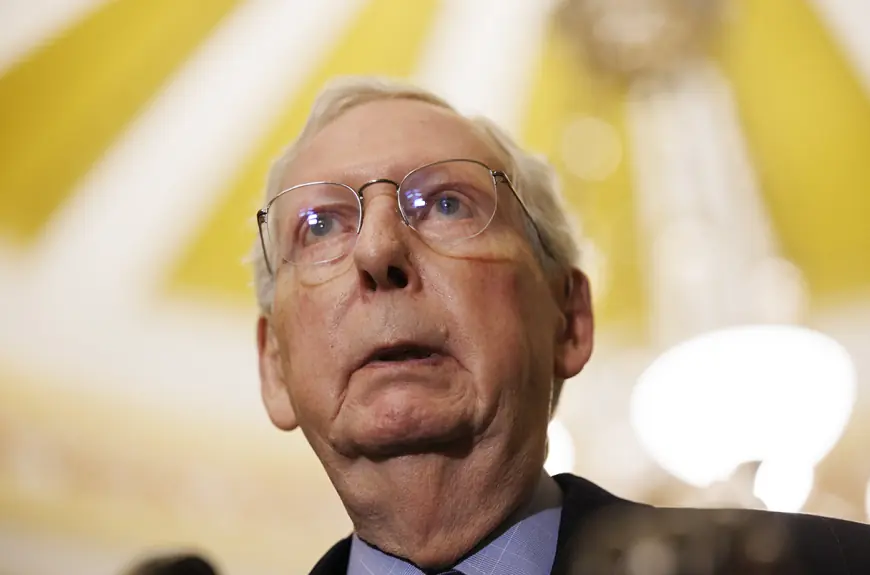
Sen. Mitch McConnell was hospitalized Monday night, Feb. 2, 2026, after experiencing flu-like symptoms over the weekend, his office said in a statement. The Kentucky Republican’s spokesperson said McConnell sought evaluation “out of an abundance of caution,” described his prognosis as positive, and said he remained in contact with staff while he receives care.
The hospitalization immediately drew attention on Capitol Hill because of McConnell’s seniority, his role in shaping Senate Republican strategy for decades, and a recent history of public health scares that have periodically sidelined him.
What McConnell’s office has said so far
McConnell’s spokesperson said the senator checked himself into a local hospital for evaluation after feeling ill over the weekend. The statement emphasized three points: the decision was precautionary, the prognosis was positive, and McConnell expected to return to Senate business.
As of Thursday, Feb. 5, 2026 (ET), no additional medical specifics had been publicly released beyond “flu-like symptoms.” That leaves open basic questions—such as whether he is being treated for influenza, pneumonia, dehydration, or another illness with similar symptoms—while keeping the official messaging focused on reassurance and continuity.
Timeline of the hospitalization (ET)
| Date | What happened | Public details |
|---|---|---|
| Feb. 1, 2026 (Sun.) | Symptoms over the weekend | Described as “flu-like” |
| Feb. 2, 2026 (Mon.) | McConnell entered a hospital for evaluation | Characterized as precautionary |
| Feb. 3, 2026 (Tue.) | Office statement circulated publicly | Prognosis called positive |
| Feb. 4–5, 2026 (Wed.–Thu.) | Attention turns to Senate schedule and votes | No new medical details released |
How old is Mitch McConnell, and why his health draws attention
McConnell was born Feb. 20, 1942. That makes him 83 years old as of Feb. 5, 2026 (ET). He turns 84 later this month.
His health has been a recurring public topic in recent years, driven by a combination of visible incidents and the demands of his role. Each new episode tends to prompt questions not only about his immediate wellbeing, but also about near-term Senate logistics, leadership decision-making, and the longer arc of succession planning inside the Republican conference.
What it means for the Senate right now
In the short term, a hospitalization can have practical effects even without a major diagnosis: it can affect attendance for votes, committee work, and negotiations that hinge on narrow margins. Senate leaders often build floor plans around predictable vote counts; an unexpected absence can force rescheduling, pairing agreements, or delayed action on contested items.
Even so, the most consequential variable here is duration. A brief evaluation followed by discharge typically causes only minor disruptions. A longer hospital stay—or a recovery period that limits travel and floor time—could widen the ripple effects, especially if it coincides with time-sensitive votes.
What to watch next
The next updates that would materially change the picture are straightforward and concrete:
-
A discharge announcement, which would signal that evaluation and treatment were brief and that he can resume work quickly.
-
A more specific diagnosis (or confirmation of a negative test set), which would clarify whether this is a routine illness or something more complicated.
-
Changes to Senate scheduling that reflect a longer-than-expected absence.
Until those details become public, the only confirmed points remain the office’s description of flu-like symptoms, the precautionary hospital evaluation beginning Monday night, and the statement that his prognosis is positive.
Sources consulted: The Associated Press, ABC News, Forbes, U.S. Senate