Jared McCain Traded to OKC: What the Thunder Got, What the Sixers Received, and How an Injury-Interrupted Year Shaped the Deal

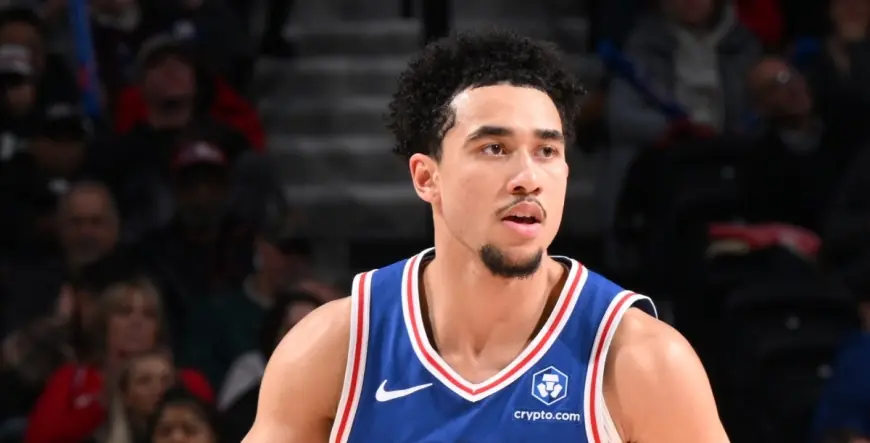
Jared McCain is heading to the Oklahoma City Thunder in a deadline-week trade that sends the second-year guard out of Philadelphia and adds another young, cost-controlled player to OKC’s already deep rotation pipeline. The move also gives the 76ers a meaningful package of draft capital, continuing a familiar pattern: Oklahoma City using surplus picks to buy upside, and Philadelphia reshaping its roster flexibility with an eye on the next phase of contention.
The deal was agreed to on Wednesday, February 4, 2026, in Eastern Time, as the trade market accelerated across the league.
Trade details: What OKC and Philadelphia agreed to
Oklahoma City receives:
-
Jared McCain
Philadelphia receives:
-
A 2026 first-round pick originally belonging to Houston
-
A 2027 second-round pick described as the most favorable among a group that includes Oklahoma City, Houston, Indiana, and Miami
-
A 2028 second-round pick from Milwaukee
-
A 2028 second-round pick from Oklahoma City
In plain terms, the Thunder turned a slice of their pick stockpile into a developmental bet on a guard who flashed high-end scoring instincts early in his pro career, while the Sixers cashed that player into future flexibility.
Why the Thunder targeted McCain
For Oklahoma City, the logic fits their team-building identity:
-
Upside at a controlled cost: McCain’s rookie-scale contract keeps financial risk low while preserving room to pay core stars.
-
Another creator in the system: OKC’s offense thrives on pace, decision-making, and spacing. A guard who can shoot, create in bursts, and attack closeouts fits the ecosystem.
-
Depth insurance for the grind: Even elite teams feel the drag of injuries and schedule density. Adding a young guard gives OKC another option without sacrificing its top rotation pieces.
This is also a timing play. The Thunder have been operating like a team that expects to contend now while still collecting assets like a rebuilding club. Converting picks into playable talent is the natural next step when the roster is too good to keep drafting multiple teenagers every year.
Why the Sixers moved him now
From Philadelphia’s perspective, the trade reads like a bet on certainty.
McCain’s value was always tied to potential, but his second season has been uneven and shaped by availability. This year, he has averaged 6.6 points and 1.7 assists across 37 games while playing limited minutes. That kind of profile can turn into a roster squeeze quickly on a team trying to win immediately.
The Sixers’ incentives are straightforward:
-
Create roster and rotation clarity in a crowded backcourt
-
Rebalance future assets without taking back long-term salary
-
Position the front office to make additional moves with more flexibility
The strongest “why now” is that picks stay liquid. They don’t get hurt, and they can be re-routed into the next trade that better matches Philadelphia’s current win-now timeline.
Jared McCain injury: what’s known and why it matters
McCain’s availability has been part of his story since his rookie year. He dealt with a left-knee meniscus injury that ended his first season early. Entering this season, he also faced a thumb issue that required surgery and slowed his ramp-up.
By early February 2026, he was also listed as not with the team in the short term on the Sixers’ game status reporting, which aligns with the timing of a player in transit after a trade agreement.
This matters because OKC isn’t just trading for a stat line. They’re trading for a player arc. If McCain is healthy and the early flashes return, Oklahoma City may have landed a rotation guard who can pop in playoff moments. If the health interruptions continue, the Thunder still limited their downside by paying mostly in future picks rather than core players.
Behind the headline: incentives, leverage, and what’s missing
This trade is a clean example of how leverage works in today’s NBA.
Oklahoma City’s leverage:
-
A massive inventory of picks that can outlast most competitive windows
-
A stable system that can develop young players without demanding they carry the offense immediately
Philadelphia’s leverage:
-
A clear priority to compete at the top end, which makes long-term picks unusually valuable as tools for future roster construction
What we still don’t know:
-
Whether OKC views McCain as a long-term rotation piece or a developmental asset who could later be bundled again
-
How quickly he will be integrated into the Thunder’s on-court role, given the team’s established guard hierarchy
-
Whether Philadelphia intends to use the newly acquired picks immediately in another deal or keep them as future ammunition
What happens next: realistic scenarios to watch
-
McCain earns a defined bench role by late February
Trigger: health stability and clear fit in OKC’s spacing-and-pace scheme. -
OKC treats him as a longer development project
Trigger: minutes stay modest, with emphasis on practice reps, spot shooting, and defensive adaptation. -
Philadelphia flips some of the picks into win-now help
Trigger: a clear roster need emerges, or another team offers a high-impact player near the deadline. -
The trade looks smarter a year from now than it does today
Trigger: McCain’s growth curve resumes and those second-rounders become less meaningful than a proven rotation guard.
The big takeaway: OKC paid a pick-heavy price to buy a controllable talent swing, while Philadelphia chose asset flexibility over waiting on a crowded-development timeline. Whether this becomes a steal or a simple roster reshuffle will come down to one thing the box score can’t predict: McCain’s health and developmental runway in a championship-level environment.