






















Bad Bunny, Super Bowl Time, and the Grammys: Who He Is, What He Just Won, and When to Watch the Halftime Moment

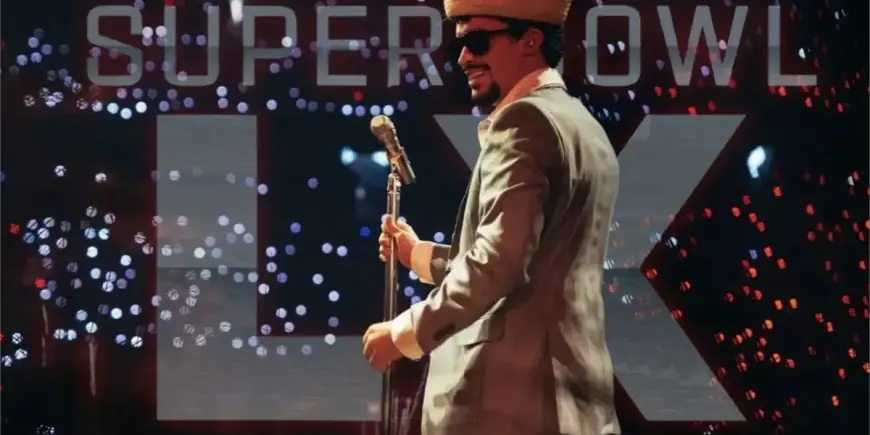
Bad Bunny is heading into the biggest week of the American sports calendar with fresh momentum from the Grammy Awards and a spotlight that now extends well beyond music. In the past few days, he picked up major Grammy recognition for his latest album, setting the stage for a Super Bowl halftime moment that will be watched as both entertainment and cultural signal.
Who is Bad Bunny?
Bad Bunny is the stage name of Benito Antonio Martínez Ocasio, a Puerto Rican artist who helped push Spanish-language reggaeton and Latin trap into the center of global pop. He broke through in the late 2010s and has since become a rare crossover figure: streaming-dominant, arena-level, and influential in fashion and pop culture, while still building albums around Puerto Rican identity and Spanish-first lyrics.
That combination matters this week because it shapes how different audiences experience him: longtime fans expect deep cuts and genre-switching, while casual viewers may be encountering him for the first time through the Super Bowl.
Super Bowl time: what time is the Super Bowl in Eastern Time?
Super Bowl kickoff is scheduled for 6:30 p.m. ET on Sunday, February 8, 2026.
If you’re watching mainly for Bad Bunny and the halftime show, the key detail is that halftime timing is never exact. In most Super Bowls, the halftime performance tends to start roughly between 8:00 p.m. and 8:30 p.m. ET, depending on how the first half plays out, penalties, reviews, and commercial breaks.
A practical viewing plan:
-
Turn it on by 6:30 p.m. ET if you want the full game start.
-
If you only care about halftime, tune in by 7:45 p.m. ET to avoid missing it.
Bad Bunny at the Grammys: what happened and why it matters
On Sunday, February 1, 2026, Bad Bunny won Album of the Year at the Grammy Awards for Debí Tirar Más Fotos. The win is significant for two reasons: it’s a mainstream validation of a Spanish-language project at the very top category, and it lands one week before the Super Bowl, when casual audiences are most open to a “big cultural moment” storyline.
Bad Bunny songs: where to start before the Super Bowl
If you’re trying to understand his range fast, here are reliable entry points that cover different eras and sounds:
-
Big global hits and crowd-starters: Tití Me Preguntó, Me Porto Bonito, Moscow Mule
-
Emotional fan favorites: Ojitos Lindos, Callaíta
-
High-energy trap-reggaeton edge: Safaera, Yo Perreo Sola
-
Newer album-era context tracks: focus on songs from Debí Tirar Más Fotos, because artists typically anchor halftime sets around the most recent “award narrative” plus two or three legacy smashes.
Expect the Super Bowl performance to compress a long catalog into a short, high-impact sequence built for people who know only one chorus but still want to feel included.
Is Bad Bunny a US citizen?
Yes. Bad Bunny was born in Puerto Rico, and people born in Puerto Rico are U.S. citizens by birth under federal law. In everyday terms: he is an American citizen, even though Puerto Rico is not a state.
What’s behind the headline: incentives, stakeholders, and what to watch next
Bad Bunny’s incentives are straightforward: the Super Bowl is the largest single-stage audience in U.S. entertainment, and a strong halftime show can translate into streaming spikes, catalog re-discovery, tour demand, and brand leverage. For the league and advertisers, the incentive is equally clear: a halftime headliner with global reach can expand younger and multilingual viewership without needing to change the sport itself.
Stakeholders include:
-
The league and broadcasters, who want maximum retention into halftime and back into the second half
-
Sponsors, whose campaigns depend on a clean, broadly appealing show
-
Music industry power centers, watching whether Spanish-language pop keeps gaining top-tier institutional recognition
-
Fans and cultural critics, who will scrutinize representation, language choices, and how “mainstream” the setlist feels
Missing pieces right now:
-
The exact song list and guest appearances, if any
-
How much of the performance will lean into Puerto Rican roots versus global pop hooks
-
The extent of any messaging, if any, versus a purely spectacle-driven set
What happens next, realistically:
-
If the halftime show lands well with casual viewers, expect an immediate streaming surge and a short-term chart rebound for older hits within 24 hours.
-
If the performance skews too deep into niche cuts, the cultural impact could still be strong, but the broad “mass-audience singalong” effect may be smaller.
-
If there are surprise guests, it could shift the narrative from “Bad Bunny as headliner” to “Bad Bunny as curator,” which often plays well on the Super Bowl stage.
For viewers, the takeaway is simple: the Super Bowl has a fixed kickoff time, but halftime is elastic. If you want to catch Bad Bunny live, plan around 6:30 p.m. ET kickoff and keep a close eye on the clock starting around 8:00 p.m. ET.