





















Kid Rock and Turning Point USA halftime show draws attention ahead of Super Bowl 2026

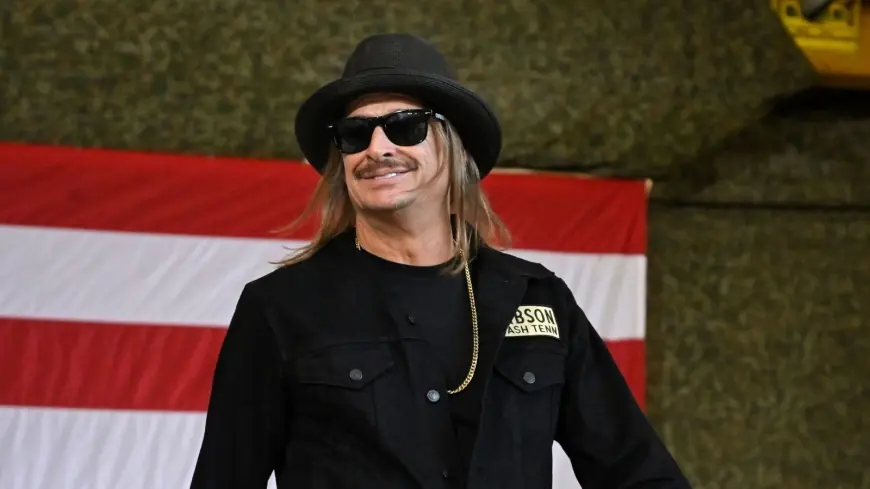
A new “All-American Halftime Show” promoted by Turning Point USA—headlined by Kid Rock with country acts Gabby Barrett, Lee Brice, and Brantley Gilbert—has ignited a parallel conversation to the official Super Bowl 2026 halftime lineup. The alternative broadcast is being pitched as “family-friendly,” but momentum this week has come as much from controversy over resurfaced Kid Rock lyrics as from the music itself.
What the TPUSA halftime show is
Turning Point USA says its “All-American Halftime Show” will run at the same time window as the Super Bowl halftime performance on Sunday, Feb. 8, 2026 (ET). Organizers describe it as a patriotic entertainment option centered on “faith, family, and freedom,” positioning it as a cultural counterprogramming play rather than an official NFL event.
The announced performers are:
-
Kid Rock
-
Brantley Gilbert
-
Lee Brice
-
Gabby Barrett
Timing, start window, and how to watch
The alternative show is scheduled to begin around the usual halftime window, with pre-show coverage planned ahead of kickoff’s midpoint. It is set to air on a religious television network and stream on associated digital channels, using a broadcast approach meant to feel plug-and-play for viewers already settled in for game night.
Here’s a simple ET snapshot for planning:
| Event | Date | Approx. time (ET) | Where it appears |
|---|---|---|---|
| Super Bowl 2026 kickoff | Feb. 8, 2026 | 6:30 p.m. | National TV broadcast + broadcaster streaming |
| TPUSA “All-American Halftime Show” pre-show | Feb. 8, 2026 | 7:30 p.m. | Religious TV network + its streaming |
| TPUSA “All-American Halftime Show” | Feb. 8, 2026 | ~8:00 p.m. | Same as above |
| Official Super Bowl halftime show | Feb. 8, 2026 | ~8:00 p.m. | Same feed as the game |
Times are approximate because halftime timing depends on game flow.
“Cool, Daddy Cool” lyrics resurface and drive backlash
Much of the attention has clustered around “Cool, Daddy Cool,” an older Kid Rock track whose lyrics include lines that many people now view as disturbing. In the last 24–48 hours, clips and screenshots have circulated widely, prompting renewed criticism and turning the “family-friendly” branding into a talking point.
The key dynamic: organizers are marketing the show as values-forward and kid-appropriate, while critics argue that parts of Kid Rock’s catalog undercut that framing. Supporters counter that the halftime appearance is about the broader lineup and a curated setlist rather than deep cuts.
No official setlist has been published, and it remains unclear at this time whether the show will address the lyrics controversy directly.
Why these artists were selected
The billing is built around a familiar country-rock lane: arena-ready hooks, big choruses, and radio-proven names. Gabby Barrett and Lee Brice bring mainstream country visibility; Brantley Gilbert adds a heavier rock edge; Kid Rock anchors the spectacle with name recognition beyond the genre.
The structure appears designed to accomplish three things:
-
Offer a simultaneous entertainment option for viewers unhappy with the official halftime choice
-
Create a shareable “event” with a clear identity and message
-
Use recognizable artists to pull in casual viewers who might not otherwise watch a political organization’s programming
Where to watch Super Bowl 2026 without cable
If you’re searching “where to watch Super Bowl 2026,” the options split into three practical categories:
-
Traditional TV: The game is televised nationally on the year’s broadcast partner.
-
Streaming on the broadcast partner: The same broadcaster offers a subscription streaming option carrying the live game feed.
-
Mobile-focused options: The league provides a paid mobile service that can carry live game viewing on phones and tablets, plus live audio options.
For people planning to watch both the game and the TPUSA show, the simplest setup is a split-screen (TV + phone/tablet) or two devices.
What to watch next as game day nears
Two things will likely determine how big this gets on Sunday night: whether the alternative show’s viewing access stays frictionless, and whether the lyrics controversy continues to dominate the conversation. If organizers keep messaging tightly focused on the lineup and avoid getting pulled into reactive debates, the broadcast could play as straightforward counterprogramming. If the controversy grows, it may become less about music and more about branding, sponsors, and who chooses to associate with the event.
Sources consulted: NFL, ABC News, People, Yahoo Entertainment