




















Fans Rush to Learn Spanish Ahead of Bad Bunny’s Super Bowl Performance

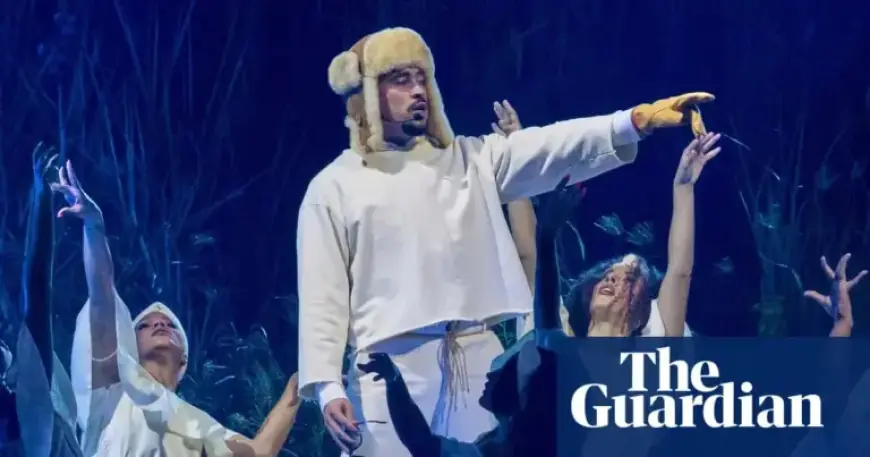
Anticipation is building for Bad Bunny’s upcoming Super Bowl halftime performance. The famed Puerto Rican artist will perform entirely in Spanish, prompting fans to rush to learn the language. His decision has sparked a wave of enthusiasm among non-Spanish speakers.
Bad Bunny’s Impact on Language Learning
In October, Bad Bunny, born Benito Antonio Martínez Ocasio, made headlines during his appearance on Saturday Night Live. He expressed pride in his heritage and encouraged viewers to learn Spanish. His statement, “If you didn’t understand what I just said, you have four months to learn!” inspired many to take up the challenge of mastering the language before the big event.
Social Media Frenzy
- Fans have taken to social media to share their experiences learning Bad Bunny’s lyrics.
- Many Puerto Ricans are explaining the unique slang used in his songs.
- Non-Spanish speakers document their journey of learning the language.
This online movement highlights the cultural influence of Latino music, even in the face of political challenges. Bad Bunny’s commitment to his message has galvanized fans, encouraging them to embrace his music while also engaging with the Spanish language.
Significant Cultural Moments
Recently, Bad Bunny’s album “Debí Tirar Más Fotos” made history by becoming the first Spanish-language album to win the Grammy for Album of the Year. In his acceptance speech, he voiced his concerns about immigration, stating, “We’re not savages, we’re not animals, we’re not aliens. We are humans and we are Americans.” This powerful message resonated with many and reinforced the importance of his performance.
Personal Experiences in Learning Spanish
Niklaus Miller and O’Neil Thomas are two fans who have taken on the challenge of learning Bad Bunny’s music. Miller, 29, started his journey after SNL, aiming to understand and perform several songs he believes will be featured in the halftime show. He shared that learning Puerto Rican Spanish has been both challenging and rewarding.
Meanwhile, Thomas, 28, a New York City actor, also embraced this journey once Bad Bunny was announced as the halftime performer. “This has been a fun introduction for me to finally hone in,” he expressed. The positive feedback he received from the Puerto Rican community further motivates him to learn and appreciate the culture.
Cultural Significance of the Performance
Vanessa Díaz, an associate professor at Loyola Marymount University, notes that the rise of Latin music has sparked a growing interest in Spanish among non-Spanish speakers. “The Super Bowl itself is an additional push for a trend that was already happening,” she said. Spanish is now the second most spoken language in homes across the United States, with over 13% of residents speaking it.
Political Context
Bad Bunny’s selection as the Super Bowl performer has not been without controversy. Critics have labeled it “ridiculous,” and some conservative groups have launched alternative halftime shows. This comes amid a backdrop of increased scrutiny and targeting of Latino communities in the U.S. under the previous administration.
Nonetheless, the visibility of Bad Bunny on a massive stage may prompt important conversations about Latino representation and identity in America, particularly in a time of divisive politics.
The preparation for his performance has opened doors for many, encouraging fans to connect with the Spanish language and the rich culture it represents. As the Super Bowl approaches, the excitement around Bad Bunny’s performance will continue to inspire a new generation of Spanish learners.