

























Elon Musk Aims to Launch AI into Orbit: Visionary, Not Crazy

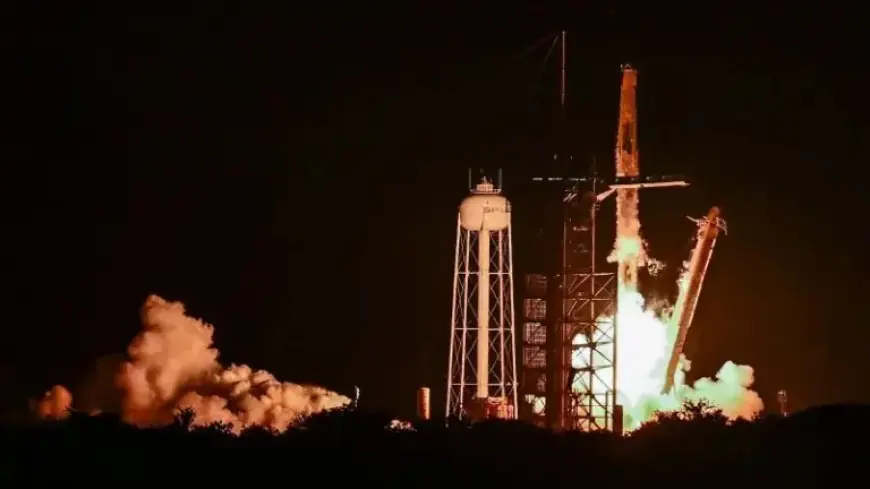
Elon Musk is taking bold steps to address the challenges of constructing AI data centers on Earth by proposing the establishment of these centers in space. His recent merger of SpaceX and xAI aims to pave the way for this innovative approach. Musk believes that the vast resources available in space can alleviate the demands placed on terrestrial infrastructure.
Vision for Orbital AI Data Centers
Musk emphasized that moving data centers to space is a logical solution due to its abundant resources. He stated, “Space is called ‘space’ for a reason,” highlighting the potential of outer space for housing resource-intensive technologies.
Several tech giants, including Google and OpenAI, share this vision. They recognize that as AI technology expands, the need for alternatives becomes critical. David Bader, a distinguished professor at the New Jersey Institute of Technology, pointed out that we are nearing our limits for power generation on Earth. “Looking to space may provide some of these solutions,” he stated.
Advantages of Space-Based Data Centers
- Access to abundant solar energy
- Natural cooling environment
- Reduced land usage
A Deutsche Bank analyst noted that while technical challenges remain, they are mainly engineering constraints, rather than fundamental physical limitations. This optimism is echoed by Google’s plans to test orbital data centers with two satellites slated for launch next year, suggesting that space could become an optimal environment for scaling AI computation.
Industry Movements and Projections
Sam Altman, CEO of OpenAI, explored the idea of acquiring Stoke Space to facilitate the development of orbital data centers. Additionally, Washington-based Starcloud successfully launched a test satellite equipped with an AI server aboard a SpaceX rocket. Philip Johnston, co-founder of Starcloud, believes that in ten years, all new AI data centers may be in orbit, which could also help mitigate the growing backlash against data center construction on Earth.
The increasing energy demands of AI centers are making electricity expenses rise sharply for consumers. A Bloomberg News analysis indicated that electricity costs in regions near data centers surged by up to 267% over five years. Bader acknowledged the lack of precise data on the financial impact but confirmed that rising demand leads to higher costs for consumers.
Water Usage and Community Impact
Data centers also pose risks to local water supplies, with large facilities consuming up to 5 million gallons daily—equivalent to the needs of a town with a population of 10,000 to 50,000. Mark Muro, a senior fellow at Brookings Metro, highlighted the increasing political resistance against new data center projects, complicating construction approvals.
Future Outlook
Despite the hurdles of relocating data centers to orbit, industry experts agree on the necessity for innovative energy solutions. Musk forecasts that orbital data centers could become more cost-effective than their terrestrial counterparts within two to three years. In contrast, Deutsche Bank anticipates that achieving parity will take until the 2030s.
Ultimately, while Musk’s timelines may be optimistic, the continual decline in satellite launch costs, coupled with rising expenses for AI data centers on Earth, indicates that space-based operations may become a viable reality in the near future. Bader expressed a more tempered view, suggesting that realization of this concept might comfortably materialize within three to five years.