






















Bad Bunny heads to Super Bowl 2026 halftime show as interest surges in his songs and background

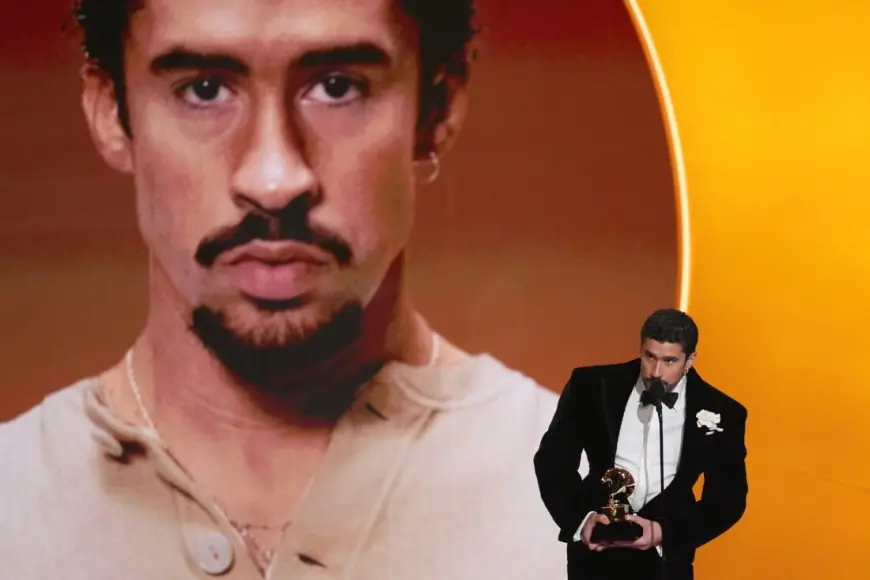
Bad Bunny is set for one of the biggest stages in U.S. entertainment next week, and the run-up to Super Bowl 2026 has triggered a familiar spike in questions: who is Bad Bunny, what are his biggest songs, and is Bad Bunny a U.S. citizen. The headline moment is simple: the Puerto Rican superstar will headline the halftime show on Sunday, February 8, 2026, at Levi’s Stadium in Santa Clara, California.
Beyond the spectacle, the booking underscores how Spanish-language music has moved from crossover success to mainstream centerpiece, with Bad Bunny’s catalog now functioning like pop’s common vocabulary—streaming staples, club anthems, and global hits that translate without changing languages.
Bad Bunny Super Bowl halftime, confirmed
The NFL’s halftime show announcement put Bad Bunny in the top entertainment slot attached to America’s biggest annual broadcast. It will be his first time as a solo halftime headliner, following his appearance during the 2020 halftime show as part of a Latin music segment.
The performance arrives after a period of heavy touring and high-profile visibility, and it lands at a moment when the halftime show has become as much a cultural event as the game itself—measured in streaming surges, set-list debate, and the inevitable post-show chart bumps.
Who is Bad Bunny?
Bad Bunny’s real name is Benito Antonio Martínez Ocasio. He was born March 10, 1994, in Puerto Rico and rose from SoundCloud-era breakout to global dominance by fusing reggaeton, Latin trap, pop, and experiment-first production choices into stadium-scale hits.
He is often described as a key figure in pushing Spanish-language rap and reggaeton further into the global pop center. That shift didn’t happen via one “crossover” single; it happened through volume—albums that stayed in rotation, collaborations that traveled, and a touring footprint that made him unavoidable.
Bad Bunny has also built a wider celebrity profile through acting and sports-adjacent ventures, but music remains the engine: albums that shape the conversation, then songs that refuse to leave playlists.
Is Bad Bunny a U.S. citizen?
Yes. Bad Bunny is a U.S. citizen by birth because he was born in Puerto Rico, and U.S. law grants U.S. citizenship at birth to people born in Puerto Rico under the applicable statute.
This question tends to spike whenever he anchors a major U.S. event, and it often comes bundled with confusion about Puerto Rico’s political status. Whatever the broader politics, the legal point is straightforward: birth in Puerto Rico confers U.S. citizenship at birth.
Bad Bunny songs that define the moment
With the halftime show approaching, listeners are revisiting the songs most likely to show up in a short, high-impact set—tracks that hit instantly, don’t need translation to move a crowd, and have the kind of chorus you can hear from a parking lot.
Signature Bad Bunny songs to know right now:
-
“DÁKITI”
-
“Me Porto Bonito”
-
“Tití Me Preguntó”
-
“Ojitos Lindos”
Those staples sit alongside newer material from his latest album cycle, which has pushed multiple tracks into top-song lists and kept his streaming totals at a scale usually reserved for the biggest English-language pop acts.
What the halftime booking signals next
The halftime show tends to act like a reset button for an artist’s U.S. mainstream narrative: it compresses a career into 12–15 minutes, then drives a wave of curiosity that’s equal parts fandom and first-time discovery. For Bad Bunny, the challenge isn’t introducing himself—it’s choosing which version of himself to lead with.
If the set leans heavy on reggaeton bangers, it will read as a victory lap for the sound that carried him to the top. If it tilts toward newer material and deeper cuts, it becomes a statement about where he wants the next era to go. Either way, the immediate impact is predictable: a short-term jump in streams, renewed attention to older albums, and a fresh round of debate about what the “core” Bad Bunny catalog really is.
For viewers who only know the name, the halftime show will answer the simplest question fast: who is Bad Bunny? The bigger question—what he chooses to represent in a global spotlight—will play out in real time on February 8.
Sources consulted: Reuters, Associated Press, U.S. Code, U.S. Department of State