

























Sun Erupts with Four Intense Flares, More ‘Exciting Activity’ Expected

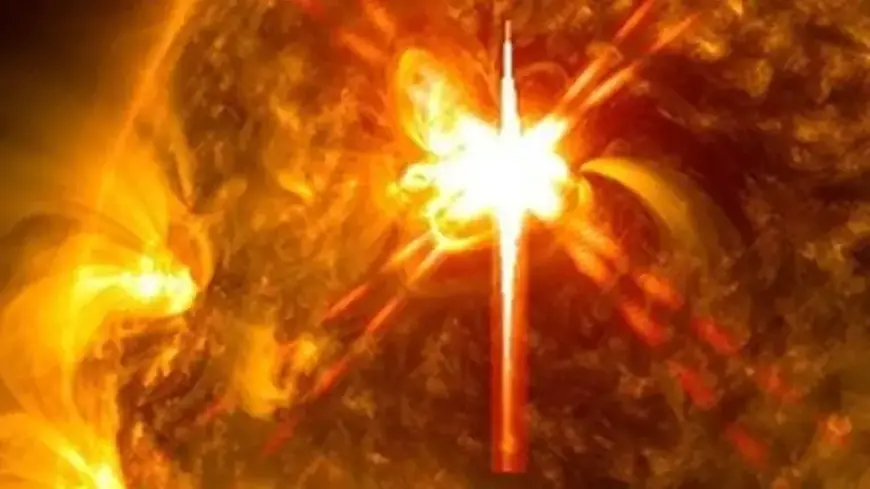
The Sun has recently erupted with four significant solar flares, indicating the potential for a dynamic week of space weather. The intense activity began on February 1, 2024, at 12:33 UTC with an X1.0 flare. Just 11 hours later, a considerably more powerful X8.1 flare erupted at 23:37 UTC, marking the strongest eruption since October 2024 and the 19th most powerful in recorded history.
Details of Recent Solar Flares
On February 2, 2024, the activity continued with two additional flares. The first occurred at 00:36 UTC with an X2.8 classification, followed by an X1.6 flare at 08:14 UTC. These flares originated from sunspot cluster RGN 4366, which is now directed towards Earth.
Potential Impacts of Solar Activity
According to NOAA’s Space Weather Prediction Center, if the RGN 4366 group remains complex, the likelihood of more powerful solar flares could increase. This could lead to energetic particle events and coronal mass ejections (CMEs), which are significant releases of plasma from the Sun.
- X-class flares are the most intense solar flares.
- The X8.1 flare is the highest magnitude since October 2024.
- February 2024 flares were captured by NASA’s Solar Dynamics Observatory.
Understanding Coronal Mass Ejections
CMEs are often linked to both the beautiful auroras and potentially disruptive solar storms. They can significantly affect satellites, power grids, and communication technologies. Recent solar activity has garnered increased media attention as the Sun completes its most active phase of the 11-year solar cycle, which peaked in 2024.
Looking Ahead
Though the current solar activity is expected to taper off leading up to the next cycle around 2030, forecasters predict that additional exciting activity could emerge. The anticipation builds as scientists observe ongoing developments in solar behavior.