

























Connections word game expands fast, fueling a booming hints-and-solvers ecosystem

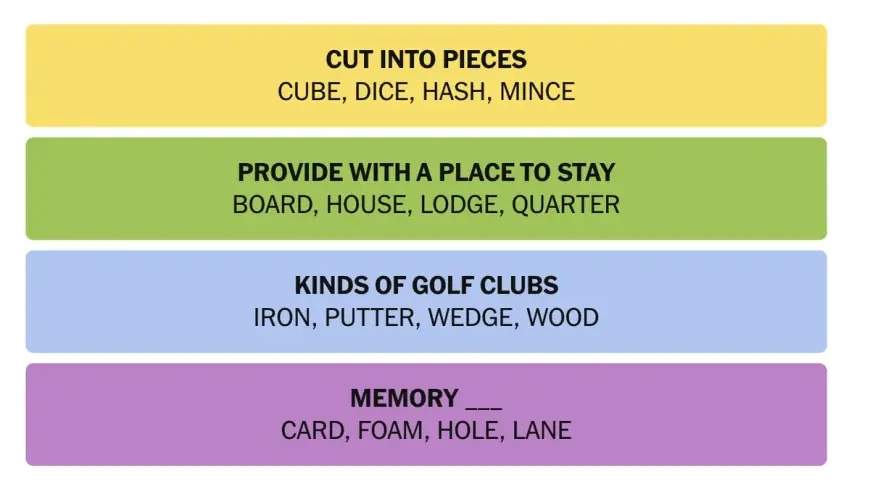
The daily Connections puzzle has become one of the internet’s most reliable morning rituals—and in early 2026 it’s also one of the most contested. In the past month, the game’s official archive and its Sports Edition have pushed more players into the habit, while an ever-growing universe of “hints,” answer pages, and automated solvers has turned a four-by-four grid into a full-on attention economy.
The result is a feedback loop: the harder the categories feel, the more people look for help—and the more the game stays in the conversation.
Why Connections keeps going viral
Connections is built around a simple hook: 16 words, four hidden groups, and a difficulty ladder that usually saves the trickiest logic for the final (purple) set. The design encourages confident guessing—then punishes overconfidence with “almost-right” overlaps that can trap even experienced players.
That structure makes the game unusually shareable. Players don’t just post a score; they argue about whether a category was fair, whether a word belongs, and how anyone was supposed to spot the intended connection. Those debates spike on tough days, and they help keep the puzzle circulating well past its daily reset.
The editor and the “fairness” debate
Much of the game’s identity comes down to its puzzle editor, Wyna Liu, whose style is known for mixing satisfying “click” moments with at least one category that feels like it’s hiding in plain sight. That combination is a feature, not a bug: the game needs enough friction to be interesting, but not so much that casual players quit.
Still, early 2026 has seen a renewed argument about fairness—especially when categories lean on niche pop culture, brand names, or wordplay that only becomes obvious after you already know the answer. On those days, the postgame conversation often becomes the real event.
Sports Edition widens the audience
The Sports Edition has broadened the brand beyond pure wordplay by leaning harder into trivia and team knowledge. That has pulled in players who don’t typically spend time on daily language puzzles, while also creating a sharper skill gap: sports fans can breeze through some grids, while everyone else feels locked out.
It also changes the social dynamic. Standard Connections thrives on “I should have seen that” logic. Sports Edition can feel more like “you either know it or you don’t,” which increases reliance on hints—especially for players trying to keep streaks alive.
The archive and the rise of “practice culture”
An official archive has helped turn Connections into something closer to a sport: players go back, replay older grids, track patterns, and build personal strategies for common category types (synonyms, homophones, “___-based phrases,” and so on). That practice culture has made the game stickier, particularly for people who treat it like training rather than a one-off daily diversion.
At the same time, the archive has fueled a parallel industry of unofficial archives and clones. Some of these sites are simple mirrors; others add features the official version doesn’t emphasize, like unlimited play, difficulty filters, or custom puzzle creation. The friction here isn’t only about intellectual property—it’s about where the community chooses to gather and which version becomes the default.
Solvers, spoilers, and the new etiquette problem
The biggest shift around the game is behavioral: more people now approach Connections as something to “complete” rather than “solve.” That’s why solvers and hint pages keep climbing—players want a nudge without wrecking the whole grid, or they want to check one stubborn group and move on.
But that has created a fresh etiquette problem. Connections is most fun when the reveal arrives naturally; full spoilers posted too early can flatten the communal experience. Many communities have responded with informal rules: soft hints first, category names next, full answers last.
Key takeaways:
-
Connections is thriving because it’s easy to play, hard to master, and built for debate.
-
Official expansions like the archive and Sports Edition are pulling in new audiences.
-
The hints-and-solvers ecosystem is growing fast, reshaping how people play.
-
“Fairness” fights and spoiler etiquette have become part of the daily ritual.
Sources consulted: The Atlantic; Nieman Lab; The Verge; Wikipedia