





















Ozzy Osbourne Tribute at the 2026 Grammys: “War Pigs” Performance, Yungblud’s Grammy Win, and the Osbourne Family’s Emotional Night

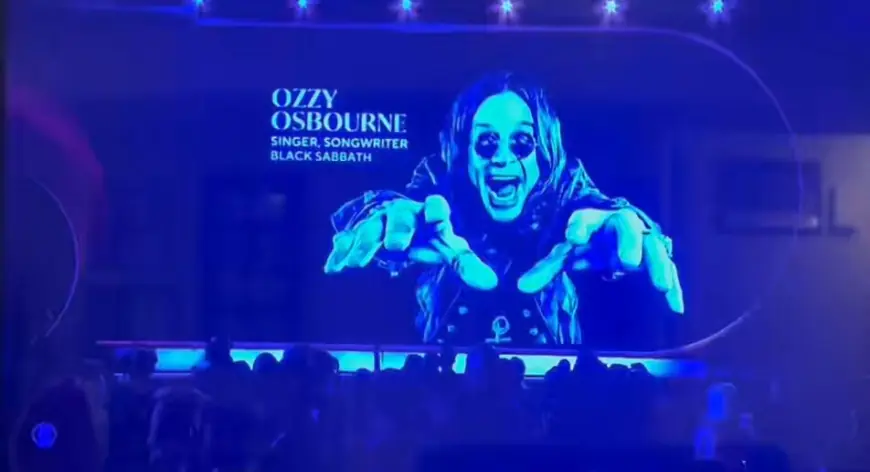
The 2026 Grammys delivered a heavy, headline-making moment with an Ozzy Osbourne tribute built around a live performance of “War Pigs,” pairing a modern superstar vocalist with a hard-rock all-star band. The segment aired during the in-memoriam portion of the ceremony on Sunday, February 1, 2026, and the cameras repeatedly cut to Sharon Osbourne and her children, including Kelly and Jack, visibly emotional as the arena honored the late Black Sabbath frontman.
At the center of the tribute was a clear message: Ozzy’s legacy is not a museum piece. It is still a living blueprint for stadium-scale rebellion, guitar-forward swagger, and the kind of dark humor that helped define heavy metal’s mainstream vocabulary.
Did the groundhog see his shadow? Not tonight: the Grammys gave Ozzy the loudest winter-burner moment
The tribute performance featured Post Malone on vocals, backed by Slash on guitar, Duff McKagan on bass, Chad Smith on drums, and Andrew Watt as musical director and guitarist. The song choice mattered. “War Pigs” is not a soft farewell ballad. It is confrontational, political, and built for volume. Putting it in the in-memoriam slot signaled respect without sentimentality: this was about impact, not nostalgia.
The staging leaned into the original track’s tension and menace, while the band lineup functioned like a shorthand for the rock ecosystem Ozzy influenced: classic-era guitar heroism, punk-to-hard-rock bass muscle, a drummer known for sheer power, and a contemporary producer-guitarist connecting it to today’s pop and rock pipelines.
When did Ozzy Osbourne die, and how did he die?
Ozzy Osbourne died on July 22, 2025. He was 76 years old.
His death certificate listed out-of-hospital cardiac arrest resulting from acute myocardial infarction, with coronary artery disease and Parkinson’s disease with autonomic dysfunction noted as contributing conditions. In other words, the final cause was a heart attack and cardiac arrest, set against years of widely known health struggles that included Parkinson’s and injuries.
That context matters because it shaped how audiences received the tribute. This was not a sudden shock years after the fact. It was a fresh loss, and the family’s grief still read as immediate.
Kelly Osbourne at the 2026 Grammys: why the family reaction became part of the story
Kelly Osbourne’s presence, alongside Sharon and Jack, turned the tribute from “award-show programming” into something closer to a public vigil. The cameras caught tears during the performance, and the emotional reaction became a second headline: the Osbourne family watching the industry say goodbye in real time.
Aimee Osbourne, who is far less publicly visible than her siblings, also appeared with the family around the tribute, underlining how significant the moment was for them as a unit rather than as individual celebrities.
Did Yungblud win a Grammy, and was Yungblud performing at the Grammys?
Yes, Yungblud won a Grammy in 2026. He won Best Rock Performance for “Changes (Live From Villa Park / Back to the Beginning),” tied to the 2025 farewell concert connected to Ozzy’s legacy.
On the “is Yungblud performing at the Grammys” question, the key detail is this: the Grammy-winning track is a previously recorded live performance, not a new in-arena performance during the Ozzy tribute segment. The tribute performance itself was “War Pigs” led by Post Malone with the all-star backing band.
Yungblud’s big Grammys “moment” was the win and what he did with it: he dedicated the award to Ozzy, reinforcing that the weekend’s rock storyline was built around legacy, mourning, and succession.
Behind the headline: why this tribute lineup, why this song, and why now
Context: Ozzy’s final chapter unfolded in public, with health updates, a farewell concert that took on mythic weight, and then his death shortly afterward. The Grammys were not introducing the loss. They were formalizing it.
Incentives: Award shows need moments that feel culturally bigger than the room, especially as audiences fragment. A hard-rock tribute featuring a mainstream headliner on vocals and legendary players in the band creates cross-audience gravity. For the performers, it is also a credibility play: honoring Ozzy signals lineage, seriousness, and belonging.
Stakeholders: The Osbourne family has reputational and emotional stakes in how the legacy is framed. The rock community has a stake in being seen as central, not niche. The Grammys have a stake in delivering a performance that travels beyond the broadcast into clips, replays, and conversation.
Second-order effects: Big tributes can move streaming behavior and reshape catalog discovery overnight. They also influence what labels submit and how artists position collaborations next cycle, especially when a rock tribute becomes one of the most talked-about segments of the night.
What we still don’t know
Even with a definitive tribute and a Grammy win tied to Ozzy’s orbit, unanswered questions remain:
What estate-led releases might follow, including archival material and live recordings.
Whether this becomes a template for future rock tributes with pop-fronted vocals.
How long the surge in attention lasts for Black Sabbath classics and Ozzy’s solo staples.
What happens next: realistic scenarios with clear triggers
-
A major streaming spike for “War Pigs,” “Paranoid,” and Ozzy solo hits like “Crazy Train”
Trigger: continued circulation of the tribute clip in the next week. -
Expanded releases tied to the farewell concert era
Trigger: strong demand for high-quality live recordings and official video packages. -
More cross-genre rock tributes at major televised events
Trigger: proof that the segment delivered broad engagement, not just niche applause. -
A renewed spotlight on the Osbourne family’s public grieving process
Trigger: interviews, memorial events, or anniversary moments that re-open the story. -
A tightening definition of “rock credibility” in mainstream pop spaces
Trigger: artists and producers chasing the halo effect that comes from respectful legacy alignment.
The 2026 Grammys didn’t just honor Ozzy Osbourne. They staged a handoff: from the era he helped create to the artists still living inside its shadow, volume turned all the way up.