






















Don Lemon Arrested With Journalist Georgia Fort After Church Protest: What the Federal Charges Say and Why It’s Becoming a First Amendment Flashpoint

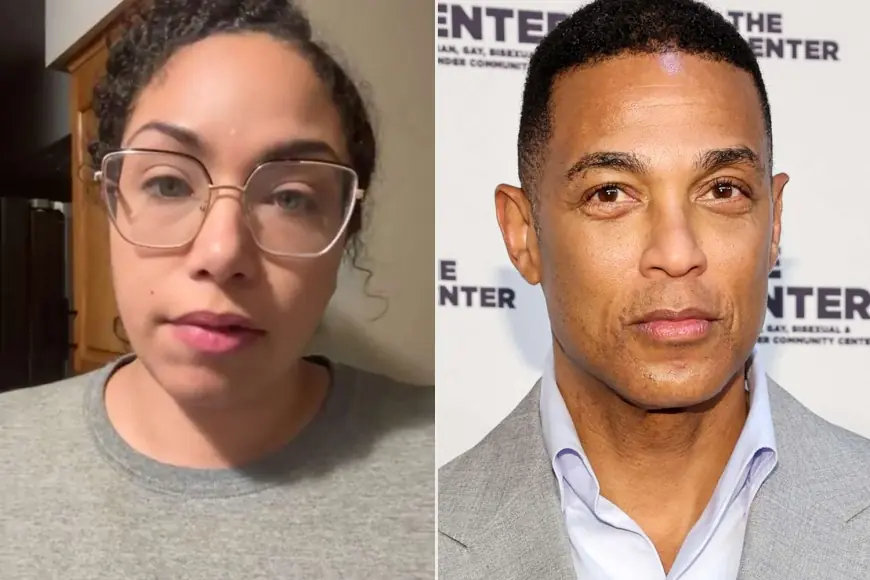
Former television anchor Don Lemon was taken into federal custody in Minnesota in late January after covering an anti–immigration enforcement protest inside a St. Paul church, a move that has ignited a national fight over where journalism ends and unlawful conduct begins. Federal prosecutors allege Lemon and others crossed from documenting into coordinated disruption during a worship service. Lemon insists he was present as an independent journalist and did not participate in planning or obstruction.
The same enforcement action swept up Georgia Fort, a Twin Cities–based independent journalist whose arrest has intensified press-freedom concerns by widening the story beyond a single celebrity defendant. Both cases are now feeding a broader debate: can the government use civil-rights statutes and religious-access laws to prosecute conduct inside a church without chilling reporting on protests that happen in sensitive places?
What happened at the St. Paul church protest
Investigators say the incident took place during a worship service at a church in St. Paul, Minnesota, where protesters entered the sanctuary and disrupted proceedings. The action was tied to anger over immigration enforcement tactics and public scrutiny of recent enforcement activity, with demonstrators arguing the target was connected to immigration leadership.
Lemon was there filming and narrating the scene for an online audience. Prosecutors argue the presence of cameras did not make the conduct lawful, and they point to what they describe as coordination and interference with congregants’ ability to worship.
Why Don Lemon was arrested and what he’s charged with
Federal filings describe two central allegations:
-
A conspiracy to interfere with civil rights connected to religious freedom
-
Conduct prosecutors frame as unlawful obstruction tied to access to religious worship
A key legal hook being discussed around the case is the Freedom of Access to Clinic Entrances law, a statute better known for protecting access to reproductive health clinics but also written to cover interference with religious worship. Prosecutors have also invoked a Reconstruction-era civil-rights conspiracy statute that can carry serious penalties.
Lemon’s defense, led by attorney Abbe Lowell, argues the government is criminalizing newsgathering and attempting to punish reporting that is politically inconvenient. Lemon has denied wrongdoing and signaled he will fight the charges rather than accept a quick resolution.
Georgia Fort’s arrest: why it’s drawing extra scrutiny
Georgia Fort’s arrest has become a parallel storyline because it complicates the easy narrative of “celebrity journalist in trouble.” Fort is known locally for documenting protests, policing, and public accountability issues. Her supporters argue she was arrested for doing routine on-the-ground reporting, not for participating in the action.
Her detention, even if brief, underscores the real fear among independent reporters: when law enforcement does not clearly distinguish between “participant” and “documentarian,” the risk of arrest becomes part of the cost of covering contentious events.
Was Don Lemon released, and what happens in court next
Lemon was released after the arrest and is now navigating the early stages of the federal case. The next steps are likely to include:
-
Formal court appearances and scheduling orders
-
Motions challenging whether the statutes apply to what occurred
-
Disputes over video evidence and intent, including whether Lemon merely recorded events or actively coordinated them
In a case like this, the legal battlefield often narrows to two questions: what the footage shows Lemon doing, and what prosecutors can prove about planning and intent beyond the presence of a camera.
Behind the headline: incentives, stakeholders, and why this case is blowing up
This story is growing because it sits on a fault line where incentives collide.
The government’s incentive is deterrence. Prosecutors want to signal that disrupting worship services is not protected conduct, even if framed as activism or “citizen journalism.” That message plays well with voters who view churches as sanctuaries from political conflict.
Lemon’s incentive is credibility. His public identity is built on being a truth-teller. If the public believes he acted as an organizer, not a reporter, the reputational damage can outlast any legal outcome.
Media institutions’ incentive is risk control. When a prominent figure becomes a lightning rod, employers and partners tend to distance quickly to avoid being pulled into a controversy that can spook audiences and advertisers, regardless of guilt or innocence.
The highest-stakes stakeholders are not the loudest ones online: congregants who say they were intimidated, protesters who say they were exercising moral speech, and working reporters who fear that ambiguous boundaries will make covering public demonstrations newly hazardous.
What we still don’t know
Several facts will determine how this plays out:
-
Whether prosecutors have evidence of planning or coordination beyond the livestream footage
-
Whether the church disruption involved physical obstruction or threats, or remained verbal and symbolic
-
How the court interprets the religious-access statute in this context
-
Whether Georgia Fort’s role is treated as clearly journalistic or as part of the alleged operation
Until those points are tested in court, much of the public argument will be narrative-driven rather than evidence-driven.
Why he was fired from his former cable news job
Lemon’s earlier departure from a major cable news network in April 2023 followed a turbulent run on a morning program, on-air controversies, and internal tensions that had become public. That history matters now because critics frame the arrest as the latest chapter in a politicized persona, while supporters argue his visibility is precisely why authorities targeted him.
What happens next: 5 realistic scenarios to watch
-
Charges narrowed or dismissed
Trigger: the court finds the statutes were stretched beyond their intended scope or the evidence of intent is insufficient. -
A fast plea or negotiated resolution
Trigger: defendants decide the risk of trial is too high, or prosecutors offer a face-saving off-ramp. -
A drawn-out First Amendment test case
Trigger: defense teams push aggressively to set precedent, and judges allow broad briefing on press protections. -
Wider press-freedom fallout
Trigger: more journalists are arrested in protest coverage, prompting legal challenges and policy changes by law enforcement. -
A political escalation around immigration enforcement and protest tactics
Trigger: elected officials amplify the case to argue either “law and order” or “government intimidation,” turning a courtroom fight into a campaign weapon.
This case isn’t just about whether Don Lemon broke a law. It’s about whether the government can credibly separate reporting from participation in the era of livestreams, and whether independent journalists like Georgia Fort will be treated as witnesses to events or as suspects simply for being close enough to record them.