
























Miners Debate Rudd’s Abandoned Mining Tax in Epstein Emails

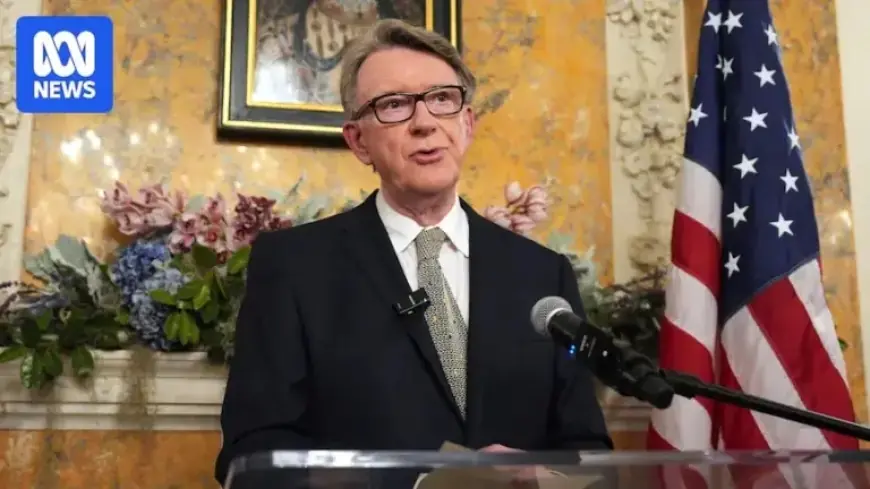
Recent releases from the U.S. Department of Justice have unveiled correspondence linking British politician Peter Mandelson to Jeffrey Epstein. This correspondence reveals Mandelson’s involvement in discussions regarding the contentious mining tax proposed by then-Australian Prime Minister Kevin Rudd.
Background on the Mining Tax Debate
In May 2010, Kevin Rudd announced the Resources Super Profit Tax, aiming to impose a 40% tax on extraordinary profits earned by mining companies. The proposal sparked immediate backlash from the mining sector, leading to a vigorous campaign against it.
A Shift in Government Policy
By July 2010, the political landscape changed when Julia Gillard became Prime Minister. Her government replaced the original proposal with the Minerals Resource Rent Tax (MRRT), a less aggressive tax plan.
In 2014, the MRRT was entirely repealed by Tony Abbott’s Coalition government.
Key Correspondence Involving Epstein
Among the substantial release of documents is an email from Mandelson to Epstein dated June 8, 2010, referencing an email from Mick Davis, then-CEO of mining giant Xstrata. This correspondence highlighted the company’s plans to suspend more than half a billion dollars in investments on two major projects in Queensland: the Ernest Henry mine and the Wondoan coal project.
Davis indicated that this announcement had significant media coverage, emphasizing the impact of the proposed Resources Super Profit Tax on jobs and mining communities.
Industry Pushback
The mining industry reacted robustly against the proposed tax, with executives like Davis criticizing media articles perceived as damaging and claiming direct attacks from the Australian Prime Minister.
Strategic Advice from Mandelson
In his email, Mandelson advised Epstein on creating a unified front against the mining tax. He suggested forming a broad coalition and urged caution to prevent the issue from being framed as a battle between the government and the mining sector.
He emphasized the importance of negotiating effectively, recommending settling for a solution that could ensure the industry contributed more to society.
Mandelson’s Ambitions and Epstein’s Influence
The documents also suggest that Ivan Glasenberg, CEO of Glencore (which acquired Xstrata in 2013), had intentions for Mandelson to become chairman of the company. In a July 2010 email, Glasenberg expressed interest in discussing Mandelson’s potential role in the company.
Mandelson highlighted his political experience and understanding of regulatory trends, asserting that such knowledge would be invaluable in navigating the complex relationship between business and government.
Controversies Surrounding Mandelson
Peter Mandelson’s relationship with Epstein has attracted scrutiny, leading to his resignation from the UK Labour Party. Reports indicate that Mandelson received a total of 75,000 British pounds from Epstein between 2003 and 2004, a claim he denies, citing lack of records and awareness.
These revelations offer critical insights into the intersection of politics and the mining industry amid ongoing debates about taxation and public interests.