
























Exploring the Evolution: From ‘Asteroids’ to ‘Star Citizen’ in Space Dogfighting Games

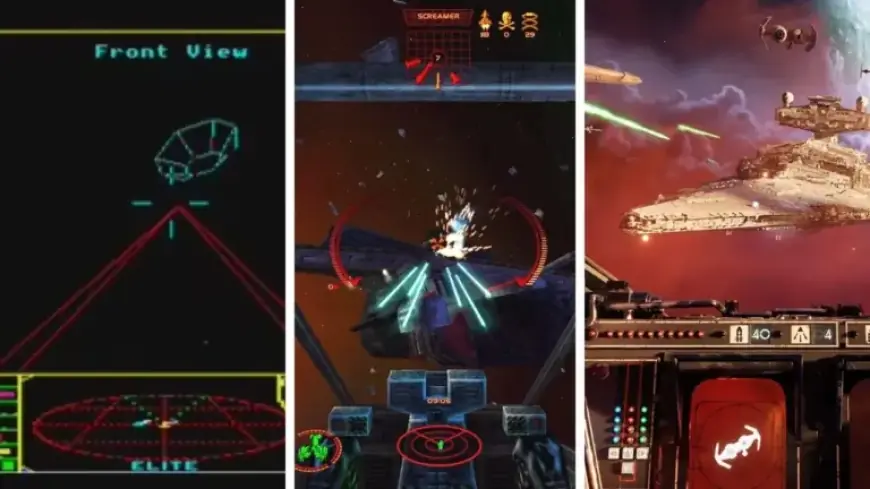
The evolution of space dogfighting games spans over five decades, marking significant milestones in game development. From arcade classics to expansive modern titles, the genre has consistently captivated players. This exploration delves into the history, key games, and technological advancements that have shaped space dogfighting.
Early Innovations: The 1970s to 1980s
The roots of space dogfighting can be traced back to the late 1970s. The release of “Asteroids” in 1979 laid the groundwork for the genre. Featuring tight physics and reflex-driven gameplay, it introduced players to the thrill of navigating spacecraft amidst asteroids while battling enemies.
Following “Asteroids,” “Star Raiders” debuted in the same year, pushing the envelope with a first-person cockpit view and strategic gameplay. In 1984, “Elite” revolutionized the genre by adding trading and procedurally generated worlds. This title highlighted player agency and opened a vast universe for exploration.
Noteworthy Games from This Era
- Asteroids (1979): A foundational game focusing on maneuverability and combat.
- Star Raiders (1979): Introduced a first-person view and strategic layers.
- Elite (1984): Expanded on gameplay with trading and an open-world concept.
The Golden Age: The 1990s
The 1990s marked a transformative era for space dogfighting. Major titles emerged as technology advanced, enhancing gameplay quality. “Wing Commander,” released in 1990, combined cinematic narrative with refined dogfighting mechanics, drawing players into its rich universe. Meanwhile, LucasArts iconic titles like “X-Wing” (1993) and “TIE Fighter” (1994) allowed players to immerse themselves in the Star Wars lore.
Key Titles of the 1990s
- Wing Commander (1990): A cinematic space combat game with a compelling narrative.
- X-Wing (1993): Provided immersive gameplay set in the Star Wars universe.
- TIE Fighter (1994): Enhanced graphics and joystick controls standardized space combat.
Challenges and Resilience: The 2000s
The 2000s were challenging for space dogfighting games. Despite the success of arcade titles, the rise of other gaming genres led to a decline in the popularity of space sims. Notable releases like “Starlancer” (2000) and “Freelancer” (2003) kept the genre alive, with “Freelancer” reviving the open-world concept introduced by “Elite.” This title focused on player choice, allowing users to explore vast star systems.
Significant Titles in the 2000s
- Starlancer (2000): A linear narrative-driven simulator.
- Freelancer (2003): Emphasized player freedom and exploration.
A New Era: The 2010s
As the 2010s emerged, space dogfighting games experienced a renaissance. “Elite Dangerous,” a modern take on the classic, featured realistic physics and expansive gameplay. Developers focused on creating detailed star systems, enhancing the dogfighting mechanics by incorporating resource management and complex flight physics.
Another ambitious project, “Star Citizen,” aimed to merge various gaming elements within a massive universe. Although it faced criticism, it garnered substantial financial backing, indicative of the genre’s enduring appeal. “No Man’s Sky” also evolved significantly post-launch, refining its combat systems and expanding gameplay features.
Prominent Games of the 2010s
- Elite Dangerous (2014): A highly ambitious space sim with realistic mechanics.
- Star Citizen (Ongoing): An expansive project blending multiple genres.
- No Man’s Sky (2016): Improved significantly to offer an engaging dogfighting experience.
The Indie Explosion: The 2020s and Beyond
The 2020s showcase an explosion of innovative space flight simulators and dogfighting games. Titles like “Everspace” and “Chorus” reflect a return to arcade-style action. Additionally, “Star Wars: Squadrons” pays homage to classic dogfighting experiences.
This era demonstrates that the potential for space dogfighting games continues to expand. Innovative mechanics and diverse gameplay experiences captivate new and veteran players alike. As technology advances, the genre is well-poised for future growth and exploration.
Emerging Games of the 2020s
- Everspace (2021): A roguelite space shooter with dynamic gameplay.
- Chorus (2021): An arcade-style dogfighting experience.
- Star Wars: Squadrons (2020): A modern homage to classic space dogfighting.
The journey of space dogfighting games has been extraordinary, evolving through innovation and player demand. As we look to the future, the excitement surrounding new releases at Filmogaz.com suggests that the best is yet to come for fans of this exhilarating genre.