Gold Price Today drops sharply after a record run, as a liquidity squeeze and policy uncertainty jolt safe-haven trades

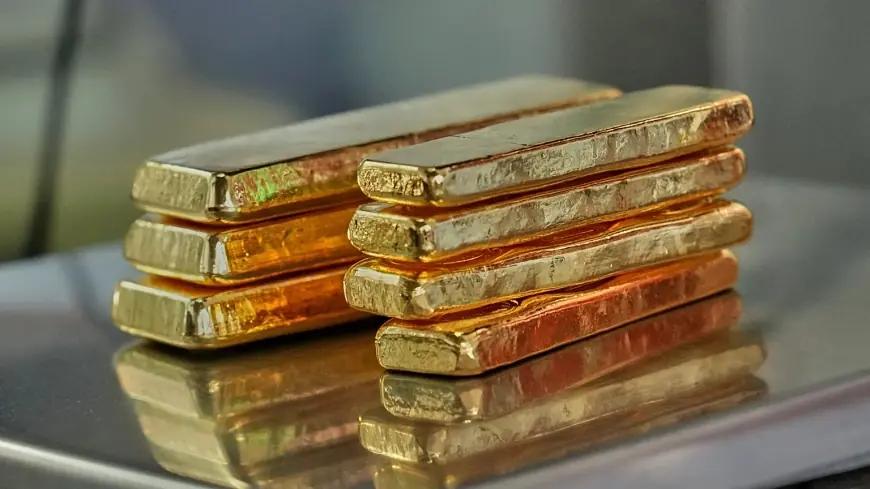
Gold price today is sharply lower after an abrupt reversal from record highs late last week, underscoring how even “safe-haven” assets can suffer violent swings when positioning gets crowded and leverage is forced out. As of early Sunday, February 1, 2026, spot gold in U.S. dollars was roughly in the high 4,800s per ounce, with pricing fluctuating around 4,890 per ounce. Futures pricing for the active gold contract was also sharply lower, sitting around the mid 4,700s per ounce after a steep one-day slide.
The headline move is not just the size of the drop. It is the speed. Gold’s surge to fresh peaks earlier in the week was driven by a classic cocktail of fear, inflation hedging, and currency skepticism. But the snapback has been driven by something less poetic and more mechanical: liquidity stress, margin pressure, and fast money trying to exit the same door at once.
What happened to gold price today
Gold entered the end of January with momentum and a strong narrative. Then, on Friday, January 30, 2026, the market suffered a sharp selloff from recent records, with spot prices falling from the mid 5,500s per ounce to the high 4,800s per ounce in a matter of hours. That kind of move is unusual for gold, which typically trades with lower day-to-day volatility than risk assets like equities or crypto.
By Saturday and into Sunday, the market remained jumpy. The price action suggested that the biggest driver was not a sudden change in gold’s long-term “why,” but a sudden change in the market’s ability to carry positions without more collateral.
Behind the headline: why gold can crash even when the long-term story is bullish
Gold is often treated as a hedge against uncertainty, but it still trades inside a financial system built on leverage and risk limits. When a trade becomes too popular, it can become fragile.
Key forces at work in this selloff include:
Crowded positioning meets a volatility spike
When many investors own the same “defensive” asset, the crowding itself becomes risk. If volatility rises, risk managers cut exposure, and the selling becomes self-reinforcing.
Margin and collateral pressure
After a shock move, futures markets often respond by requiring more collateral to hold positions. That forces some traders to sell, not because they want to, but because they must. The result can look like panic, even if the underlying economic outlook has not changed much.
Policy uncertainty hits the dollar narrative
Gold’s recent rally had a strong “currency skepticism” component. When investors suddenly believe the policy path could shift, or that central bank independence and future rate decisions might look different, the market can reprice quickly. Even if the long-term direction is unclear, uncertainty alone can trigger a rush to reduce risk.
Stakeholders: who gains and who gets hurt when gold moves like this
The winners in a volatility shock are usually the most liquid players: market-makers, short-term traders, and hedgers who were already positioned for turbulence. The losers are often late entrants and leveraged holders who used gold as a “safe” allocation but sized it like a low-volatility asset.
Retail buyers of physical gold face a different reality: the paper price can fall fast, while physical premiums and availability can lag. That can create a strange moment where headline prices say “crash,” but real-world buying demand increases because some buyers see it as a discount.
What we still don’t know
Even with clear mechanical pressures, several crucial questions are still open:
-
How much forced selling remains in the system, especially in leveraged derivatives
-
Whether the market stabilizes as collateral requirements and risk limits reset
-
Whether fresh buyers step in quickly, or stay cautious after such a violent reversal
-
Whether the macro backdrop turns more supportive for gold, or shifts toward higher real yields and a stronger dollar, both of which can weigh on bullion
Second-order effects to watch this week
Gold’s sudden downdraft can ripple into several corners of the market:
Mining shares and gold-linked funds
These vehicles often amplify moves in the metal. If gold stays volatile, funding flows into and out of these products can intensify the swings.
Silver and other precious metals
In stress events, silver tends to move more violently than gold. If gold remains unstable, silver can see exaggerated moves that reflect thinner liquidity.
Broader “safe haven” confidence
When a defensive asset drops hard, investors reassess what “protection” really means. That can shift capital toward cash-like instruments, short-duration bonds, or alternative hedges, depending on risk appetite.
What happens next: realistic scenarios with clear triggers
Stabilization and a relief bounce
Trigger: volatility cools, forced liquidations fade, and spot gold holds a key psychological level near 4,800 to 4,900 per ounce.
Choppy consolidation
Trigger: buyers and sellers both step back, producing wide intraday swings as the market recalibrates positioning.
Another downside leg
Trigger: renewed margin pressure, a sharp rise in real yields, or another macro shock that forces broad de-risking.
A fast recovery toward recent highs
Trigger: clear risk-off headlines return, the dollar weakens meaningfully, or investors treat the selloff as a liquidity event rather than a thesis break.
For now, gold price today is less about a single new fundamental revelation and more about how modern markets behave under stress. The metal’s long-term role as a hedge is still the core narrative for many investors, but the last few days are a reminder: in the short run, liquidity and leverage can overpower even the most established “safe haven” story.