

























China Advances Space Mining Technology with Major Breakthroughs

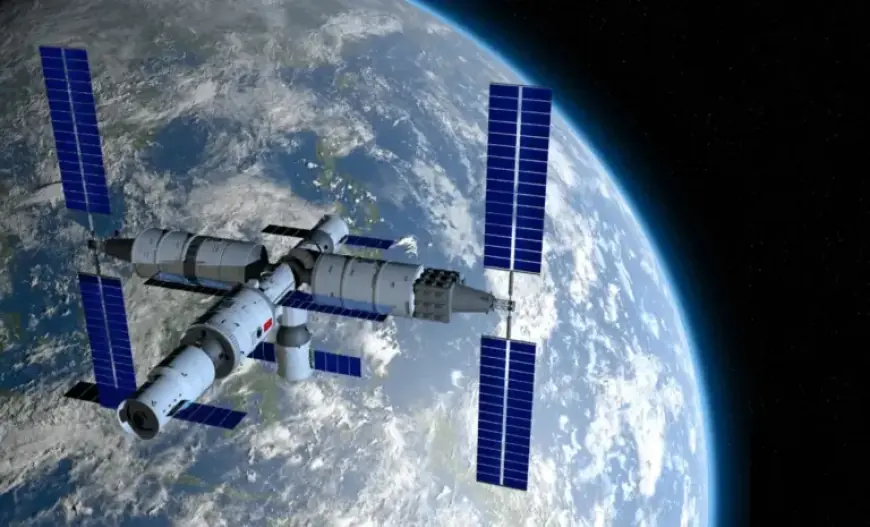
China is making significant strides in space mining technology. This initiative is part of the country’s broader commitment to explore and extract resources from asteroids and smaller celestial bodies.
China’s Ambitious Space Mining Vision
The China Aerospace Science and Technology Corporation (CASC) is at the forefront of this exploration. CASC’s goal is to advance the development of space resources, focusing on innovative technologies for surveying and extracting materials from asteroids.
Space mining carries immense potential, but it also presents challenges. Low gravity and unpredictable surfaces complicate traditional mining methods. To address these issues, researchers are placing emphasis on robotic technologies tailored for extreme environments.
Targeting Asteroids
Asteroids are rich in valuable resources such as platinum, gold, and other metals. Mining these celestial bodies could revolutionize industries on Earth, especially as terrestrial resources become scarcer. However, specialized robotic systems are essential for navigating the difficulties of low gravity and harsh conditions.
Innovative Robotics for Space Mining
A breakthrough in China’s space mining efforts comes from researchers at the China University of Mining and Technology. They have developed a unique robotic system designed to function in a weightless environment. This six-legged robot features three legs with claws for gripping asteroids and three wheeled legs for mobility.
- The claws provide a gripping force of up to 600 newtons, enabling stable operations on rugged surfaces.
- Wheeled legs enhance movement speed on smoother terrains.
- The robot is powered by electricity, with researchers exploring local energy sources for extended missions.
This combination of adaptability and power makes the robot crucial for overcoming the obstacles of space mining. It must collect and process materials in ways that conventional mining equipment cannot achieve in such settings.
The Importance of Space Resources
China’s exploration of space mining is not limited to technology. The economic implications are considerable. One notable target is helium-3, a rare isotope found in lunar soil. Helium-3 is considered a potential fuel for nuclear fusion reactors and could transform energy production on Earth.
In addition to helium-3, other metals like platinum and nickel are found abundantly in asteroids. Securing these resources could alleviate Earth’s increasing demand, especially as terrestrial supplies dwindle. If successful, space mining could reshape the global economy and potentially surpass traditional mining industries.
China’s Space Missions: Building Towards Mining Feasibility
China’s space mining efforts are aligned with a broader exploration agenda. In May 2025, the country launched the Tianwen-2 probe, its first asteroid exploration mission. The probe aims to reach the near-Earth asteroid 2016 HO3 to collect over 100 grams of samples for scientific analysis.
Following this mission, Tianwen-2 will explore a main-belt comet, 311P, over a seven-year journey. These missions are crucial for gaining insight into asteroids and developing technologies necessary for future mining activities.
As research and innovation continue, China’s commitment to space mining positions it as a leader in this emerging industry. The future of resource extraction in space holds exciting potential, possibly rivaling resources available on Earth.