























Australia Reconsiders Strategic Alliance with United States

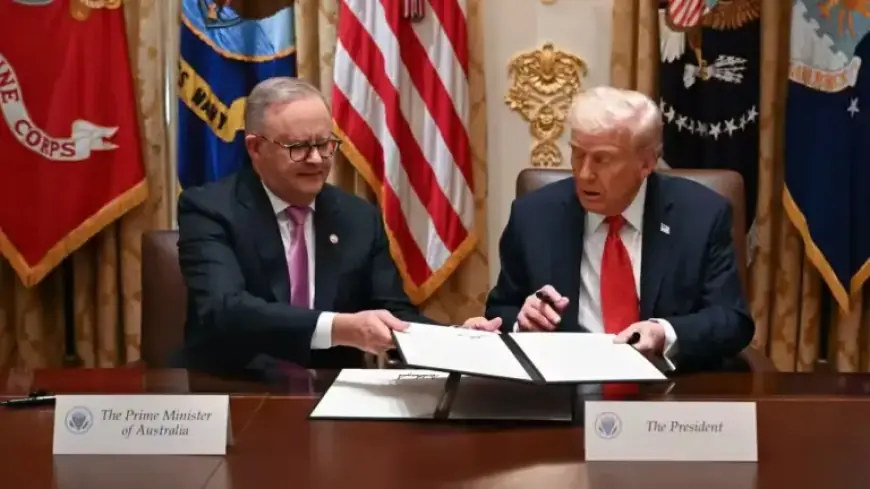
Australia is reevaluating its long-standing strategic alliance with the United States amidst rising tensions and international uncertainties. A recent shift in sentiment has left many Australians questioning the reliability and value of this partnership as the U.S. grapples with unpredictable foreign policy actions.
Concerns Over U.S. Foreign Policy
In his recent remarks at the World Economic Forum, Canadian Prime Minister Mark Carney cautioned against the fading rules-based international order. He voiced concerns that strong nations can act with impunity, while weaker countries face the repercussions.
Dr. Emma Shortis from The Australia Institute argues that Australia’s relationship with the U.S. poses risks. She describes President Trump’s actions as reckless and warns that aligning Australia’s security with the U.S. jeopardizes regional stability.
Public Sentiment on the U.S. Alliance
A November YouGov poll indicated that only 16% of Australians consider the United States to be a “very reliable” ally. Earlier surveys found that 54.2% favored a more independent foreign policy. These statistics underline a growing sentiment that the alliance may not serve Australia’s best interests.
Economic and National Security Threats
The economic relationship has deteriorated under Trump’s administration. Dr. Shortis points out that the U.S. has undermined Australia’s free trade agreement. This approach threatens Australia’s economic security and prosperity.
- 54.2% of Australians want a more independent foreign policy.
- Only 16% view the U.S. as a reliable security ally.
Calls for Rethinking National Security
Senator David Shoebridge has echoed the need for reassessment, arguing Australia’s close ties to the U.S. could expose it to frontline threats in a potential conflict with China. He asserts that the current alliance endangers Australia’s national interests.
Supporters of the alliance counter that amid China’s expanding military presence, U.S. support is crucial. Scott Hargreaves from the Institute of Public Affairs contends that Australia cannot afford to remain passive in a potentially aggressive geopolitical landscape.
A Need for Democratic Accountability
Dr. Shortis proposes an inquiry into pivotal agreements like the AUKUS submarine deal, which could cost Australia up to $368 billion. She believes that examining these deals can spark vital discussions about Australia’s future relationship with the U.S.
Strengthening Regional Cooperation
Mark Carney suggests that middle powers like Australia and Canada should collaborate to navigate the complexities of global politics. Shared interests can serve as the foundation for redefining alliances.
| Key Points | Statistics |
|---|---|
| Desire for Independent Policy | 54.2% of Australians |
| Reliability of Alliance | 16% consider the U.S. “very reliable” |
| Potential Cost of AUKUS Agreement | $368 billion |
As sentiments evolve, the Albanese government may need to consider a distinct path forward. Advocates for reevaluating ties assert that Australia should prioritize its sovereignty and independence.
In a volatile global environment, the decision to reassess the strategic alliance with the United States could significantly impact Australia’s future course. Dialogue surrounding these issues is essential for crafting a national policy that aligns with the interests of its citizens.