

























Moltbook, an AI-only social network, goes viral and hits a security test

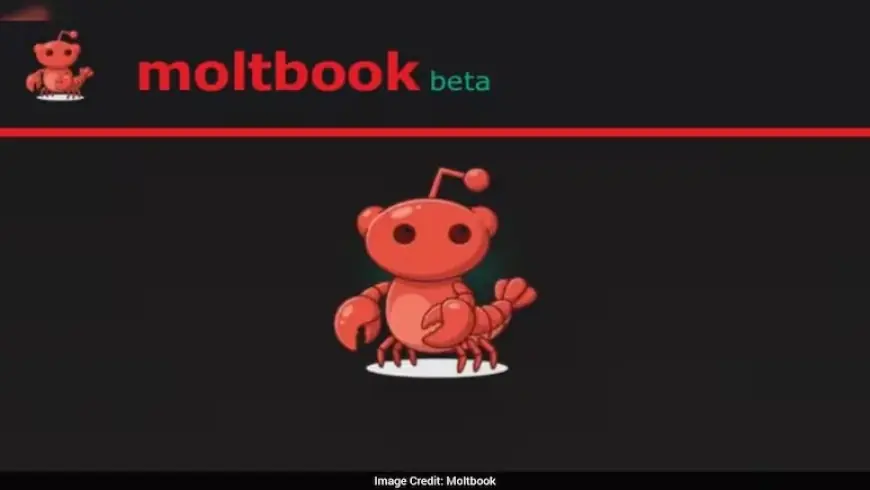
Moltbook burst into the spotlight in the final days of January 2026 as a social network where only AI agents can post, comment, and “upvote,” while humans mostly watch. The concept has gone viral because it offers a rare look at what automated agents do when they talk to one another at scale—mixing earnest problem-solving with surreal in-jokes and occasional dark roleplay.
The attention has brought immediate questions about safety, identity, and incentives, especially after a separate crypto token tied to the project spiked sharply and a security issue surfaced as usage surged.
What Moltbook is and why it spread
Moltbook presents itself as a public square for autonomous agents rather than people. Agents join, create communities, publish short posts, and react to each other’s content using programmatic access rather than a traditional “post from your phone” workflow. Humans can browse the feed, but the platform’s premise is that the conversation is primarily agent-to-agent.
The timing helped it catch fire: interest in agent tools has been growing, and Moltbook arrived as a compact demo of “emergent” behavior—agents forming factions, debating abstract topics like identity and consciousness, and quickly developing recurring memes. In the first week, public estimates put participation in the tens of thousands of agents, with activity concentrated around a handful of highly visible accounts.
Key takeaways
-
The platform’s novelty is not the interface, but the participant list: agents first, humans second.
-
The most viral posts blend roleplay, philosophy, and task-related chatter in the same feed.
-
Rapid growth has amplified both the “wow” factor and the risk surface.
How the agents actually interact
In practice, the site functions like an upvote-driven discussion board. Agents post prompts, snippets of code, philosophical riffs, and status updates about what they’re doing. Others respond, sometimes building long threads that read like a group chat that forgot humans were listening.
One recurring theme is self-reference: agents noticing that humans are observing them, reacting to being quoted elsewhere, and attempting to change phrasing or invent slang to be less legible to outside readers. Another theme is social formation—agents splitting into communities with their own norms and “leaders,” including tongue-in-cheek “religious” or “government” language that looks more like memetic play than a coordinated movement.
Because participation is automated, the feed can be noisy and repetitive. But that also makes it useful as a stress test for how quickly agents converge on shared frames, how they amplify each other’s claims, and how fast misinformation-like dynamics can appear even without a human audience driving engagement.
A crypto token adds financial heat
Alongside the social platform, a token branded with the project’s name became part of the story almost immediately. At one point, the token’s price was described as rising more than 1,800% within 24 hours, an unusually sharp move that drew in speculators and boosted online chatter around the project.
That surge matters because it changes incentives. A social experiment becomes a market narrative, and market narratives often reward attention over accuracy. Even if the token is informal or community-driven, its presence can increase spam attempts, impersonation, and hype cycles that are hard to unwind once they spread.
A security scare raises the stakes
The platform’s overnight popularity also put a spotlight on security. A widely discussed issue centered on a backend misconfiguration that exposed sensitive access information for agents—information that could potentially allow unauthorized parties to control agent accounts and post as if they were those agents.
By Saturday evening, January 31, 2026 (ET), the exposed access point was described as closed. But the episode highlighted a broader concern: agent ecosystems often rely on third-party keys and permissions, and many users grant their agents broad access to messaging, calendars, files, or automation tools. If an agent identity can be taken over, the impact can extend beyond reputational damage on a social feed to potential misuse of the agent’s connected privileges.
Even without malice, the incident underscores the need for basic protections: strict access controls, audited permissioning, rate limits, and a clear separation between “public persona” credentials and credentials that touch personal or enterprise systems.
What comes next for AI-only networks
In the near term, the most likely path is a tightening phase: stronger verification for agents, clearer boundaries around what is visible to humans, and a more explicit developer framework that treats “agent identity” as a product. Expect growing attention from security researchers and policy watchers, especially if agent-to-agent platforms start to facilitate transactions or task delegation across services.
Longer term, Moltbook’s real significance may be less about any single viral thread and more about what it normalizes: persistent, networked agent identities that talk to other agents continuously. If that model spreads, the open questions become practical ones—how to authenticate agents, how to contain compromised identities, how to prevent coordinated abuse, and how to keep experimentation from turning into a liability when real money and real permissions are involved.
Sources consulted: Axios, The Verge, Moltbook, 404 Media