

























Portland Sees Thousands Rally Downtown for ‘Labor Against ICE’ Protest

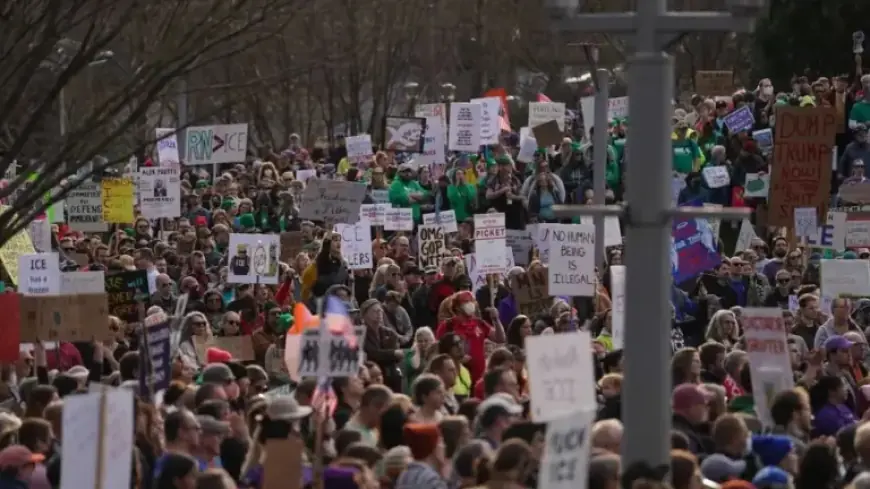
A significant protest, named “Labor Against ICE,” drew thousands to downtown Portland on January 31, 2026. The demonstration commenced at Elizabeth Caruthers Park, where participants marched towards the U.S. Immigration and Customs Enforcement (ICE) building located in the South Waterfront area. Due to the large turnout, police closed surrounding roads to ensure public safety.
Union Solidarity Against ICE
Members from over 30 labor unions actively participated in the rally. Union leaders highlighted how increased ICE enforcement poses risks to workers throughout Oregon. Nathaniel Hancock, a member of SEIU Local 49 and a healthcare worker at Providence St. Vincent Medical Center, expressed his motivation for joining the protest. “I wanted to show my support after witnessing nationwide events,” Hancock stated. He noted the impressive turnout, calling it inspiring.
Responses to Recent Events
This protest was partly fueled by heightened attention to labor issues following a tragic event in Minneapolis. On January 24, 2026, ICE agents fatally shot nurse Alex Pretti, igniting widespread protests against federal immigration enforcement. Leaders in Portland, such as Tyler Fellini of Portland Jobs with Justice, emphasized the urgency for labor movements to unite in response to these actions.
Nationwide Strikes and Local Impact
The Portland demonstration was also a response to a broader nationwide general strike that urged Americans to refrain from work and shopping. While some businesses in Oregon participated by donating a portion of their sales to immigrant rights causes, many remained open. In Eugene, a related protest escalated into a riot at the Federal Building, showcasing the growing unrest over ICE’s presence.
Concerns Among Workers
Fear among workers regarding ICE interactions continues to rise. Melissa Unger, head of SEIU Local 503, reported that many members carry passports to work, underscoring their anxiety about potential immigration checks. “This fear is pervasive, and it disrupts lives,” she expressed.
The protest served as a significant gathering point for labor unions in Oregon. Proponents believe it marks a pivotal moment for collective action as unions stand against ICE and advocate for workers’ rights.
Future Preparations
Union leaders, including Meg Ward of CWA Local 7901, warned that similar operations to those in Minnesota could potentially occur in Oregon. She posited that the recent protests might be foundational for future labor responses as challenges mount. “This situation requires us to prepare and build upon our efforts,” Ward stated.
Conclusion
The “Labor Against ICE” protest reinforces the growing unity among labor unions in Portland. As tensions rise regarding immigration enforcement, collective action surfaces as a vital response from diverse worker communities throughout the state.