
























Sabalenka vs Rybakina at Australian Open 2026 Ends With a Statement as Elena Rybakina Wins the Women’s Final in Three Sets

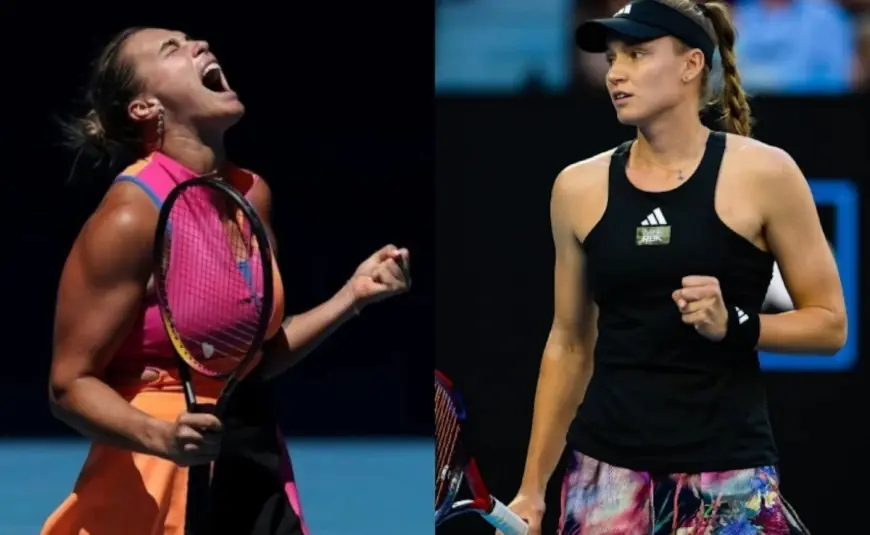
Australian Open delivered a heavyweight women’s final on Saturday, January 31, 2026 ET, and the matchup lived up to its billing: Elena Rybakina defeated Aryna Sabalenka 6-4, 4-6, 6-4 to lift the title after a tense, momentum-swinging contest that turned on a late comeback in the deciding set.
The result matters beyond the trophy. It reinforced this rivalry as one of the tour’s most consequential power matchups, and it signaled that the women’s game is entering a phase where the top seed no longer carries the psychological advantage against the handful of players who can match — and absorb — elite pace.
What happened in Sabalenka vs Rybakina
Rybakina took the first set by outlasting Sabalenka in baseline exchanges and winning key points on serve returns. Sabalenka responded in the second, raising her aggression and cleaning up the timing that can make her either unplayable or error-prone.
The third set became the hinge of the day: Rybakina trailed 0-3, then flipped the match by tightening her service games, forcing shorter exchanges, and converting critical breaks as Sabalenka’s margins thinned under pressure.
Behind the headline: why this final was really about pressure management
Context is everything here. Sabalenka entered the final as world No. 1 and a proven Australian Open champion, which brings a specific kind of burden: you’re expected to impose your game, not merely survive. Rybakina came in with a different incentive set — a chance to validate her status at the very top and turn a marquee rivalry into a dependable pathway to major titles.
Stakeholders extend far past the two players:
-
The WTA ecosystem benefits when rivalries feel repeatable and high-quality, not one-off upsets
-
Coaches and teams care about proving a repeatable blueprint under stadium-level stress
-
Tournament organizers care about star power and competitive credibility for prime-time finals
-
Sponsors and broadcasters care about narrative continuity: “these two again” is easier to market than “a surprise finalist”
What made this final sticky is that it wasn’t decided by a single hot streak. It was decided by who could keep serving patterns disciplined, who could reset after a momentum swing, and who could win the uncomfortable points where both players know the right shot — but only one can execute it at full speed.
Reviews, records, and what this says about the rivalry
This win gave Rybakina her first Australian Open title and added another major to her résumé, while also rewriting the emotional ledger of this matchup by turning a previous final result on its head
For Sabalenka, the loss is not an indictment of form so much as a warning about the costs of a narrow margin game in finals. When she’s even slightly late, slightly over-amped, or slightly too aggressive on second-serve looks, opponents with elite first-strike tennis can punish immediately — and the scoreboard moves fast.
Second-order effect: expect more players to study the “absorb then redirect” pattern that Rybakina used in the third set. If that becomes the common playbook against Sabalenka’s power, Sabalenka’s next evolution will be about controlled variety — not less aggression, but smarter aggression.
What we still don’t know
Even with a clear scoreline, several key questions will shape the next few months:
-
Whether this match changes their tactical priorities, or simply confirms what both already believed
-
How Sabalenka’s team responds — with technical tweaks, match scheduling changes, or a strategic reset
-
Whether Rybakina can sustain this level week to week, not just in majors
-
How the rankings race tightens as the season moves into spring hard courts and clay
Those missing pieces matter because a single major title can be a peak — or it can be the start of a consistent top-two dynamic.
What happens next: realistic scenarios and triggers
-
Rybakina consolidates into a year-long title threat
Trigger: maintaining serving efficiency and staying healthy through the next two months. -
Sabalenka rebounds quickly and turns the rivalry back
Trigger: improving third-set decision-making and reducing unforced errors on pressure points. -
The rivalry becomes the tour’s defining final pairing
Trigger: both continue to hold serve reliably and win tie-break-heavy matches that translate well in majors. -
A third contender interrupts the two-player storyline
Trigger: a rising player peaks at the right time or exploits matchup-specific edges on clay or grass. -
Tactical shifts reshape the rematch dynamic
Trigger: either player meaningfully changes return position, second-serve patterns, or rally tolerance.
Why it matters
Sabalenka vs Rybakina at Australian Open 2026 wasn’t just a final; it was a stress test for the modern power era in women’s tennis. The match showed that the difference between champion and runner-up can be three or four points — and that the player who wins those points is often the one who stays calm enough to play boring, correct tennis when everything in the moment screams for a knockout.
Rybakina left Melbourne with the title and a louder claim to the sport’s top tier. Sabalenka left with a familiar lesson of elite competition: being the favorite isn’t about playing your best tennis — it’s about playing your best tennis when the match is trying to take it away.