

























Epstein Files Released: DOJ Publishes Over 3 Million Pages in Major Jeffrey Epstein Document Dump as Searches Spike for Trump, Bill Gates, Prince Andrew, and More

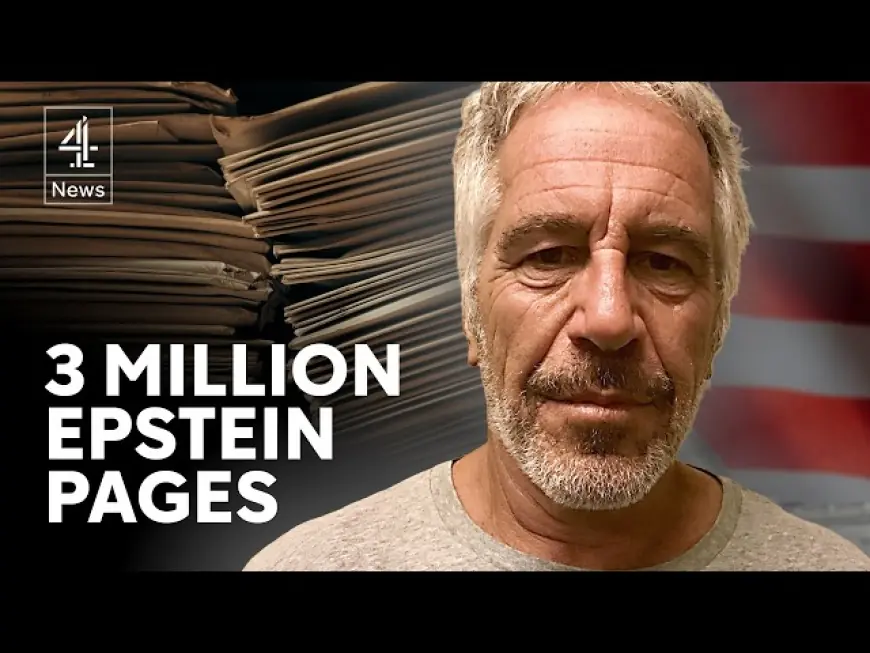
A massive new release of records tied to Jeffrey Epstein landed on Friday, January 30, 2026, when the U.S. Department of Justice published more than 3 million additional pages of investigative and case materials tied to Epstein and related matters. The disclosure also includes thousands of videos and a large cache of images, much of it redacted, and it immediately triggered a new wave of public scrutiny, political argument, and frantic name-searching across the internet.
The scale is the story: this is not a single “list,” but a sprawling production of paperwork and media gathered across years of investigations, prosecutions, and litigation. And because the release is so large, the first hours and days are likely to be dominated by incomplete reading, cherry-picked screenshots, and claims that race ahead of verification.
What happened with the new Epstein files release
The Justice Department says the newest publication adds more than 3 million pages, bringing the total produced under the current transparency law to roughly 3.5 million pages. The government describes the materials as a mix of documents and media connected to the Epstein investigations, with redactions intended to protect victims and sensitive information.
That combination—huge volume plus heavy redaction—creates an unavoidable tension. The public can now see more of what investigators collected, but some of the most actionable details are obscured, withheld, or difficult to interpret without context. As a result, “Epstein files released” quickly becomes a Rorschach test: different factions treat the same dump as proof of a cover-up, proof of a political hit, or proof that a reckoning is finally underway.
What are the Epstein files, exactly, and what they aren’t
The phrase “Epstein files” has become a catch-all. In practical terms, it refers to investigative records, court filings, warrants, contact information, travel and logistics documents, emails and scheduling fragments, and various seized materials gathered in criminal and civil matters connected to Jeffrey Epstein and his associate Ghislaine Maxwell.
Two points matter for readers trying to make sense of the noise:
-
A name appearing in files is not the same thing as evidence of wrongdoing. High-profile people can show up because investigators chased leads, reviewed contacts, or documented social relationships.
-
The absence of a name is not proof of innocence or proof of concealment. The release is curated through legal constraints, redactions, and the messy reality of what was collected.
This is also why searches like “epstein files pdf” surge: people want a single, searchable document that definitively answers who did what. The reality is closer to a library than a pamphlet—large, uneven, and easy to misread when excerpts are ripped from their surrounding pages.
Trump, Epstein, and the politics around “trump epstein files”
Donald Trump’s name has long been adjacent to Epstein-era reporting and public debate, and the newest release intensifies that attention. The political incentive structure is straightforward: opponents want association to equal guilt, supporters want association to equal fabrication, and both sides benefit from ambiguity because ambiguity keeps the story alive.
That helps explain the recurring bursts of “trump epstein news” and “trump epstein files” searches whenever new records are published. Even if no single new item is decisive, the release expands the universe of material that partisans can weaponize.
Bill Gates, Melinda Gates, Prince Andrew, and the broader reputational blast radius
Bill Gates and Melinda Gates remain central to public curiosity because the Gates–Epstein connection has been discussed for years and continues to raise questions about elite access, philanthropy networks, and reputational risk management. Prince Andrew, formally Andrew Mountbatten-Windsor, remains a focal point for obvious reasons: allegations tied to Epstein have already had major consequences for his public role and standing.
At the same time, the latest cycle shows how the internet works: people search any prominent name they’ve ever heard in the Epstein orbit—or even names with no confirmed connection—hoping to find a “smoking gun.” That’s why trend lists can include figures from entirely different worlds, from entertainment and music to business and sports: Jay-Z, Pusha T, Jamie Foxx, Mira Nair, Woody Allen, Harvey Weinstein, Robin Leach, Casey Wasserman, Josh Harris, Brian Vickers, Les Wexner, and Howard Lutnick. Some may appear as contacts, mentions, or contextual references; others may be pure rumor. In the early stages of a dump this big, it’s responsible to treat viral claim-chains as unconfirmed until the underlying pages are located and read in context.
Behind the headline: incentives, stakeholders, and what’s missing
The stakeholders are broad and often in conflict:
-
Survivors and their advocates want transparency that strengthens accountability without exposing private identities or retraumatizing victims.
-
Prosecutors and investigators must balance transparency with legal limits, privacy obligations, and protection of sensitive material.
-
Public figures named anywhere in the files face reputational exposure regardless of whether a mention is meaningful.
-
Politicians gain leverage by framing the release as either overdue transparency or a manipulated narrative.
The missing pieces are just as important as what was released. Key questions include how redactions were applied, whether victim privacy protections were consistently enforced, what categories of material were withheld entirely, and whether any ongoing investigations constrain what can be published now.
What happens next: realistic scenarios to watch
-
Verification phase accelerates: researchers and lawyers build indexes, cross-reference page numbers, and publish timelines that correct early misinformation.
-
Privacy backlash grows: if victims’ identifying details surface, pressure mounts for takedowns, stricter review, and possible new legal battles.
-
Political escalation: lawmakers push for additional disclosures or hearings, using the files as a proxy fight over institutions and credibility.
-
Targeted defamation disputes: high-profile individuals pursue legal remedies over false claims made from misread excerpts.
-
Narrow new prosecutions remain unlikely but not impossible: if truly novel, corroborated evidence emerges, pressure rises to explain why charges did or did not follow.
Why it matters beyond the headlines
The Epstein files release is not only about one dead financier and one imprisoned accomplice. It’s a stress test for how democratic societies handle transparency, elite accountability, and victim protection in the same breath. The next week will likely determine whether this dump becomes a serious evidentiary record that clarifies history—or another fuel source for viral misinformation that obscures it.