

























Gold Price Today tumbles from record highs as dollar jumps, volatility surges

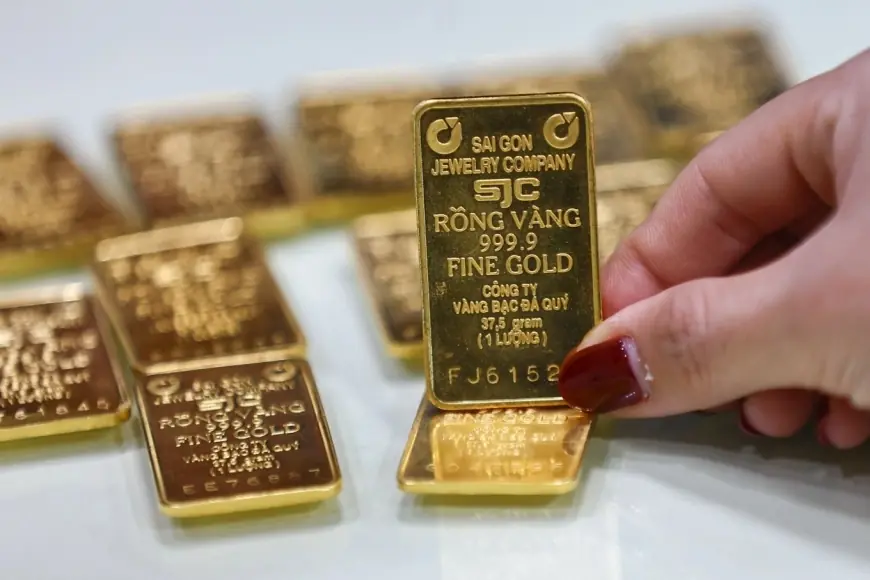
Gold Price Today was sharply lower in the latest trading session, snapping a blistering run that had pushed prices to fresh records earlier in the week. The slide matters because it was not a slow drift lower: it came in a fast, high-volatility reversal that rippled across other precious metals and forced traders to reprice “safe-haven” demand against a suddenly stronger U.S. dollar and shifting expectations for U.S. monetary policy.
With U.S. markets closed on Saturday, January 31, 2026, “today’s” reference for most investors is the Friday, January 30, 2026 close and late-session pricing in electronic trade, which remained volatile into the evening (all times ET).
Gold Price Today: Levels after the late-session plunge
Gold’s benchmark spot and futures references both posted outsized declines, with prices still far above year-ago levels but well off the week’s peak. Late-session electronic quotes and published closes showed a wide intraday range—an important signal that liquidity thinned and positioning was being reduced quickly.
| Reference | Latest level (USD/oz) | Prior close (USD/oz) | Session low–high (USD/oz) | Timestamp (ET) |
|---|---|---|---|---|
| Spot gold (XAU/USD) | ~4,890 | ~5,373 | ~4,680 – ~5,450 | Late Fri, Jan 30 |
| COMEX gold futures (most-active) | ~4,765 (close) | ~5,411 | ~4,703 – ~5,480 | Fri close, Jan 30 |
| COMEX gold futures (electronic “last”) | ~4,908 | — | — | 9:39 p.m., Jan 30 |
Note: The “close” and the late electronic “last” can differ because futures keep trading after the primary settlement window, while spot references update continuously.
What changed so fast in the narrative
The selloff coincided with a sharp turn in the macro backdrop that had helped fuel gold’s surge. Market focus shifted toward the U.S. dollar and the expected path of interest rates after news tied to the Federal Reserve leadership outlook sparked a broad “risk reset” across precious metals.
In practical terms, gold faced a double hit:
-
A stronger dollar makes dollar-priced commodities more expensive for non-U.S. buyers, often pressuring demand at the margin.
-
A change in rate expectations can alter the opportunity cost of holding non-yielding assets like gold, especially when moves happen quickly and leveraged positioning is involved.
The sheer size of the intraday swing—thousands of dollars from the week’s high to Friday’s low in some references—also suggested forced de-risking. When volatility spikes, margin requirements and risk limits can tighten, turning routine selling into a cascade.
Why gold didn’t fall alone
Gold’s reversal landed alongside even steeper drops in silver and other precious metals, reinforcing that this was not a single-market story. When multiple closely linked metals move violently in the same direction, it often points to a common driver: currency moves, rate repricing, and portfolio rebalancing, rather than a sudden change in jewelry demand or mine supply.
Gold also tends to anchor sentiment across the complex. When it breaks sharply, it can trigger mechanical selling in funds and strategies that treat precious metals as one risk bucket. That can amplify moves in thinner markets, which then feeds back into gold via cross-hedging and broad “reduce exposure” decisions.
What this means for physical buyers and long-term holders
For physical buyers, a large drop in spot prices does not always translate cleanly into what you see at a dealer counter. Premiums can widen when volatility surges, and some retailers may adjust prices less frequently during weekends. For long-term holders, the more relevant question is whether Friday’s plunge changes the medium-term drivers that pushed gold higher: currency trends, real yields, and demand for hedges during geopolitical or policy uncertainty.
Two practical implications stand out:
-
Timing matters more than usual. In a market swinging hundreds of dollars per ounce in hours, “the price” depends heavily on the timestamp.
-
Risk management is now part of the story. Even investors with a bullish view often scale entries and hedge more actively when daily ranges expand.
The next signals traders will watch
With the weekend pause limiting fresh price discovery, the next trading sessions will likely focus on observable indicators:
-
U.S. dollar direction early next week: If the dollar stays firm, gold can remain under pressure even if risk sentiment is mixed.
-
Volatility and liquidity: A calmer tape—narrower ranges, steadier bids—would be an early sign that forced selling has eased.
-
Key technical reference zones: Traders will watch whether gold stabilizes around late-Friday levels or revisits the week’s lows, which can shape positioning into the next batch of U.S. economic data and central-bank commentary.
If volatility remains elevated, sharp rebounds are possible without changing the broader trend; if liquidity improves and the dollar cools, gold could attempt to rebuild a base. Either way, the market has shifted from a smooth rally to a two-way, headline-sensitive trade.
Sources consulted: CME Group, Financial Times, Barron’s, Investopedia, Investing.com, Trading Economics