

























Michigan State vs Rutgers: Tom Izzo Escapes an Overtime Scare as Coen Carr Helps Spartans Hold Big Ten Pace

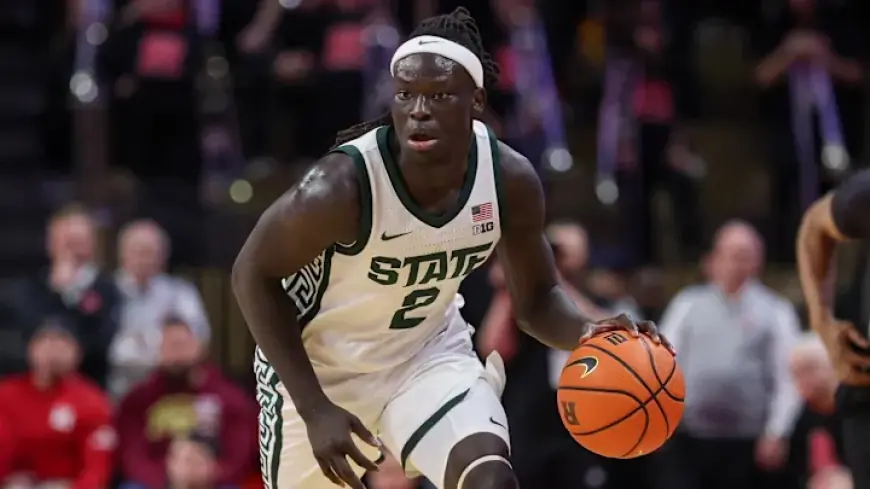
Michigan State’s latest win over Rutgers turned into a stress test that looked nothing like a comfortable ranking-era victory. On Tuesday, January 27, 2026 ET, the Spartans needed overtime to put away the Scarlet Knights, 88–79, after trailing for most of the night in Piscataway. The game has since become a reference point for two intertwined storylines: Michigan State’s ability to survive imperfect performances and Rutgers’ push to build around a young core that earned rare public praise from Tom Izzo.
Coen Carr’s production in the win mattered because it arrived in a game that demanded poise, not highlights. He finished with 13 points, providing scoring support as Michigan State stabilized late and finally flipped a game that Rutgers controlled for long stretches.
What happened in Michigan State vs Rutgers
Rutgers led for nearly 36 minutes of game time and carried an edge deep into regulation. Michigan State did not take its first lead after the opening minutes until overtime. The Scarlet Knights’ plan worked: pressure the ball, speed up decisions, and make the Spartans play from behind.
Michigan State’s response was the kind that travels in February and March. The Spartans hit a late tying shot in regulation, then opened overtime with enough composure to create separation and finish at the foul line. Izzo afterward framed the outcome bluntly, signaling he believed Rutgers was good enough to win it and that Michigan State was fortunate to escape.
Rutgers’ most glaring issue was the one that often decides close games against experienced teams: the final minutes. The Scarlet Knights went the last 4 minutes and 40 seconds of regulation without a field goal, turning a position of control into a scramble.
Coen Carr’s role and why it matters for Michigan State
Carr’s value is not just his box score. In games where Michigan State’s offense bogs down, he supplies a different kind of pressure: rim runs, transition lanes, and the ability to turn one defensive stop into quick points. In a matchup that repeatedly forced Michigan State to reset, any reliable secondary scoring becomes oxygen.
For Michigan State, that is the broader takeaway. The Spartans are winning while still showing seams. When the defense creates enough possessions, and when a player like Carr can turn chaos into points, the margin for error grows.
Tom Izzo, Rutgers, and the “stay together” message
Izzo used his postgame spotlight in an unusual way: he publicly praised Rutgers coach Steve Pikiell and urged Rutgers’ freshmen to stay together. That is not casual coach-speak. It is a signal that Izzo views Rutgers’ roster foundation as real and that he sees the current college landscape as fragile, where retention can be as important as recruiting.
The subtext is clear. Rutgers has enough talent to challenge top teams, but the program’s next step depends on keeping its core intact long enough to turn close losses into wins.
Where to watch Michigan State vs Rutgers
If you are looking to watch Michigan State vs Rutgers now, the live broadcast has already passed. The practical options tend to be:
A replay through your television provider’s on-demand library if you get the channel that carried the game
A replay or condensed version through the conference’s official digital platforms, typically requiring a cable login or a paid subscription add-on
A radio call through the schools’ official audio outlets, which is often easier to access than full video replays
For future Michigan State games, the fastest way to confirm the specific channel and streaming availability is to check the official game listing on the day of the matchup, since television assignments can shift.
Michigan basketball coach: why the Big Ten race keeps tightening
The Big Ten’s top tier is crowded enough that one overtime swing changes the tone of a week. Michigan, coached by Dusty May, has been part of the league’s front-running pack along with Michigan State, Illinois, and Nebraska. That context matters because Michigan State’s overtime survival is not just a single win; it is a pressure-release valve in a standings race that punishes slip-ups immediately.
Behind the headline: what’s really being fought over
Context: The Big Ten schedule now functions like a rolling elimination tournament. Two-minute droughts decide road games, and road games decide titles.
Incentives: Michigan State’s incentive is blunt. Keep stacking wins while depth, defense, and late-game execution mature. Rutgers’ incentive is structural. Prove the rebuild has traction and keep the roster together long enough to capitalize.
Stakeholders: Coaches are balancing development against nightly survival. Players are navigating performance pressure in an environment where every game is a résumé. Fans and donors are watching whether close losses become a pattern or a stepping stone.
Second-order effects: If Rutgers cannot convert games like this, it risks becoming a cautionary tale about “almost” teams. If Michigan State keeps surviving its sloppy nights, it builds the kind of confidence that turns tight games into expected wins later.
What happens next: realistic scenarios to watch
-
Michigan State sharpens late-game offense, reducing the need for overtime escapes
-
Rutgers uses the near-upset as proof of concept, especially if the freshmen core stays intact
-
Big Ten leaders trade wins in a compressed race where tiebreakers and road wins matter
-
Carr’s role expands in games where pace and athleticism are the difference
-
Rutgers’ next close game becomes a referendum on whether the late drought was an outlier or a trend
Michigan State vs Rutgers ended as a win for the Spartans, but the more revealing story is how it happened: Rutgers showed it can drag a contender into deep water, and Michigan State showed it can survive even when it is not at its best.