Trump accounts for kids draw corporate match pledges as launch nears

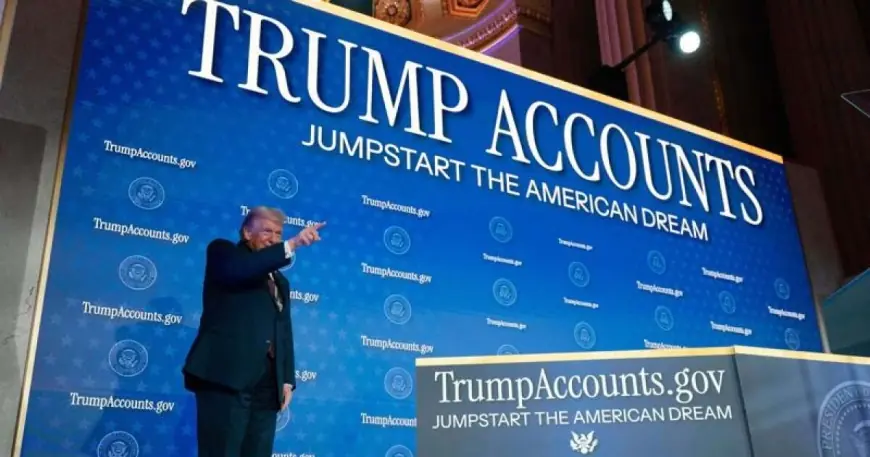
A new federal investing program branded Trump accounts is moving from policy pitch to rollout planning, with the Treasury Department preparing the mechanics for accounts that will start with $1,000 for eligible children and open for enrollment later this year. The initiative is also pulling in private-sector match commitments from major employers and financial firms, raising the stakes for how the government selects the companies that will hold and administer these accounts.
How Trump accounts work for kids
If you’re asking “what are trump accounts,” the government’s description is straightforward: they are tax-advantaged investment accounts for U.S. citizen children under 18, designed to build wealth over time by putting money to work in low-cost, broad-market investments.
Parents and guardians are likely to see the term trump account for kids (or trump accounts for kids) used interchangeably with “Trump Accounts” in official materials. Some online posts have also used the phrase trump baby account to describe the newborn-focused piece of the program.
Here’s the core structure currently outlined by federal guidance and recent administration messaging:
| Feature | What it means |
|---|---|
| Eligibility for $1,000 seed | Babies born Jan. 1, 2025–Dec. 31, 2028 (U.S. citizen with SSN) |
| Who can contribute | Parents/guardians, relatives, and in some cases employers |
| Investment approach | Broad, low-cost index-style options (details finalized during rollout) |
| When the child can use it | Funds generally restricted until age 18, then rules broaden |
The launch date being publicly promoted is July 4, 2026 (ET), tying the program’s start to the country’s 250th anniversary celebrations.
What “match” means and who’s doing it
One reason the program is gaining attention beyond Washington is the growing list of employers and financial companies pledging to match the federal seed money—often by offering an additional $1,000 for employees’ eligible children, or by supporting account contributions in other ways.
These pledges matter for two reasons:
-
they can effectively double the starting balance for some families, and
-
they may shape which firms become the default providers many households encounter first.
Not every “match” offer is identical. Some are framed as employee benefits; others look more like philanthropic add-ons or marketing-driven incentives. Families should read the fine print on eligibility (employee status, timing of birth/adoption, required enrollment steps, and whether the company’s contribution is automatic or requires opting in).
Which firms may run the accounts
Behind the scenes, the biggest open question is operational: which institutions will act as trustees/custodians for millions of new accounts.
Recent reporting indicates the government has considered Robinhood as a potential trustee, with the Treasury Department expected to choose up to three firms for the initial phase. A final decision has not been publicly confirmed, and the selection criteria have not been fully spelled out in a single, consumer-friendly document yet.
If multiple trustees are chosen, it could create a “default provider” landscape similar to other benefits systems—where families are routed into a platform unless they actively pick an alternative. That makes fees, investment menus, and user experience more than just technical details; they become key drivers of long-term outcomes.
What to know about trumpaccounts.gov and look-alikes
Searches for trump accounts.gov have surged alongside interest in enrollment. The official promotional portal currently circulating is trumpaccounts.gov, which presents basic program messaging and a “coming in 2026” posture.
Two important cautions:
-
The presence of a splash page does not necessarily mean enrollment is live or that every site using similar language is legitimate.
-
For official enrollment instructions and tax guidance, families should prioritize federal sources like the IRS and Treasury (and be cautious with third-party “sign up here” prompts circulating on social media).
If you’re looking up “trump account” details, make sure you’re seeing clear references to the federal program’s eligibility dates, the $1,000 Treasury seed for qualifying births, and the age-based access rules—those are the most consistent identifiers across official descriptions.
What happens next and what families should watch
Between now and July 4, the practical questions will define how useful the program becomes for typical households:
-
How automatic enrollment really is (or isn’t) when a child receives a Social Security number
-
How simple it is to contribute small amounts versus only large annual deposits
-
The final investment options and any guardrails on fees
-
Whether corporate matching is widely available or concentrated among large employers
For families trying to plan, the safest approach is to treat the program as real but still in implementation mode: the headline benefits are clear, but the user-facing steps—where to open, how to verify eligibility, and how matching works—will determine who actually gets the money and how effectively it grows.
Sources consulted: U.S. Department of the Treasury, Internal Revenue Service, White House, Reuters, Business Insider, CBS News