























Musk Revolutionizes Tesla by Replacing Cars with Walking Machines

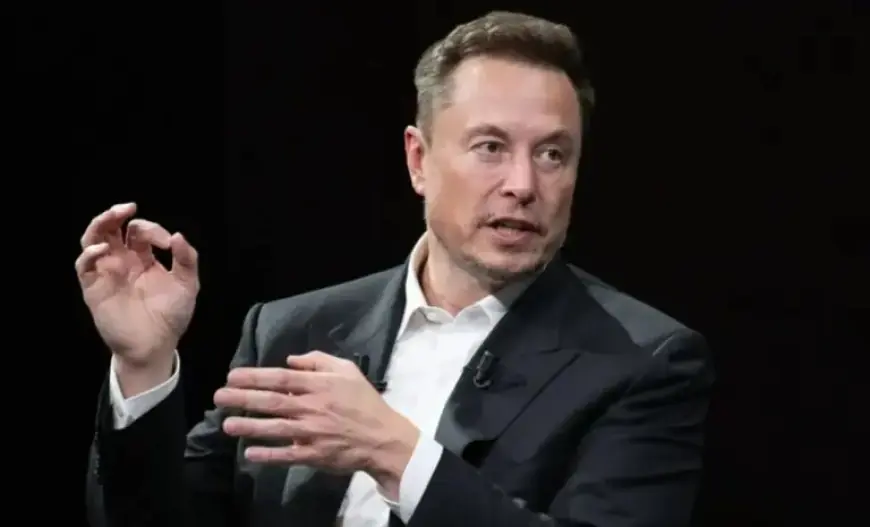
Tesla has announced a significant shift in its business strategy by discontinuing production of its oldest premium vehicles, the Model S and Model X. This decision was confirmed by CEO Elon Musk during the company’s Q4 2025 earnings call. The Fremont factory, previously dedicated to manufacturing these luxury electric vehicles, will be repurposed for producing humanoid robots.
Tesla’s New Focus: Humanoid Robots
The transition marks a major turning point for Tesla, as the company aims to transform into what Musk describes as a “physical AI company.” This new focus will prioritize automation, robotics, and autonomy over traditional automotive manufacturing. Musk announced that production of the Model S and Model X will officially end in the second quarter of 2026. He stated that it is time for these programs to receive an “honorable discharge.”
Background of the Model S and Model X
Introduced in 2012 and 2015, respectively, the Model S and Model X significantly contributed to Tesla’s rise in the automotive industry. These models established Tesla as a leader in electric mobility and supported its growth into the world’s most valuable automaker.
Declining Sales Figures
- As of 2025, Model S and X accounted for only 3% of Tesla’s total vehicle production.
- In 2025, Tesla’s automotive revenue saw an 11% drop compared to the previous year.
- Global vehicle deliveries fell by 16% in Q4 2025.
- Combined deliveries of Model S and X did not exceed 50,000 units, far below the factory’s capacity of 100,000.
Musk indicated that this decline in sales is partially due to reduced demand in Europe. With competitors like BYD surging ahead, surpassing its sales numbers, the shift away from luxury sedans is seen as a necessary pivot.
The Future: Optimus Robots
The Fremont factory will be redesigned to accommodate the mass production of Tesla’s Optimus robots. The goal is to produce one million units annually. Musk highlighted that this transition will create new jobs and require a complete overhaul of the current supply chain.
Investment in Robotics
- The first mass-produced version, referred to as Optimus 3, is expected in late 2026.
- Public sales of the Optimus are slated to begin in 2027.
- Tesla’s capital expenditures for 2026 are projected to exceed $20 billion, fueling various projects including new production lines.
- The company has invested $2 billion in Musk’s AI startup, xAI.
In summary, Tesla’s decision to pivot from Model S and X production to the development of humanoid robots illustrates its commitment to an autonomous future. Musk believes the company’s evolution from traditional automotive production to robotics is vital as they look ahead.