

























Microsoft stock slides after Microsoft earnings, as AI spending and Azure growth worry investors

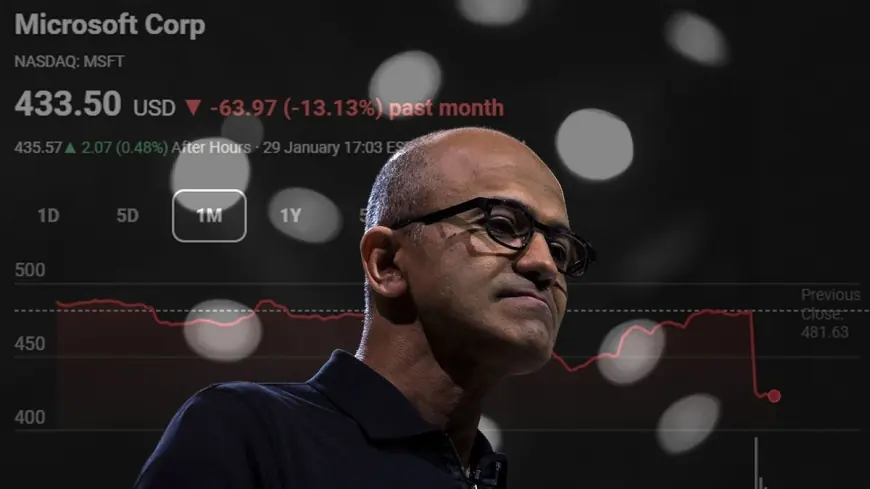
Microsoft stock extended its post-earnings selloff into Friday, with traders weighing strong headline profits against rising AI infrastructure costs and questions about the pace of Azure growth. The move has pushed “microsoft stock price” and “msft stock price” searches higher as investors try to answer a single question: why is microsoft stock down after what looked like a solid quarter on paper.
As of 11:34 a.m. ET on Friday, Jan. 30, 2026, MSFT was trading around $430.71, following a sharp drop the prior session after the company reported Microsoft earnings for fiscal Q2 2026.
| Snapshot | Level |
|---|---|
| MSFT stock price (11:34 a.m. ET, Jan. 30) | $430.71 |
| Prior close (Jan. 29) | $433.50 |
| One-day move (Jan. 29 vs prior close) | about -10% |
| Fiscal Q2 2026 revenue (quarter ended Dec. 31, 2025) | $81.3B |
| GAAP diluted EPS (fiscal Q2 2026) | $5.16 |
Microsoft earnings: beats, but the market wanted different answers
Microsoft reported fiscal second-quarter results after the market close on Wednesday, Jan. 28, 2026, followed by its conference call at 5:30 p.m. ET. Revenue rose to $81.3 billion, and GAAP diluted earnings per share came in at $5.16. Microsoft Cloud revenue crossed $50 billion for the quarter, and the company highlighted ongoing demand across its AI and cloud portfolio.
So why did microsoft stock earnings spark a selloff instead of a rally? The market reaction suggests investors were less focused on the quarter that just ended and more focused on what it will cost to deliver the next phase of growth—especially as Microsoft builds out data centers and AI capacity at a rapid pace.
What drove the post-report drop in MSFT
The immediate pressure on msft has centered on a few repeat themes voiced by analysts and traders after the report:
First, Azure growth came in strong in absolute terms but didn’t clear the informal bar many investors were leaning on. Microsoft said Azure and other cloud services grew about 38% in constant currency (39% reported). In a market that has priced Microsoft as a premier AI-and-cloud compounder, “good” growth can still disappoint if expectations were drifting toward 40%+.
Second, spending is rising fast. Investors reacted to signs that AI-related capital expenditures are climbing sharply, and that the payback period could stretch if cloud growth is constrained by supply (capacity) or if monetization lags demand.
Third, there’s concentration risk around big AI customers and partners. The market has increasingly treated OpenAI exposure as both a catalyst and a vulnerability: a driver of usage and backlog, but also a dependency that can amplify sentiment swings.
These forces combined into a classic “beat-and-raise isn’t enough” setup—where msft earnings were strong, but the story around costs and capacity dominated the tape.
OpenAI’s accounting impact adds noise
Microsoft’s quarterly release also underscored how OpenAI can move reported figures in ways that confuse quick comparisons. The company showed that fiscal Q2 2026 GAAP results included a sizable net gain tied to its OpenAI investments—about $7.6 billion of net income impact, or $1.02 of EPS—while its non-GAAP presentation backs that out to help investors see operational trends more clearly.
That doesn’t mean OpenAI is “the reason” the stock fell; it does mean the msft earning narrative can get muddled when headline GAAP numbers look unusually elevated by investment marks, even as the market is trying to judge the durability of Azure demand and the cost of serving it.
What to watch next for MSFT stock
The next catalyst is execution, not another headline. Investors will be watching:
Whether Azure growth re-accelerates as Microsoft adds capacity (and whether management signals fewer constraints).
How quickly AI infrastructure spending translates into higher-margin revenue rather than simply higher depreciation and operating costs.
Evidence of durable monetization in Microsoft’s AI products, alongside enterprise renewal activity across core cloud services.
In the near term, the path for msft stock will likely hinge on whether the market regains confidence that Microsoft can grow cloud revenue rapidly without letting the AI buildout compress returns for longer than expected.
Sources consulted: Microsoft Investor Relations; Microsoft Source (earnings release); Reuters; Investopedia; MarketWatch.