






















Gold price today slides after record run, but January still looks historic

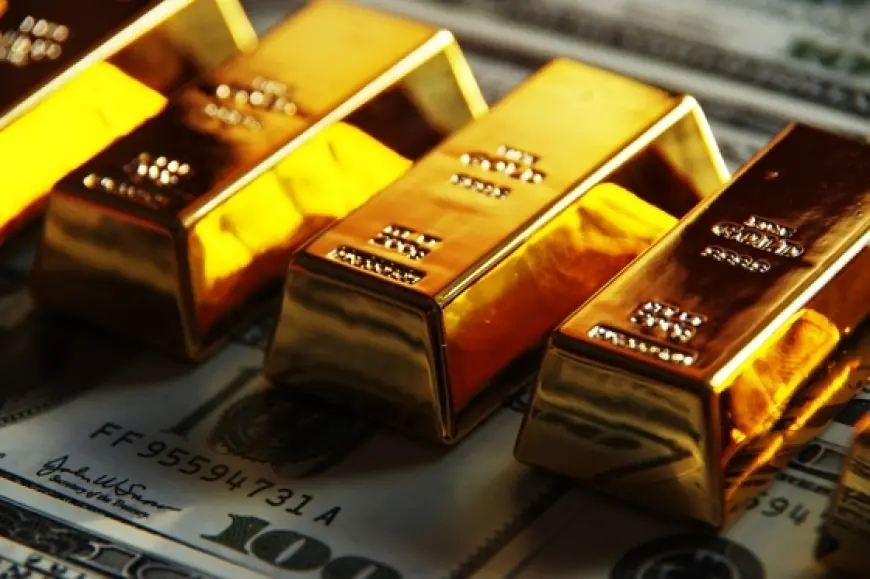
Gold price today pulled back sharply in overnight trade Friday, January 30, 2026 ET, retreating to around $5,180 an ounce after touching fresh records near $5,595 a day earlier. The drop — more than 4% at one point — has the feel of a classic “reset” after a blistering rally, with traders reacting to shifting expectations around U.S. monetary policy and a bounce in the dollar.
Even with Friday’s slide, the metal remains up more than 20% for January, keeping its best-month narrative intact while reminding investors how quickly momentum can reverse at record highs.
Gold price today: A fast pullback from a $5,500+ peak
The most striking feature of the move is the speed. Spot prices fell roughly 3.9% to about $5,183 per ounce after briefly dropping as much as 5% earlier in the session. U.S. gold futures also eased, trading near $5,176.
Here’s where key benchmarks sat during the latest swing:
| Market snapshot (Friday, Jan. 30, 2026 ET) | Level | Move |
|---|---|---|
| Spot gold | ~$5,183/oz | ~-3.9% |
| U.S. gold futures (near-term) | ~$5,176/oz | ~-2.7% |
| Record high (prior day) | ~$5,595/oz | — |
| January performance (month-to-date) | — | +20%+ |
Volatility has also spilled into the rest of the precious-metals complex, with big intraday ranges becoming routine after an extreme month.
What sparked the drop: Policy chatter, a firmer dollar, and “overbought” pressure
A stronger U.S. dollar was a near-term headwind. When the greenback firms, gold priced in dollars becomes more expensive for buyers using other currencies, often cooling demand at the margin.
At the same time, market speculation around the future path of Federal Reserve leadership and policy tone has been feeding two-way trade. The key issue isn’t a single headline — it’s the idea that rate-cut optimism may be less certain than it looked during the most aggressive leg of the rally. Even as pricing still leans toward cuts later in 2026, a perceived shift toward a more hawkish stance can quickly lift yields and support the dollar, both of which tend to weigh on non-yielding assets.
There’s also a plain mechanical factor: after a steep multi-week surge, the market was stretched. When prices go “overbought,” the next catalyst — even a modest change in sentiment — can trigger profit-taking, forced deleveraging, or both.
The bigger picture: January’s surge hasn’t vanished
Friday’s move reads like a correction inside a broader uptrend, at least so far. The metal is still tracking for its strongest monthly gain in decades, extending a streak of monthly advances.
That matters because large monthly moves tend to reshape investor behavior: they pull in momentum buyers, invite hedging activity, and encourage tactical traders to treat pullbacks as opportunities — until they don’t. The durability of this rally will depend on whether the fundamental supports remain in place: persistent demand for hedges, uncertainty around growth and inflation, and a credible path toward lower real rates later this year.
In other words, the pullback tests conviction. If buyers continue to show up on dips, the market may treat Friday as a volatility event, not a trend break.
Demand signals: Investment flows rise as traditional buyers step back
One reason gold has been able to sprint to repeated records is that demand has broadened beyond its traditional base. Investment appetite has been unusually strong, helped by renewed interest in bullion-linked vehicles and physical bars and coins.
At the same time, high prices have a cost. Jewelry demand typically softens when prices spike, especially in major consumer markets, because buyers either delay purchases or trade down in weight and purity. That shift doesn’t kill a rally by itself — but it changes who sets the marginal price.
There are also signs of strong cross-border movement in physical markets, alongside new and expanding investment products in major trading hubs. Those developments can amplify price moves when supply is tight and sentiment is hot.
What to watch next: Dollar direction, rates, and the psychology of repeats
The near-term roadmap is straightforward: watch the dollar, watch yields, and watch how the market behaves around recent breakout levels. If the dollar resumes weakening, it can re-open the door for another leg higher. If yields climb and the dollar holds firm, the pullback could deepen as traders reduce exposure after an outsized month.
Also watch the “repeat test” effect. After a record high, markets often revisit the scene: either they reclaim it quickly — rebuilding confidence — or they fail near the highs and invite a larger reset. Friday’s drop doesn’t decide that outcome on its own, but it does raise the bar for the next push higher.
For now, gold price today is telling two stories at once: a sudden recoil from extreme levels, and a month that still looks like a milestone for the modern market.