
























Government Shutdown Update: Senate Moves to Split DHS Funding as Friday Night Deadline Nears, With a Brief Lapse Still Possible

Washington is racing toward a late-week funding cliff after Senate leaders outlined a compromise designed to prevent a broad U.S. government shutdown while pushing the hardest fight into a shorter, sharper window. As of Thursday, January 29, 2026 ET, the emerging plan would fund most federal agencies through the end of the fiscal year while extending Department of Homeland Security funding for roughly two weeks, giving negotiators time to keep arguing over immigration enforcement rules without taking down the entire government.
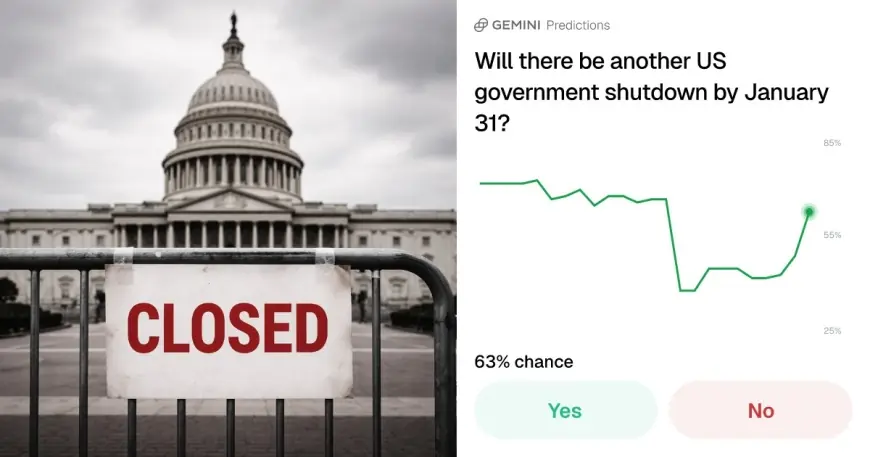
The shutdown risk is not gone. Current funding authority is set to expire Friday, January 30, 2026 ET, and even a deal in the Senate can still be derailed by clock management, procedural delays, and the simple fact that both chambers must pass the same path forward. If lawmakers miss the deadline, the country could see at least a short partial shutdown beginning Saturday, January 31 ET, even if everyone expects a quick fix afterward.
Government shutdown update: What changed in the Senate on Thursday
Earlier Thursday, a House-passed spending package hit a wall in the Senate when Democrats refused to provide the votes needed to clear a key procedural hurdle. The vote failed 45 to 55, far short of the 60 votes typically required to move major funding legislation forward.
That failed vote forced leadership to pivot quickly. The new approach is a two-track move:
-
Pass funding for the bulk of the government, covering roughly 96 percent of federal operations included in the non-DHS bills
-
Pass a short extension of DHS funding at current levels for about two weeks, creating time to negotiate policy guardrails and oversight demands tied to immigration enforcement
In practice, it is an attempt to shrink the battlefield. Instead of risking an all-agency shutdown over one flashpoint, leaders are trying to isolate the fight to DHS while keeping everything else running.
Why DHS is the sticking point
DHS has become the choke point because it sits at the intersection of budgets and enforcement tactics. Senate Democrats, led by Chuck Schumer, are pressing for changes to how federal immigration agents operate, including proposals that focus on accountability and visibility in the field.
The demands being discussed include measures such as:
-
Restrictions on face coverings during enforcement operations
-
Expanded body-camera requirements
-
Tighter warrant standards and clearer operational rules
-
Stronger oversight and reporting requirements
The political pressure driving those demands has intensified after recent fatal incidents connected to immigration enforcement activity in Minneapolis, which sharpened public scrutiny and turned DHS funding into a proxy fight over legitimacy, tactics, and control.
Why a shutdown could still happen even if a deal exists
Even when leadership agrees on the outline, shutdowns can happen because process moves slower than headlines.
Three friction points matter most right now:
-
The Senate must clear procedural steps that can consume hours even with cooperation
-
The House must act as well, and timing becomes everything when the deadline is Friday night ET
-
Any demand for changes, amendments, or separate votes can chew up the remaining runway
That’s why “brief shutdown” remains a realistic outcome: not necessarily because either side wants one, but because congressional mechanics can create a lapse before a final vote lands.
Behind the headline: incentives, stakeholders, and what’s really being negotiated
Context: This is not just a budget dispute. It is a fight over whether Congress can use a must-pass funding deadline to impose enforceable constraints on immigration operations.
Incentives: Democrats are using the deadline as leverage to force accountability language that would otherwise struggle to pass on its own. Republicans are resisting the precedent of rewriting enforcement policy inside last-minute appropriations. Leadership on both sides wants to avoid owning the political cost of a shutdown, but neither side wants to look like it caved on a defining issue.
Stakeholders: Federal workers and contractors face immediate uncertainty. Travelers and businesses watch for operational slowdowns and backlogs. Immigrant communities and advocacy groups see DHS language as the difference between oversight and impunity. Frontline personnel face heightened scrutiny and shifting rules that can change daily practice.
Missing pieces: The biggest unknown is what the two-week DHS window actually contains. Is it a simple time extension, or does it include binding policy language that changes operations immediately. Another unknown is whether the House will accept a split approach quickly or insist on keeping the original package intact.
Second-order effects: Even if a broad shutdown is avoided, isolating DHS sets up a new cliff in roughly two weeks. That can normalize repeated brinkmanship, create recurring disruptions in planning, and turn immigration policy into a standing hostage of the funding calendar.
What happens next: realistic scenarios with clear triggers
-
No shutdown, quick passage before Friday night ET
Trigger: both chambers vote rapidly on the split plan without amendment delays. -
Brief partial shutdown over the weekend
Trigger: the Senate acts, but the House cannot vote until after the deadline. -
Another Senate stall
Trigger: disagreement over DHS policy language reopens the 60-vote math problem. -
A two-week DHS patch becomes the next cliff
Trigger: lawmakers postpone the fight and return to the same confrontation on a shorter fuse.
For now, the clearest government shutdown update is that leaders are trying to save the wider government by separating the DHS fight. Whether that strategy works depends less on rhetoric and more on time: how fast Congress can move before Friday night ET, and whether compromise language is strong enough to win votes without detonating the coalition needed to pass it.