

























Collins Claims Credit for ICE Leaving Maine; Democrats React Swiftly.

Political dynamics in Maine became more intense as news broke that Immigration and Customs Enforcement (ICE) had withdrawn its operations in the state. This decision coincided with the U.S. Senate race, particularly as candidates maneuvered to influence public perception.
Collins Claims Credit for ICE’s Withdrawal
Senator Susan Collins, a Republican seeking re-election in November, asserted she played a crucial role in persuading ICE to halt its operations. Collins cited discussions with Kristi Noem, the Secretary of Homeland Security, and expressed appreciation for her willingness to consider recommendations.
Democratic Responses
- Graham Platner, a Democratic candidate, criticized Collins, stating she only received a “pinky promise” from the White House.
- Governor Janet Mills, another Democratic contender, accused Collins of failing to hold ICE accountable and instead supporting its funding.
On the day of Collins’s announcement, she voted in favor of a bill to fund the Department of Homeland Security, which oversees ICE. Mills expressed discontent, claiming Collins should leverage her position to demand accountability from the agency.
Local Protests Erupt
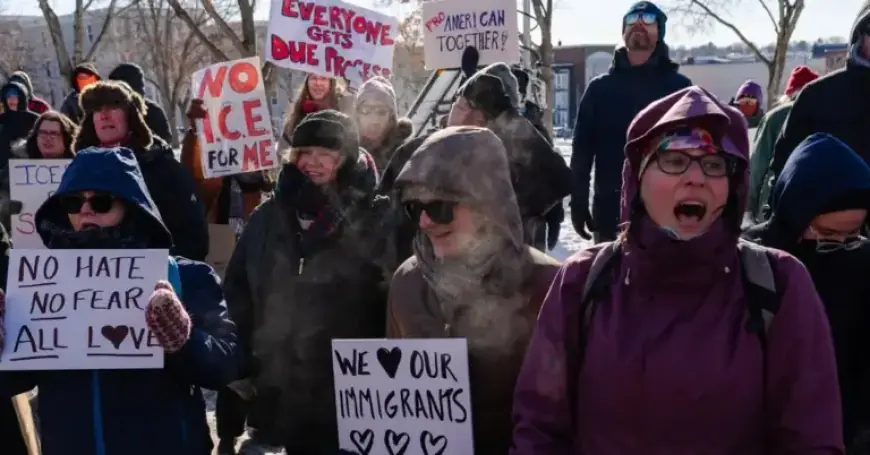
Protests erupted outside Collins’s offices in Portland and Bangor, with supporters demanding an end to increased ICE funding. Protesters shouted, “Not a penny more for ICE,” as temperatures dipped to 10 degrees.
Impact on Maine Communities
The news of ICE’s withdrawal was met with relief by immigrant communities, who had experienced fear and anxiety during the agency’s recent operations. Many reported incidents where ICE agents had pulled over vehicles and monitored apartment buildings.
In Southern Maine, where many residents lean Democratic, outrage over ICE’s presence overshadowed any support for enhanced immigration enforcement. Conversely, support for the Trump administration’s policies remains more prevalent in the rural northern regions.
Ongoing Consequences
Despite Collins’s statements, uncertainty remains regarding ICE’s future presence in Maine. Many advocates worry about the long-term effects of the 206 arrests made last week. Neighborhoods are facing increased fear, and businesses dependent on immigrant labor have been disrupted.
Educational Fallout
Schools across Portland saw a significant spike in absences, with over 1,000 out of 6,200 students missing classes. Local educational leaders noted the psychological impact on families and ongoing community challenges.
Involvement of Advocacy Groups
Advocates continue to push for support for affected families. Sue Roche, director of the Immigrant Legal Advocacy Project, emphasized the extensive recovery needed within these communities.
As the U.S. Senate race heats up, candidates like Collins, Mills, and Platner will continue to navigate the charged political landscape surrounding immigration enforcement in Maine. The responses and actions of these candidates will shape public perception as the election approaches.