
























US Oil Blockade Forces Havana to Ready for Conflict

As tensions escalate between the United States and Cuba, the island’s leadership is bracing for potential conflict. This situation arises from a looming blockade that threatens Cuba’s oil supply, a vital lifeline for its economy. The recent remarks from US Charge d’Affaires Mike Hammer indicate that the situation has reached a critical point.
US Oil Blockade and Its Fallout
Cuban officials commonly refer to the longstanding economic embargo as “the blockade.” According to Hammer, this blockade is becoming more severe, with a warning that “nothing is getting in,” and “no more oil is coming.” This resurgence in tensions echoes the levels of hostility observed during the Cuban Missile Crisis in the 1960s.
Impact on Cuba’s Energy Supply
The current crisis has been exacerbated by a US military operation in Venezuela that resulted in the deaths of 32 Cuban military personnel. Cuba has historically depended on Venezuela for over one-third of its oil needs. The disruption in oil shipments has led to pervasive blackouts and gas shortages throughout the island.
- Over 100 fatalities occurred during the US operation in Venezuela.
- Cuba relied heavily on Venezuela for 35% of its oil supply.
In the wake of these events, Cuban towns are experiencing widespread energy shortages. Reports indicate that blackouts now last longer than hours, encasing cities in darkness nightly. The situation has driven residents to seek alternative energy sources, including solar power and charcoal grills.
Reactions from US Officials
Amidst these developments, US officials are contemplating a full naval blockade, which would be the first since the 1962 crisis. Prominent figures such as Secretary of State Marco Rubio advocate for regime change in Cuba, viewing it as beneficial to US interests. He stated, “We would love to see a change” in the Cuban government.
Cuba’s Response
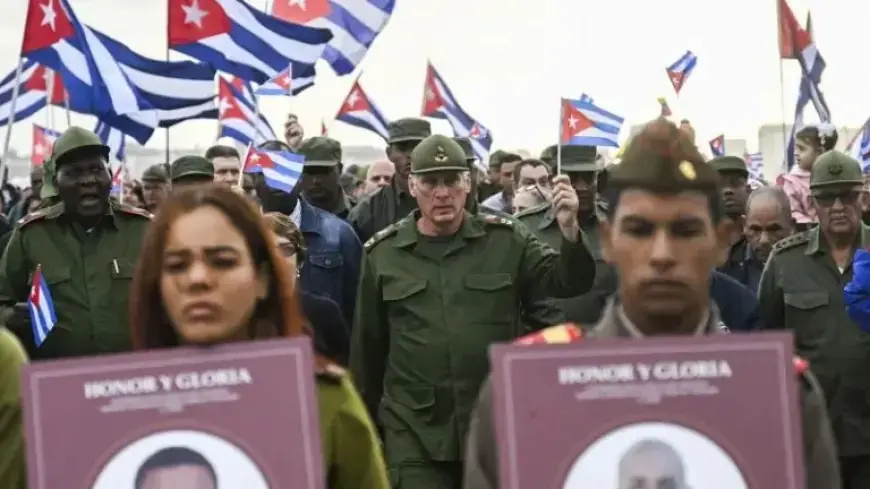
Cuban diplomats have condemned these threatening actions as “a brutal assault against a nation that doesn’t threaten the US.” The Cuban government is reportedly preparing its citizens for a possible military confrontation, suggesting a nationwide mobilization to resist any form of aggression.
- Public demonstrations of military readiness have been showcased in state media.
- Cuban President Miguel Diaz has emphasized the need for preparedness against potential invasions.
Residents are feeling the weight of these geopolitical tensions. Daily life is increasingly disrupted by lack of services, with many Cubans facing long lines for fuel. For example, some individuals have waited nearly a month to access gasoline.
Looking Ahead
The unfolding crisis raises urgent questions about Cuba’s future. With its economy already fragile, a complete cut-off of oil could lead to catastrophic consequences. Energy analyst Jorge Piñon warns, “If the oil valve is really shut off, then Cuba faces an imminent economic collapse.”
In the face of these challenges, the Cuban government maintains a stance of resilience. Citizens express a mix of fear and determination, indicating a willingness to confront whatever comes, even amidst rising uncertainties.