

























Is Nicki Minaj a U.S. Citizen? What’s Confirmed, What’s Not, and Why the Question Is Back

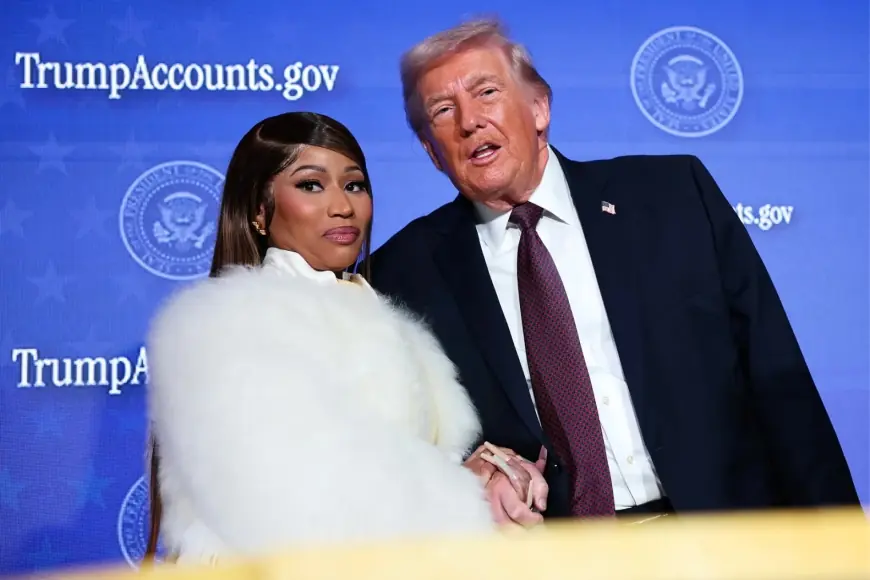
Is Nicki Minaj a U.S. citizen? The question surged again this week after the Trinidad-born superstar appeared at a Washington policy event with President Donald Trump and then posted a photo of what she called a Trump Gold Card, adding that she was “finalizing” her citizenship paperwork.
By Thursday, January 29, 2026 (ET), the renewed attention had turned a personal-status question into a wider conversation about immigration pathways, celebrity access, and what actually changes when someone moves from long-term residency to U.S. citizenship.
The moment that reignited the citizenship debate
Minaj’s latest comments came after she took the stage at a Trump Accounts summit-style event tied to a new federal initiative promoting investment accounts for children. Shortly after, she shared an image of a gold-colored card linked to the administration’s “Gold Card” immigration program and suggested it was connected to her immigration status.
In follow-up posts, Minaj indicated she was not just seeking residency but was actively working to complete citizenship paperwork. The White House also amplified the moment online, intensifying the public focus.
Some specifics have not been publicly clarified, including whether Minaj’s post reflected an already-completed step in the process or a claim about what she expects to happen next.
What Minaj has said publicly, and what remains unconfirmed
Two statements sit at the center of the public record as fans and critics parse her status.
First, in a livestream in 2024, Minaj said plainly that she was not a U.S. citizen, while describing how long she has lived in the country and how surprising she found that fact given her career and tax history.
Second, this week she stated she is “finalizing” citizenship paperwork. That language suggests she believes she is near the end of a process, but it does not, on its own, confirm that naturalization has been completed.
Further specifics were not immediately available about any formal documentation, such as a naturalization certificate, a public legal filing, or a direct confirmation from federal immigration authorities. Minaj’s representatives have not publicly released proof of citizenship in connection with the latest posts.
How U.S. citizenship typically works for long-term residents
The key point often missed in online debate is that residency and citizenship are not the same thing.
In general terms, a person becomes a U.S. citizen through naturalization after first holding lawful permanent resident status (often called having a green card). The standard route typically requires maintaining continuous residence for a set period, meeting physical-presence requirements, passing background checks, completing an application, and then taking an oath of allegiance at a formal ceremony. A program that offers a faster way to qualify for permanent residency can shorten the front end of the journey, but it does not automatically make someone a citizen.
That’s why Minaj’s “finalizing paperwork” phrasing matters: it implies a naturalization track, but the public can’t confirm whether she is describing paperwork leading up to an oath ceremony or a process that is already complete.
The Gold Card factor and why it’s fueling confusion
The administration’s “Gold Card” pitch has been described as a premium, expedited option for certain applicants to obtain lawful permanent resident status after fees, screening, and a vetting process. Program materials describe it as a residency pathway tied to an applicant’s claimed benefit to the United States, not an instant citizenship designation.
Online reaction has treated the Gold Card as either a shortcut to citizenship or a symbol of special access. The reality, based on how immigration status typically functions, is more procedural: even a fast track to residency still leaves multiple steps between residency and citizenship, and those steps are not optional.
Key terms have not been disclosed publicly about how exceptions, waivers, or discretionary decisions would work in individual Gold Card cases.
Who is affected, and what the next verifiable milestone looks like
The immediate impact falls on at least two groups.
First, immigrant communities and immigration applicants are watching closely because celebrity moments can distort expectations about timelines, costs, and eligibility. When a high-profile figure frames citizenship as something that can be “finalized” quickly, it can amplify misinformation for people whose cases involve years of paperwork and waiting.
Second, Minaj’s fan base is caught in the crossfire of politics and identity, with supporters defending her right to pursue status and critics questioning whether she is receiving preferential treatment. That tension can have practical consequences for public discourse, from harassment campaigns to broader polarization around immigration policy.
The next verifiable milestone is a concrete process event: a naturalization oath ceremony and the issuance of a Certificate of Naturalization, which is the standard proof that citizenship has been granted. Separate from Minaj’s personal status, another milestone to watch is formal federal guidance that further defines how the Gold Card program is administered, including eligibility criteria and the timeline for approvals.