






















Highguard Faces Online Backlash After Player Surge Collides With Technical Complaints

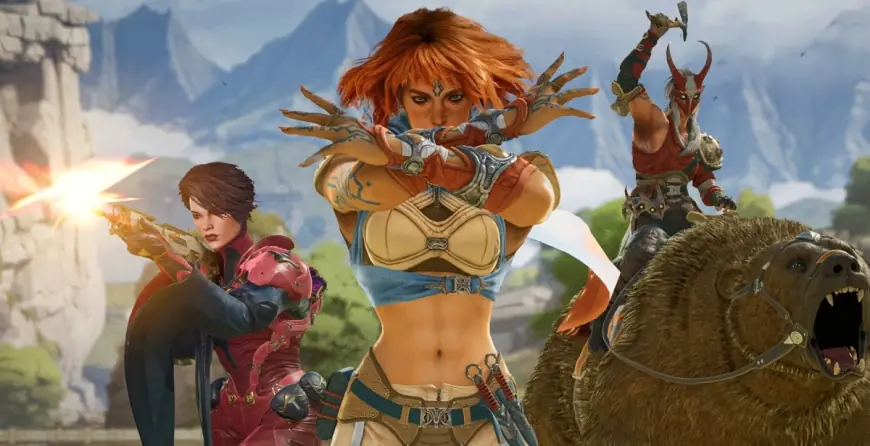
Kindly without source link, Highguard Faces Online Backlash as the free-to-play shooter’s launch-week momentum has been overtaken by a wave of angry posts, harsh user reviews, and a visibly shrinking player base. The game drew a massive audience on day one, but many early adopters say performance problems and stability issues made the debut feel unfinished.
Highguard launched on January 26, 2026, ET, and public player counters showed an all-time peak near 97,000 concurrent players that same day. Within roughly 24 hours, the visible live count dropped to the single-digit thousands, a sharp fall that helped supercharge the perception that the rollout went sideways.
A huge opening day, then a fast drop that shaped the narrative
The scale of Highguard’s first-day turnout is exactly what free-to-play launches aim for: get as many people in as possible, let the game’s core loop hook them, and convert that attention into a stable community. Instead, the conversation turned quickly toward whether the game could keep the audience it attracted, or whether curiosity was always going to outpace retention.
The user-review rating on the game’s main PC store page slid into “Mostly Negative” territory within hours, fueled by complaints about crashes, stuttering, and erratic match performance. Some negative posts also leaned into meme-style dogpiles, which can distort the signal around what players are actually experiencing in-game.
Further specifics were not immediately available about how many of the negative reviews came from players who spent meaningful time in matches versus those reacting to the broader online discourse.
What players are criticizing and what the studio has conceded
The most common critique is technical: players describe inconsistent frame pacing, hitching, and stability problems that interrupt competitive play. Beyond performance, people have argued about the feel of gunfights, time-to-kill balance, and whether the game’s maps and pacing fit its small-team format.
There has also been pushback around security tooling and how aggressive anti-cheat measures feel on some systems, alongside concerns about false positives and background resource use. The practical impact is straightforward: if a competitive shooter feels unreliable, even a fun idea can become hard to recommend.
Wildlight Entertainment, the studio behind Highguard, has acknowledged that its reveal marketing set expectations it did not meet. Its leadership has said the initial trailer should have focused more clearly on what makes the game distinct rather than trying primarily to entertain, a concession that has been widely shared across community threads.
Key terms have not been disclosed publicly about what benchmarks the studio used to determine the game was ready for release, including internal targets for performance, server stability, and matchmaking reliability.
Why live-service launches unravel so quickly
Highguard’s situation highlights a basic live-service reality: the first week functions like a public stress test, whether developers want it to or not. Free-to-play games in particular invite huge sampling, and that surge exposes server capacity, netcode edge cases, hardware compatibility gaps, and anti-cheat tuning issues all at once.
User reviews and social clips then create a feedback loop. Technical issues lead to negative posts, negative posts reduce newcomers, and reduced newcomers concentrate matchmaking among the most frustrated remaining players, which can worsen perceived match quality. When a studio pushes rapid hotfixes, the spiral can reverse, but only if updates measurably improve the moment-to-moment experience.
Who is affected and what happens next
Players are the first group impacted, especially those looking for a new competitive mainstay. Early instability forces them to choose between waiting for fixes or moving on before investing time in ranked progression, cosmetics, or team chemistry.
Developers are the second group hit hardest. A launch-week backlash can reshape the roadmap, pull staff into emergency patch work, and make it harder to rebuild trust even after real improvements land. Content creators and competitive organizers are also affected because they rely on stable matches and predictable updates to plan streams, events, and community growth.
Wildlight has already begun issuing early fixes aimed at crashes and game-breaking bugs, and it has signaled more substantial updates in the weeks ahead to address stability and gameplay tuning. The next verifiable milestone is the studio’s next scheduled patch release with full patch notes, which will be the clearest test of whether Highguard can turn the conversation from backlash to recovery.