

























ICE Harnesses Advanced Tools to Track Suspects and Protesters

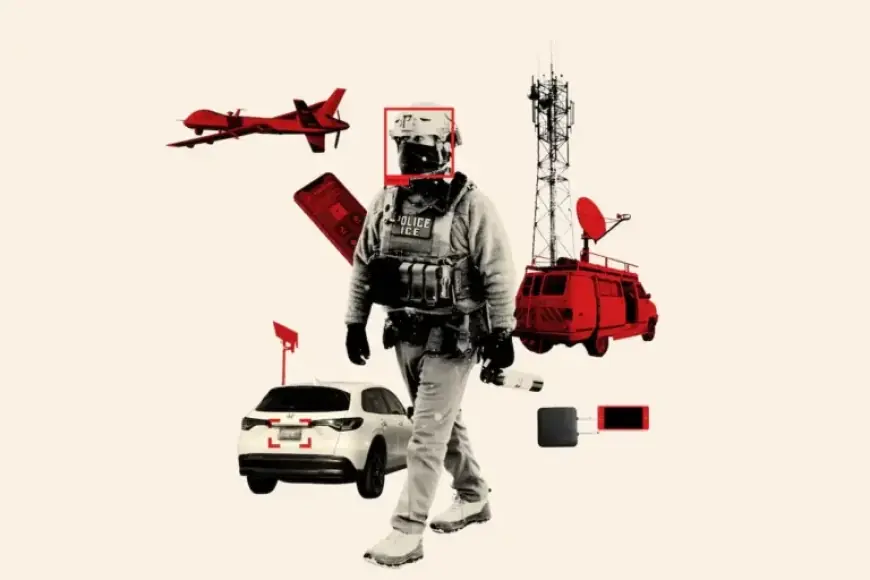
The Immigration and Customs Enforcement (ICE) agency has recently upgraded its surveillance capabilities. Equipped with advanced tools, federal officers are transforming the landscape of immigration enforcement across the United States. This shift follows a legislative change, which boosted ICE’s funding, making it one of the most financially empowered law enforcement agencies in the nation.
New Surveillance Technologies in Use
ICE is utilizing high-tech methods to enhance its deportation efforts. These include:
- Biometric trackers
- Cellphone location databases
- Drones
- Facial recognition software
Among the implications of these technologies is the agency’s move to monitor anti-ICE protests and potentially infringe on the privacy rights of U.S. citizens. Recent discussions within the agency reveal an expansion of the use of facial recognition and artificial intelligence for identifying individuals and monitoring gatherings.
Facial Recognition Tools
ICE has incorporated facial recognition technology through applications such as NEC’s Mobile Fortify. This software allows ICE agents to directly compare faces scanned in the field with a database containing immigration information. A notable purchase was an iris-scanning app from BI2 Technologies, which can identify individuals from a distance.
While these technologies have raised concerns regarding civil liberties, ICE maintains that such implementations are crucial for security. The agency’s use of tools like Clearview AI, which relies on publicly available images to assist law enforcement, has stirred debate about privacy violations.
License Plate Readers
ICE has also enhanced its surveillance through license plate readers sourced from Motorola Solutions and Thomson Reuters. These systems allow for detailed tracking of vehicle movements. ICE can access vast databases that provide insights into vehicle histories and locations, facilitating investigations efficiently.
ICE’s strategies have sometimes drawn public scrutiny, especially regarding the agency’s indirect access to data obtained through local police departments.
Cellphone Location Tracking
Another area of surveillance concerns cellphone location tracking. ICE employs cell-site simulators, known as Stingrays, to identify the location of mobile phones by imitating cell towers. Although the agency claims adherence to legal restrictions, reports indicate that warrant requirements are occasionally bypassed.
Furthermore, ICE has tapped into commercial databases to obtain cellphone location data again, indicating a return to practices previously curtailed.
Digital Forensics Capabilities
ICE’s arsenal includes powerful digital forensics tools capable of accessing locked smartphones and retrieving deleted data. Companies like Cellebrite and Paragon Solutions provide these tools, which have traditionally focused on serious crimes but are now being used for immigration enforcement.
The Role of Drones
Lastly, drones have become integral to ICE’s surveillance methods. The agency has invested in small drones like the Skydio X10D, known for its advanced surveillance capabilities, such as night vision. Drones are increasingly used to monitor public gatherings, raising further concerns about privacy rights.
These developments highlight a growing trend towards more invasive surveillance practices in immigration enforcement, igniting discussions about the implications for civil rights.
As technology continues to advance, the balance between security and individual privacy remains a contentious issue within the realm of federal law enforcement.