






















Craig Berube’s Head Injury: Maple Leafs Coach Shrugs Off “Bad” Gym Accident, Coaches Through Black Eye and Nearly 50 Stitches

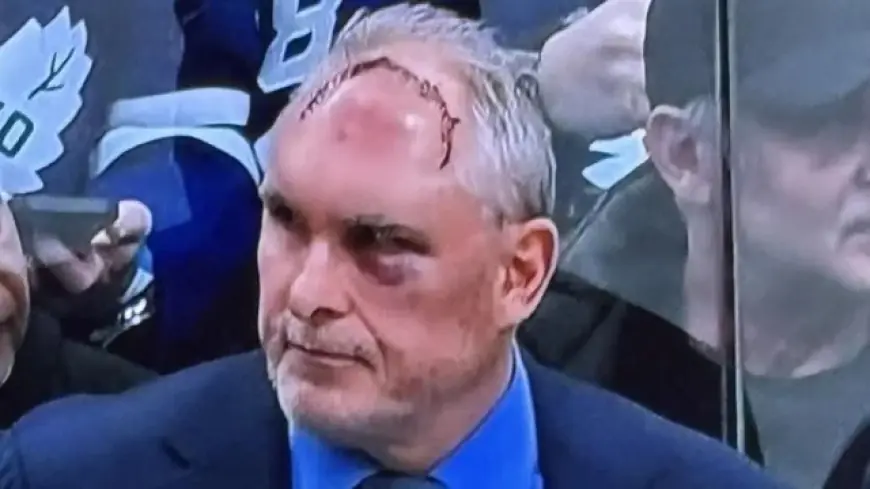
Toronto Maple Leafs head coach Craig Berube is coaching through a conspicuous head injury after what he described as a “bad accident” in the gym, leaving him with a large cut across his scalp and a bruised eye that quickly became unavoidable in every on-camera moment around the team.
Berube, 60, first appeared publicly with the injury at the Maple Leafs’ morning skate on Friday, January 23, 2026 ET, wearing a cap and sporting a swollen, darkened eye alongside a stitched-up gash. He repeatedly emphasized that he was fine, called the mishap “stupid,” and said it was his fault. He also tried to defuse the attention with humor, joking that “the other guy looks way worse” and quipping that “there were three of them,” while making clear there was no altercation.
What Happened: The Known Timeline So Far
The clearest confirmed outline is straightforward:
-
Thursday, January 22, 2026 ET: Berube sustained the injury in a gym accident.
-
Friday, January 23, 2026 ET: He addressed it at morning skate, showing a bruised eye and a stitched scalp wound, and said he would coach that night.
-
Saturday, January 24, 2026 ET: Berube later indicated the cut required close to 50 stitches, while still declining to share specifics on how it happened.
-
By the middle of the following week: Berube was still visibly marked up, with the bruising around his eyes more pronounced as the healing progressed.
That last part is medically unsurprising even without additional details: bruising from facial or scalp injuries can spread and darken over days as swelling shifts and blood settles under the skin, which can make the injury look worse before it looks better.
Why Berube Stayed Vague About Details
Berube’s refusal to describe the exact mechanism is notable mostly because it is consistent with how teams handle anything that could trigger deeper questions about health, safety, and risk. Even when an injury is non-hockey related, a head wound invites a predictable line of follow-ups: Was there a loss of consciousness, was there a concussion evaluation, are there symptoms, and will it affect duties?
By keeping it at “gym accident” and “I’m fine,” Berube controlled the story’s scope. In a market that can turn any detail into a week-long referendum on leadership and toughness, vagueness is often a deliberate protective move rather than evasiveness.
The Practical Impact: Coaching Optics vs Coaching Function
A coach’s injury rarely changes tactical preparation. What it changes is the emotional temperature around a team.
Berube’s brand is hard-nosed, direct, and demanding. A stitched forehead and black eye accidentally reinforce that persona, especially when paired with the choice to show up, answer questions, and coach on schedule. It becomes a visual symbol of grit, whether anyone asked for the symbolism or not.
At the same time, the optics can become a distraction for players, staff, and the organization. The more the storyline lingers, the more every press conference starts with the injury instead of systems, matchups, or lineup choices. Berube’s humor was, in part, an attempt to cut that cycle off early.
Behind the Headline: Incentives, Stakeholders, and What We Still Don’t Know
Context: The Maple Leafs operate under constant scrutiny, and coaching narratives in Toronto are rarely neutral. Any unusual event becomes a stress test of messaging discipline and team focus.
Incentives:
-
Berube has a strong incentive to project normalcy. Head coaches set the tone, and any hint of uncertainty can ripple through a room.
-
The team has incentives to keep the conversation on performance and results, not a coach’s stitches.
-
The broader hockey ecosystem has incentives to mythologize toughness, which can encourage “play through it” stories even when caution might be wiser.
Stakeholders:
-
Berube and his family, first and foremost, because a head injury is a health event before it is a storyline.
-
Players and assistant coaches, who may be asked to “answer for” the situation in media settings.
-
Team medical and performance staff, who balance privacy with public visibility in a high-profile environment.
-
Fans and sponsors, who are sensitive to optics around safety and professionalism.
Missing pieces:
-
The exact cause of the accident remains undisclosed.
-
There has been no detailed public accounting of any symptoms beyond the visible cut and bruising.
-
It is not clear whether the organization will treat this as a one-off mishap or use it to reinforce internal safety protocols for staff.
Second-order effects:
-
The story can normalize risk-taking behavior around training and daily routines, especially in a culture that already romanticizes “toughing it out.”
-
It can also prompt quieter internal changes, like safer facility practices, different training habits, or more conservative approaches to nonessential risks during the season.
What Happens Next: Realistic Scenarios and Triggers
-
The story fades quickly if Berube’s appearance improves over the next one to two weeks and there are no reported symptoms that affect his routine.
-
The story resurfaces if bruising worsens temporarily and sparks renewed speculation, especially after a tough loss or tense media moment.
-
A brief step-back from media availability happens if swelling or discomfort makes daily press duties impractical, with assistants handling some sessions.
-
The organization tightens internal training and facility practices if the accident involved a preventable hazard, even if no details are ever made public.
-
The narrative flips from novelty to caution if any signs of lingering effects emerge, shifting the conversation from toughness to health management.
For now, the message from Berube is simple and consistent: it looked worse than it felt, it was a gym accident, and it was not stopping him from coaching. The stitches and black eye made it headline-worthy, but the next phase of the story is mostly mundane—healing, bruising that changes day to day, and the steady work of trying to keep a team’s focus on hockey rather than the cut on its coach’s forehead.