

























Chinese Ambassador Signals Retaliation Over Port of Darwin Issue

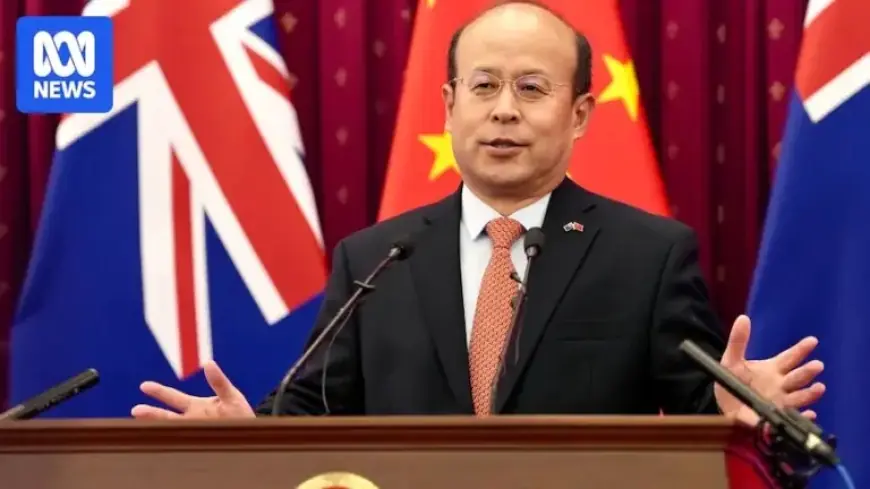
China’s ambassador to Australia, Xiao Qian, has expressed concerns regarding the Australian government’s intention to revoke the Port of Darwin’s lease from the Chinese company Landbridge. This issue has stirred significant diplomatic tension.
Background of the Port of Darwin Lease
Landbridge obtained a 99-year lease of the Port of Darwin in 2015 for $506 million. The decision raised alarms internationally, particularly in the United States, as it was seen as a strategic move by China. In recent developments, both Prime Minister Anthony Albanese and the opposition Coalition have pledged to terminate this lease at the upcoming federal election in 2025.
Chinese Concerns Over the Lease Reversal
During a press conference, Ambassador Xiao questioned the ethics behind Australia’s push to reclaim the port now that it has become profitable. He pointed out that the significant profit of $9.6 million recorded last financial year starkly contrasts with the previous year’s $37 million loss.
- 2023 Financial Year Profit: $9.6 million
- 2022 Financial Year Loss: $37 million
Xiao indicated that the timing of the Australian government’s decision raises ethical questions, suggesting it reflects poorly on Australia’s business values. “When it was losing money, the government was willing to lease it. Now that it’s profitable, they wish to reclaim it,” he stated.
Potential Economic Impact
The ambassador emphasized that reversing the port’s ownership could deter future Chinese investments in Australia. He argued that Landbridge’s presence has stimulated investments by numerous Chinese firms in the region. Xiao warned that any aggressive move to take control of the port would compel China to protect its interests, potentially leading to economic repercussions for Australia.
China’s Military Activity and Diplomatic Relations
In a related context, Xiao addressed recent Chinese military exercises around Australia, asserting that these actions were not threats. He clarified that while a Chinese naval task group conducted live-fire drills approximately 300 nautical miles southeast of Sydney, such exercises should not be interpreted as hostile actions aimed at Australia.
Australia’s Stance
Prime Minister Albanese reiterated Australia’s intention to reclaim control of the Port of Darwin, asserting it is crucial for national interests. He indicated that despite the concerns raised by China, the government’s decision remains steadfast.
China-Taiwan Relations
Xiao also touched upon the sensitive issue of Taiwan, reiterating China’s position on reunification. He stressed there is “no room for compromise” regarding Taiwan’s status, given its historical ties to China. This statement underlines the ongoing complexities in diplomatic relations between Australia, the United States, and China.
In conclusion, the situation surrounding the Port of Darwin and associated diplomatic tensions reflects broader geopolitical challenges. The stakes are high, given the implications for international investments and regional security dynamics.