

























Free Bert Turns Bert Kreischer’s Loudest Persona Into a Scripted Family Comedy as Viewers Zero In on the Cast and the Real-Life Kreischers

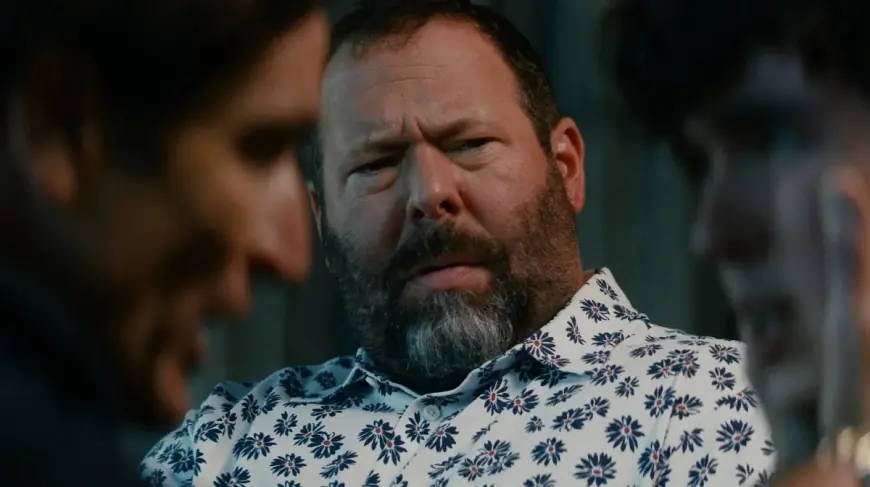
“Free Bert” has landed as Bert Kreischer’s biggest leap from stand-up mythmaking into scripted television: a short, bingeable season that takes his shirtless, hard-partying stage identity and forces it into the one environment where that persona collapses fastest—elite private-school culture in Beverly Hills. The series debuted on Thursday, January 22, 2026 (ET) with six episodes available immediately, leaning into the current “watch-it-all-now” model that makes audience verdicts arrive fast and loud.
At the center is a familiar Kreischer tension: he plays himself, but the show isn’t a documentary. It’s a heightened, fictionalized version of the “Bert problem”—what happens when a man who’s built a career on being the chaotic fun uncle tries to become the responsible dad his family needs.
Free Bert cast: who plays who
The core cast is designed to mirror Kreischer’s public life while keeping the story firmly in sitcom territory:
-
Bert Kreischer as Bert, a stand-up comic trying (and failing) to “tone it down” for his family
-
Arden Myrin as LeeAnn, Bert’s wife, who often functions as the adult in the room and the reality check
-
Ava Ryan as Georgia, the older daughter navigating status, social rules, and the brutal politics of a new school
-
Lilou Lang as Ila, the younger daughter with her own orbit of chaos and vulnerability
Supporting roles deepen the “Beverly Hills pressure cooker” setup:
-
Christine Horn as Headmaster Rossmyre
-
Chris Witaske as Landon Vanderthal
-
Mandell Maughan as Chanel Vanderthal
-
Additional recurring characters expand the school ecosystem—other parents, staff, and kids who treat Bert like a walking liability.
Bert Kreischer family: what’s real, what’s borrowed, and what’s clearly fiction
The show borrows names and the headline dynamic—comedian dad, wife holding things together, daughters caught between pride and embarrassment—but it’s not a 1:1 portrayal of Kreischer’s actual household.
In real life, Kreischer is married to LeeAnn Kreischer, and they have two daughters, Georgia and Ila. Those basic facts are widely known and have been part of his storytelling for years. “Free Bert” uses that familiarity as a shortcut: viewers come in already believing they know the family, which makes the show’s invented conflicts feel more immediate.
That choice comes with a tradeoff. Using real names invites audiences to treat punchlines like confessionals and to over-read fictional scenes as hidden autobiography. It also puts pressure on everyone around the star—especially family members—because the line between character and person gets blurred in the public conversation.
Behind the headline: why “Free Bert” exists now
This is a strategic pivot disguised as a sitcom.
Kreischer’s stand-up brand thrives on a single idea: he’s the lovable disaster who refuses to grow up. That persona sells tickets—but it also has a ceiling. A scripted show offers a way to expand the audience beyond comedy fans, build a longer-term entertainment footprint, and turn the “Bert story” into something other people can perform and extend.
The premise—trying to fit into an elite world—also solves a creative problem. If the show were simply “Bert does Bert things,” it would be a sketch stretched thin. By placing him in a setting that punishes every impulse, the writers create a repeatable engine: each episode asks whether Bert can change, and each episode answers, “not without collateral damage.”
Stakeholders have clear incentives:
-
Kreischer gets a new lane that isn’t limited by live touring
-
The platform gets a recognizable personality packaged in a sitcom format that’s easy to sample
-
The supporting cast gets a defined comic world with room to steal scenes and expand storylines
-
Fans get more access to the persona, while critics of that persona get a new target
What people are reacting to in the first week
Early chatter has clustered around two questions:
-
Is it funnier when Bert is “unleashed” or when he’s forced to behave?
The show’s best moments often come from restraint—watching him try to act normal and failing in ways that feel painfully plausible. -
Does playing “himself” limit the story?
The self-portrayal adds authenticity, but it can also trap the show inside the existing caricature. When the series stretches beyond the “shirtless chaos” bit and lets other characters drive stakes—especially the daughters—the world feels bigger and more sustainable.
What happens next: realistic scenarios to watch
-
A second season built around escalation
Trigger: strong completion rates and conversation that lasts beyond the initial binge window. -
A retool that pushes more story onto the family
Trigger: feedback that the supporting characters are the real draw, prompting a shift away from “Bert as the only engine.” -
Tour synergy becomes the marketing plan
Trigger: the show functions as a funnel for live dates, with plot beats and stand-up material cross-promoting each other. -
A short-run, one-season experiment
Trigger: if the novelty fades quickly, the series may be treated as a contained project that still expands Kreischer’s brand.
“Free Bert” is ultimately a test of whether Kreischer’s persona can evolve from a stage bit into a sitcom character with enough depth to hold narrative weight. The cast and the family angle make it easy to click, but the show’s longevity will depend on something harder: whether “Bert trying to grow up” becomes more than a punchline.