
























National Trust Creates New Bird Haven by Sinking Three Barges

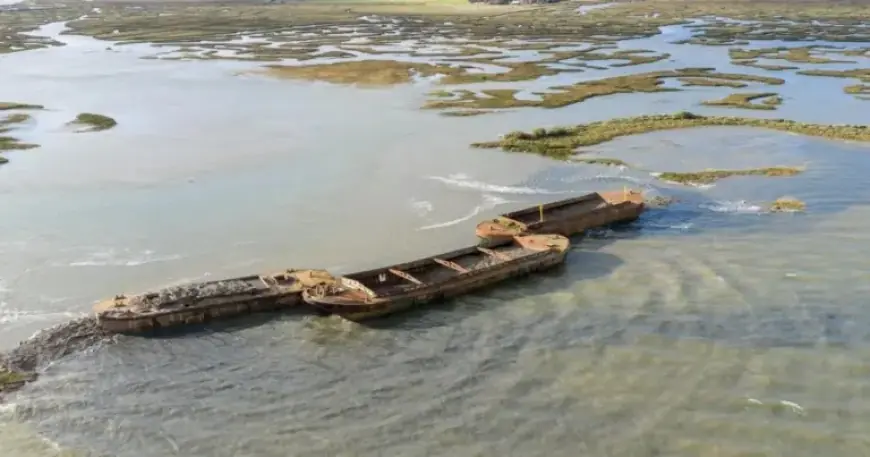
The National Trust is launching an innovative project to create a new bird haven by sinking three decommissioned barges in the Blackwater Estuary. This initiative aims to enhance wildlife habitat in the region while promoting marine recycling.
Details of the Project
To establish this new sanctuary, up to 8,000 cubic meters of sediment, equivalent to three Olympic swimming pools, will be used. The sediment will be transported from Maldon harbor, requiring approximately 170 trips by a dredge barge. Once complete, the project will add 0.55 hectares (1.4 acres) of habitat, almost the size of a football pitch.
Background of the Barges
The three sunken vessels are former Thames lighters, dating back to the 1950s. Historically, these boats were utilized for transporting building materials, coal, and food from the Port of London. Holes were meticulously cut into the hulls of the barges, which will allow them to function as stable structures for a diverse array of bird species.
Targeted Bird Species
This new habitat will attract various bird species, including:
- Dunlin
- Curlew
- Lapwing
- Ringed Plover
- Little Terns
- Avocets
As per Katy Gilchrist, the coastal project manager for the National Trust, this project represents a unique approach to marine recycling—transforming retired vessels into a wildlife sanctuary. The decommissioned barges have undergone cleaning and refurbishment to ensure they are seaworthy prior to being positioned in the estuary.
Environmental Impact
Beyond creating a safe haven for birds, the new island will also contribute to the protection of the existing saltmarsh at Northey Island. The force of tidal waters poses a significant erosion risk to the saltmarsh, which serves as a natural flood defense and a vital carbon storage ecosystem.
According to Matt Wilson, countryside manager for the National Trust, the newly constructed island will provide refuge for shorebirds above the highest tides and away from disturbances. Birds such as oystercatchers, Brent geese, redshank, and curlew are expected to benefit from this habitat once completed.
Future Prospects
As sediment continues to be added to the island, the team will monitor when bird populations begin to utilize their new sanctuary. This effort signifies a forward-thinking approach to wildlife conservation, aiming to mitigate habitat loss and promote biodiversity in the region.