
























Exoskeleton Race Yields a Clear Winner

At CES 2026, personal exoskeletons captured attention, showcasing advancements from companies like WiRobotics, Sumbu, Ascentiz, and Dephy. Dnsys and Hypershell also unveiled their latest models, illustrating the growing interest in wearable technology designed to enhance human movement. Exoskeletons, once limited to medical and industrial applications, are now entering the consumer market.
Exoskeletons: A New Frontier
Exoskeletons are innovative devices worn like belts that extend mechanized splints over the hips and thighs. These devices assist with physical activities such as walking, running, and squatting. They offer noteworthy benefits, including improved strength and posture. Reports indicate this market is projected to grow from over $500 million in 2025 to more than $2 billion by 2030, reflecting their rising popularity.
Competitive Edge in Exoskeletons
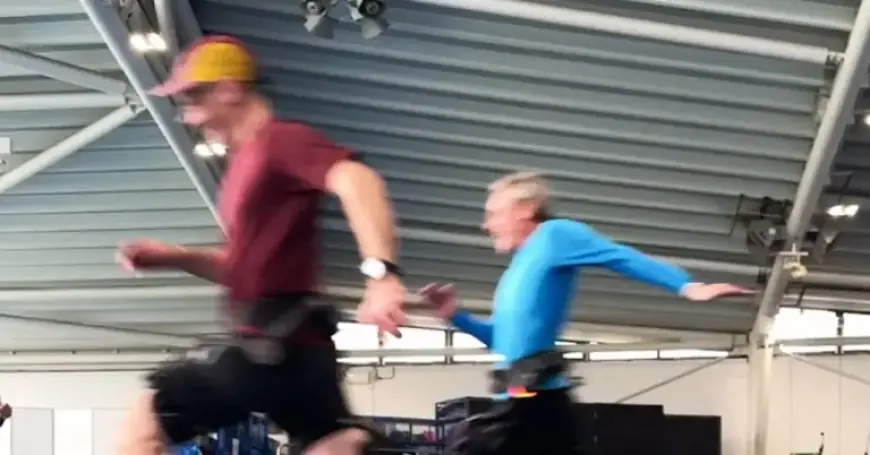
Currently, only Hypershell and Dnsys have consumer-ready exoskeletons. The recent launch of the Hypershell X Ultra now allows for direct comparison with the Dnsys X1 Carbon Pro. Priced at $1,999 and $1,899 respectively, both devices were put to the test during races at the Lea Valley Athletics Center in London, drawing significant attention.
Performance and Claims
Both Dnsys and Hypershell heavily promote the health benefits of their devices. Hypershell asserts its exoskeleton can reduce heart rate by 42%, lower exertion by 20% while walking, and increase hip flexor endurance by 63%. Meanwhile, Dnsys claims a potential 50% decrease in power demand when wearing their device. However, the practical benefits may vary based on individual fitness levels.
Testing the Exoskeletons
The testing involved a baseline 400-meter run without assistance, followed by the same distance using each exoskeleton. This approach allowed comparison of heart rates and exertion levels clearly. While some participants experienced increased effort while using the devices, the responses varied.
- Performance Comparison:
- Chris Haslam tested both exoskeletons and noted differences in experience.
- A 76-year-old user was able to ascend a hill more easily with the exoskeleton.
- Conversely, active adults like Chris found them a hindrance at times.
Conclusion
The exoskeleton race at CES 2026 offered valuable insights into how these devices can impact physical activities. As the technology evolves, individual experiences will play a crucial role in determining the future of exoskeletons in everyday use. With their market expected to skyrocket, the potential for innovation continues to expand.