

























Tennis Legends Outraged as Carlos Alcaraz Forced to Remove Device

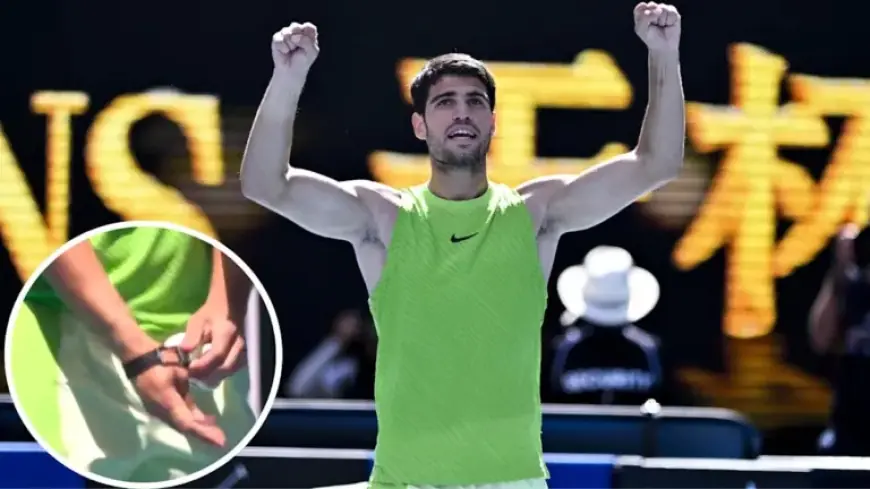
Tennis professionals Todd Woodbridge and Lleyton Hewitt have publicly criticized the Australian Open officials and the International Tennis Federation (ITF) following an incident involving Carlos Alcaraz. During his match against Tommy Paul, Alcaraz was instructed to remove his Whoop band, a device worn to monitor health metrics.
Tennis Legends Speak Out Against ITF Decision
The match, which Alcaraz won with a score of 7-6(6), 6-4, 7-5, was marred by the mid-match directive from chair umpire Marija Cicaka. Woodbridge expressed his confusion over the differing rules regarding the use of devices like the Whoop band across various tennis governing bodies.
Inconsistencies in Rules
- WTA permits players to wear Whoop bands; ITF does not.
- Woodbridge questioned the rationale behind these disparate regulations.
- He highlighted that such devices track essential metrics like sleep and heart rate.
“It doesn’t make sense,” Woodbridge stated. He urged the need for uniformity in rules across the sport. Hewitt shared similar frustrations, emphasizing that the ITF has not effectively managed its regulations. He described the decision as detrimental to player wellness.
Reactions to the Incident
Whoop’s founder, Will Ahmed, defended the device on social media, asserting that it is approved for in-match use by the ITF. However, commentator Mark Petchey disagreed, stating that devices measuring health metrics are not allowed during play.
Additionally, Aryna Sabalenka, the women’s world No.1, also faced a similar situation when she was asked to remove her performance tracker during her match.
The Debate on Athlete Wellness
Despite being listed as an approved device by the ITF, the inconsistency in enforcing rules has raised questions. Whoop issued a statement underlining the belief that athletes should have access to their health data during competitions. “Blocking access to personal health data does not protect sport,” the company declared.
As the controversy unfolds, Alcaraz’s experience has ignited a broader conversation about the importance of allowing athletes to monitor their health effectively during competitions. However, there has been no further comment from Australian Open officials on the matter.