























Minneapolis ICE shooting: Why the Alex Jeffrey Pretti case is turning into a trust-and-accountability crisis in Minnesota

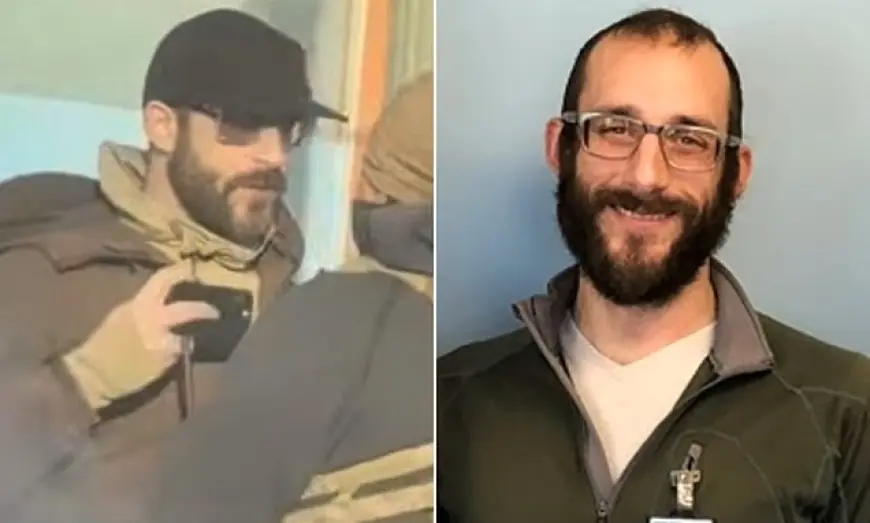
Minnesota’s latest flashpoint isn’t only about a fatal shooting in Minneapolis; it’s about whether the public can trust what they’re being told in the first hours after force is used by federal agents. The killing of Alex Jeffrey Pretti, a 37-year-old ICU nurse and U.S. citizen, has widened into a larger showdown between federal leadership and Minnesota officials over transparency, evidence control, and the rules of engagement during immigration operations in a major city. That tension—more than any single statement—now shapes what happens next in Minneapolis.
The uncertainty isn’t just “what happened,” it’s who controls the proof
In cases like this, the most consequential detail is often procedural: who preserves the footage, who interviews witnesses first, and who sets the narrative while investigators are still catching up. Here’s the part that matters: the early accounts of the Minneapolis ICE shooting are already in direct conflict, and the gap is being filled by video clips, eyewitness descriptions, and political megaphones—before a complete, independently verified timeline is publicly established.
What’s easy to miss is how fast a single incident can reset relationships between governments. When state and city leaders say they’re being blocked from basic fact-finding—while federal agencies insist their agents acted in self-defense—every subsequent update gets filtered through suspicion. In that environment, even routine steps (body-worn video releases, evidence logs, ballistics, dispatch audio) become contested ground.
What’s known so far about the Alex Pretti Minneapolis shooting
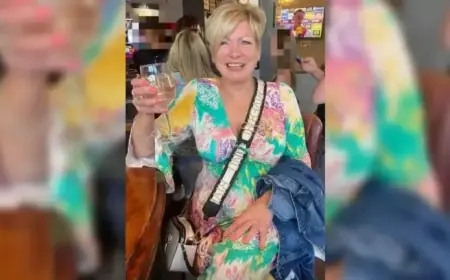
The shooting occurred on Saturday morning, January 24, 2026, near the intersection of 26th Street and Nicollet Avenue in Minneapolis. Alex Jeffrey Pretti—also referred to in some posts as “Alex Pretty”—was identified by family as an ICU nurse working with veterans at a Minneapolis VA facility. He was killed during a federal immigration-related operation involving agents commonly associated with immigration enforcement and border operations.
Federal officials have publicly characterized the shooting as self-defense, asserting that Pretti posed a threat during an encounter. But multiple bystander videos circulating online have driven a competing account: Pretti appears to be holding a phone while filming and is seen being pepper-sprayed, taken to the ground, and then shot. The videos have become central because they speak to the core dispute—whether a weapon was presented and when—yet short clips can still miss the moments just before or after the camera view.
Local and state leaders in Minnesota have condemned the killing and demanded a full accounting. Protests have spread beyond Minneapolis as the incident becomes a symbol of broader anger over aggressive federal immigration operations in the Twin Cities area.
A senior federal official, Kristi Noem, defended the agents’ actions and portrayed Pretti as a threat, while Minnesota leaders rejected that description and pointed to the videos as a reason for heightened scrutiny. The result is a fast-moving credibility battle, not a settled case.
Key takeaways readers in Minnesota are trying to pin down
-
Identity and community impact: Pretti’s role as an ICU nurse—especially in veteran care—has fueled intense local grief and outrage, with colleagues and neighbors framing this as a loss far beyond politics.
-
Two incompatible narratives: Federal officials describe a defensive shooting; widely shared footage suggests a person filming with a phone who is then subdued and shot.
-
Evidence preservation is now a headline: Legal efforts to preserve and secure all recordings and documentation have accelerated, signaling fears that crucial material could be lost, delayed, or disputed.
-
Federal-state friction is escalating: Minnesota officials are pressing for access and cooperation, while federal leadership is tying the incident to broader demands and policy pressure.
-
Protests are broadening the story: Demonstrations are no longer only about one encounter; they’re increasingly about the presence and conduct of federal agents in Minneapolis.
The political spillover: voter rolls, DHS pressure, and why the story keeps expanding
Within hours, the shooting began merging with larger fights between Washington and Minnesota. U.S. Attorney General Pam Bondi sent a letter to Governor Tim Walz that, among other demands, sought access to Minnesota voter roll data and other state information while linking cooperation to federal posture in the state. That move reframed the Minneapolis shooting from a single-use-of-force case into a wider pressure campaign, pulling in election-administration arguments (“voter rolls” are the lists used to manage voter registration and eligibility) that have little to do with the street-level facts of the encounter.
Some online claims also mention the NRA, public statements by national political figures, and posts on social platforms. As of Sunday, January 25, 2026, those claims are unevenly supported in public records: some commentary is clearly circulating, but not every alleged “statement” appears in a verifiable, official form. If you’re seeing screenshots, the safest approach is to treat them as unconfirmed until they’re posted through an official channel with clear authentication.
The real test will be whether investigators can publish a coherent, evidence-backed timeline that resolves the central contradiction—what Pretti was doing at the moment force escalated, whether a gun was present or introduced into the narrative later, and how command decisions were made on scene. Until then, “what happened in Minnesota today” will keep changing hour by hour, because the argument isn’t only about events—it’s about proof.