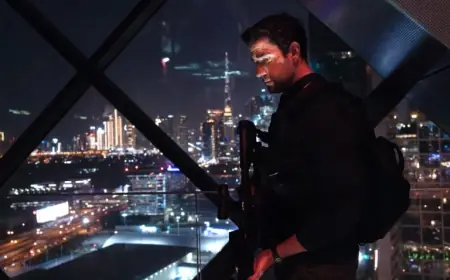























The biggest obstacle in Alex Honnold’s latest stunt isn’t the wall—it’s the weather window

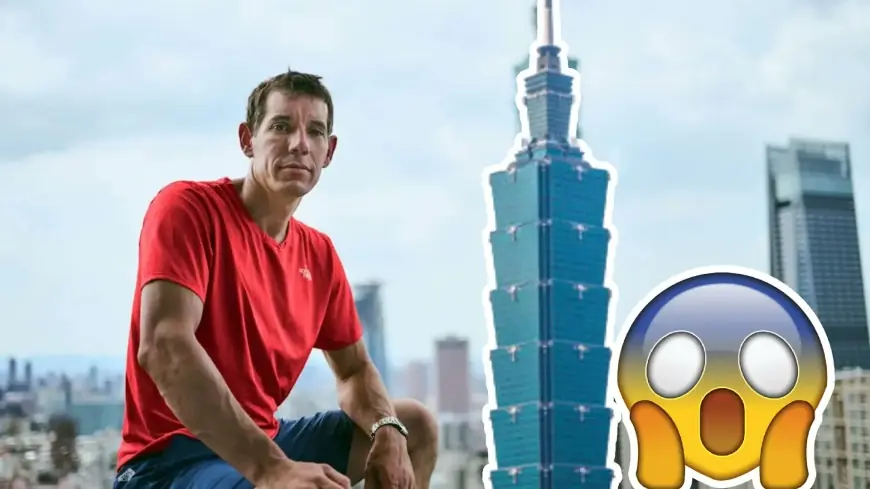
Alex Honnold is back in the spotlight with a high-risk, high-visibility climb that turns a familiar question into a live one: how much uncertainty can you remove before an “unroped” ascent stops being the same act? In the past day, his planned rope-free climb of Taipei 101 was pushed back after rain moved in, underscoring that even the most controlled, engineered surface can’t be treated like a studio set. For viewers, the delay changes the story from bravado to conditions, timing, and safety calls made in real time.
A live, no-ropes ascent has one non-negotiable: you don’t get to bargain with friction
Free solo climbing is often explained as strength plus nerve, but the less dramatic truth is grip. Rain doesn’t just make a surface wet; it changes how rubber, skin, and tiny edges behave, and it erases the margin that separates “hard” from “unclimbable.” That’s why this kind of attempt can be meticulously planned for months and still hinge on a short stretch of cooperative weather.
This is also what makes the event unusual even by Honnold standards. A skyscraper isn’t a cliff: it’s repetitive, exposed, and visually legible to an audience that can see every stop, every hesitation, every decision to reset. The risk isn’t only physical. There’s a psychological pressure to “perform” because the format invites spectators to treat it like entertainment—while the climber has to treat it like a serious, consequence-heavy route.
To reduce that collision between spectacle and safety, the broadcast was set up with safeguards typical of live television, including a short time delay and strict conditions around whether the attempt proceeds at all. The presence of those guardrails doesn’t make the climb safe; it makes the surrounding production less likely to amplify a worst-case moment.
What’s happening in Taipei—and why this climb is different from his usual arena
The current headline is straightforward: the Taipei 101 climb was postponed by roughly a day due to rainy conditions, with the intention to go when weather improves. The bigger point is what he’s trying to do.
Taipei 101 rises well over 100 stories, and the planned route isn’t a simple vertical sprint. The building’s stacked, tiered design creates distinct sections that behave like separate pitches. In the middle of the structure, there are steep, overhanging “boxy” segments that demand sustained pulling power and composure—less like edging up a slab, more like managing repeated bursts of steep movement with little room to relax.
Unlike natural rock, the surface is engineered and consistent, which can make some holds and transitions more predictable. But it introduces new unknowns: how the material feels under fingertips, how transitions between architectural features “flow” under fatigue, and how wind and moisture behave around corners and ledges. It’s also his first major attempt on a man-made high-rise at this scale, which adds a layer of novelty even for someone whose résumé includes the most famous rope-free big-wall climb of the modern era.
A short timeline of the last-day shift
-
Planned start: a live, scheduled attempt to climb Taipei 101 without ropes.
-
Conditions change: rain lingers close to start time, raising the likelihood of slick surfaces.
-
Decision: the attempt is postponed for safety, rather than forcing a marginal window.
-
New target: the climb is rescheduled for the next available clear-weather slot.
-
Next turning point: whether the forecast holds long enough for a clean start and steady conditions through the steep middle sections.
For now, the news is less about a single heroic moment than about restraint: the willingness to wait until the wall is truly climbable. In this discipline, that patience isn’t caution—it’s competence.