US-Owned Islands Send Message to Greenland

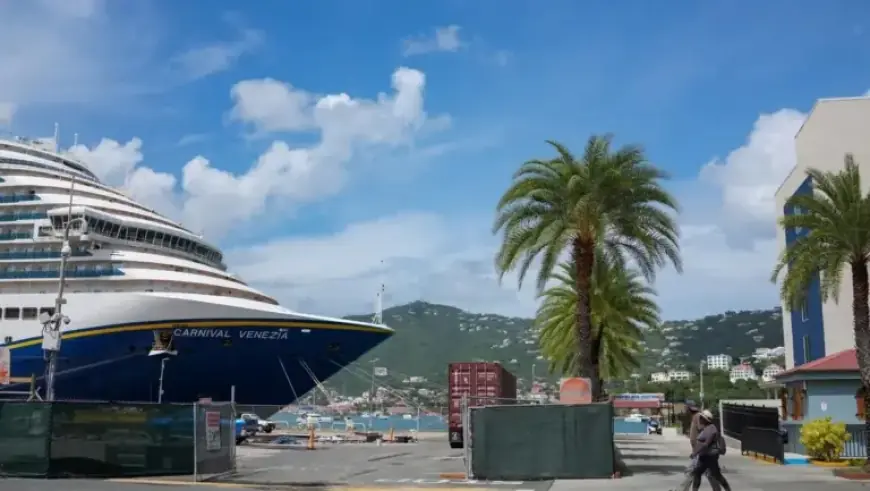
Recent discussions around U.S. interests in Greenland have drawn parallels to past events involving the acquisition of territories from Denmark. Residents of the U.S. Virgin Islands express concern that history may be repeating itself.
Historical Context of U.S. Acquisition
President Donald Trump has publicly declared a desire to negotiate a deal for Greenland, reminiscent of the U.S. purchase of the U.S. Virgin Islands. In 1917, President Woodrow Wilson acquired these islands, then known as the Danish West Indies, for $25 million. This purchase followed threats of military action amid global unrest during World War I.
The motives behind Wilson’s acquisition were strategic. At that time, fears loomed that Germany, a rising power, would attempt to seize Denmark and its territories. Consequently, the U.S. sought to secure trade routes and maintain dominance in the region.
Residents’ Perspective
In the Virgin Islands, the history of colonialism has left a lasting impact. Stephanie Chalana Brown, a noted Afro-Caribbean historian, highlights the struggle for identity and autonomy faced by her ancestors during Danish colonial rule. She warns that Greenland’s residents could face similar disenfranchisement in discussions concerning their land.
- Over 26,000 inhabitants lived in the islands at the time of acquisition.
- Virgin Islanders didn’t have a voice in the purchase, while a referendum was held for Danish mainland residents.
- It took over a decade for Virgin Islanders to gain U.S. citizenship after the acquisition.
Today, citizens of the Virgin Islands remain unable to vote in presidential elections and lack direct representation in Congress. Felipe Ayala, a member of the St. Thomas Historical Trust, notes that conversations about Trump’s ambitions regarding Greenland mostly occur in private, as many residents focus on local issues.
The Current Situation in Greenland
Trump’s negotiation strategies have raised questions about Greenland’s future. Recent statements indicated that he claims the U.S. would secure “total access” to the island through agreements. However, the precise details of these negotiations remain unclear.
Greenland is predominantly inhabited by the Inuit people, whose culture and language differ significantly from those in Denmark. This raises concerns among Virgin Islanders who worry about the potential impact of increased American influence. Brown cautions against the loss of Greenland’s identity, drawing parallels to the cultural shifts experienced in the Virgin Islands.
Concerns for Greenland’s Future
As discussions about Greenland’s future unfold, the stakes are high for its 57,000 residents. Brown questions whether U.S. interests would genuinely involve Greenlanders in decision-making processes. She fears that without inclusion, Greenland’s trajectory may mirror the historical experiences of territories once owned by Denmark.
In conclusion, the ongoing negotiations over Greenland serve as a powerful reminder of the intricacies of colonial legacies and contemporary political dynamics. The voices of both Virgin Islanders and Greenlanders remain crucial in addressing these historical and future implications.