Tornado Watch Vs Warning: West Texas Severe Threat Shifts East

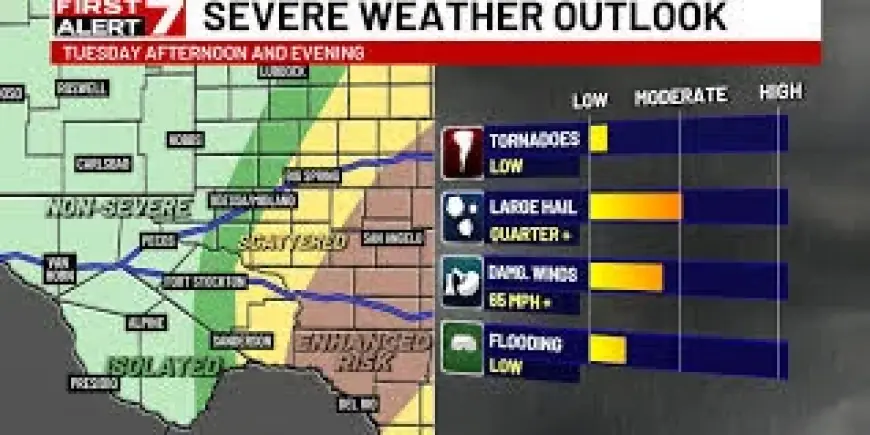
As West Texas storm alerts circulate, the distinction in tornado watch vs warning matters because the most intense thunderstorm threat has already moved away from the Permian Basin. In the Midland-Odessa area, strong to severe thunderstorms were described as tracking east into the Big Country and Concho Valley, with the remaining concern centered on gusty winds and pockets of blowing dust.
Midland-Odessa storms move east
In Midland-Odessa, the severe-weather focus shifted as storms pushed “well east of the Permian Basin” and into the Big Country and Concho Valley. The forecast expectation in the area was that “all areas of West Texas” would be clear of the severe weather threat by the early evening hours, narrowing the hazard picture after the main line of stronger storms moved out.
The pattern suggests the immediate risk is increasingly tied to wind impacts rather than the strongest thunderstorm cores. That shift matters operationally: when storms have exited a region, the most disruptive effects often become secondary hazards that linger after the heaviest precipitation and lightning threat has passed.
Tornado Watch Vs Warning and alerts
Public attention can jump quickly when severe weather messaging escalates, but tornado watch vs warning becomes especially relevant during a day when conditions change from storm-driven impacts to wind-and-dust impacts. In the Midland-Odessa update, the stated “main threat” after the severe threat wanes was gusty winds along with some areas of blowing dust—conditions that can still disrupt travel and daily routines even when storms are no longer severe.
Yet the context available here includes only a regional status update and does not include the specific boundaries, timing, or details of any watch areas beyond the Permian Basin description. What is confirmed is the direction of storm movement—east into the Big Country and Concho Valley—and the expectation of improving conditions for West Texas by early evening, with wind-related hazards persisting.
Cold front due by Wednesday morning
A cold front was expected to push through by Wednesday morning, bringing more gusty winds and “another bout of blowing dust. ” That sequence—storms moving east, then a frontal passage followed by renewed winds—sets up a second window of weather-related impacts even as the severe thunderstorm threat decreases. The figures are not provided for wind speeds or visibility, but the repeated mention of blowing dust signals a specific, non-thunderstorm hazard that can recur after the severe phase ends.
For now, the open question is how widespread the blowing dust becomes as the cold front moves through by Wednesday morning, since the available context does not specify which parts of West Texas are most likely to see the worst conditions.