

























“Century Ago, Baird’s TV Breakthrough Met with Viewer Skepticism”

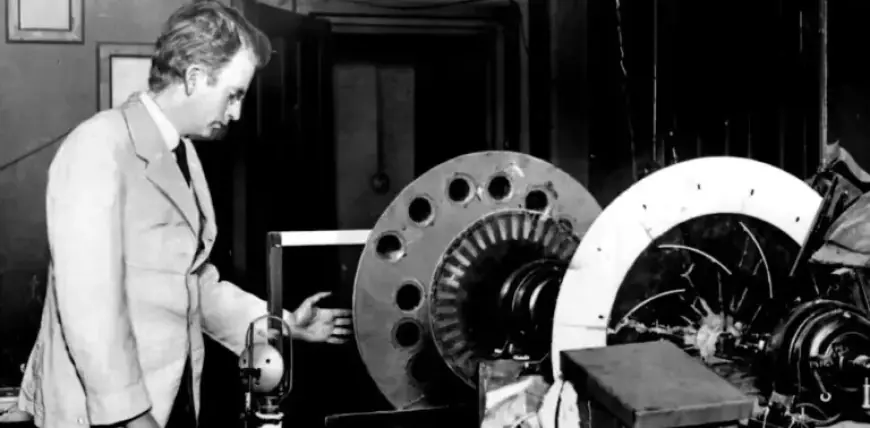
In 1926, a significant moment in television history unfolded when John Logie Baird introduced a groundbreaking prototype that merged broadcast radio with live moving images. This event took place on January 26, 1926, at a makeshift laboratory on Frith Street in Soho, London. Around 40 members of the Royal Institution attended the demonstration, drawn by an invitation from the relatively unknown Scottish inventor.
Historic Demonstration of Baird’s Televisor
Despite the allure of London’s vibrant entertainment scene, the attendees chose Baird’s demonstration over popular shows like “Lady, Be Good!” featuring Fred Astaire. Dressed in formal attire, they entered a space limited in capacity, where Baird showcased his mechanical television system, which he referred to as a “televisor.” This prototype was notable for being the first to display live images of human faces.
Initial Reactions and Skepticism
- The audience’s response was largely underwhelming.
- William Chaney Fox, a journalist present at the event, noted disappointment among viewers.
- No formal accounts of the demonstration’s significance were published by attendees.
William Chaney Fox later observed that while the demonstration featured a moving image, it lacked detail, resulting in many guests feeling unimpressed. The technology at the time produced a picture using a large spinning disc of lenses, generating images with just 30 vertical lines and a refresh rate of five times per second.
Baird’s Vision and Innovations
In the early 20th century, transmitting still images was commonplace, but the ability to broadcast moving pictures remained elusive. Baird quickly recognized a market opportunity, leveraging outdated concepts of television and developing them into a commercially viable product. His efforts were characterized by a desire to popularize television technology, despite the financial risks involved.
Public and Expert Opinions
Although Baird presented his work as an ongoing project, the initial public demonstrations did not garner significant interest. For instance, E.G. Stewart from the Gas, Light and Coke Company suggested that marketing such technology at the time would be a misstep. Baird’s apparatus, despite its limitations, was a stepping stone that paved the way for future advancements in television.
Legacy and Impact
As Baird continued to innovate throughout the late 1920s, he achieved various milestones, including the first live television broadcasts and color transmissions. His work influenced the development of television systems across the globe, notably inspiring the BBC’s transition to more advanced services and laying groundwork for future innovations, including CBS’s breakthroughs in the 1940s.
Although Baird faced constant financial difficulties, he is remembered as a pioneering figure in the realm of television. His experiments and demonstrations marked the shift from theoretical ideas about television to practical applications that have shaped modern broadcasting.