























Kevin Johnson’s death spotlights a brutal edge of life after the NFL: homelessness, violence, and fragile safety nets

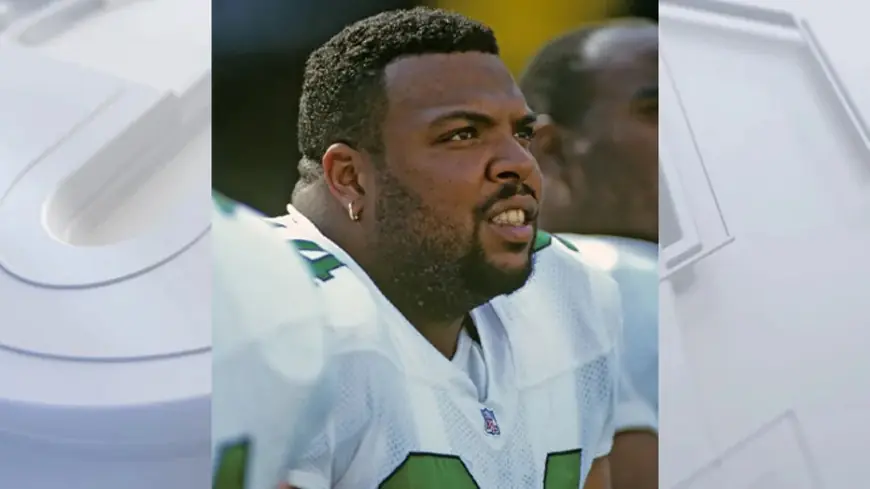
The death of Kevin Johnson—an ex-NFL defensive lineman who spent parts of the 1990s with the Philadelphia Eagles—has landed like a warning flare for anyone who assumes a pro sports career guarantees lifelong stability. It’s not just a crime story. It’s a story about how quickly health problems, financial strain, and isolation can turn into housing insecurity, and how dangerous that can be on the streets. A homicide investigation is now unfolding around a man who once played on national stages.
The most unsettling part isn’t the headline—it’s the pathway
Johnson was 55 when he was found dead at a homeless encampment in the Willowbrook area near South Los Angeles. The Los Angeles County medical examiner listed the cause of death as blunt-force head trauma and stab wounds and classified the case as a homicide. The Los Angeles County Sheriff’s Department is investigating; no arrests have been announced.
That sequence—former pro athlete, homelessness, violent death—forces uncomfortable questions that don’t fit neatly into a single explanation. NFL pensions exist, but access and adequacy vary by career length and timing. Medical issues can pile up long after the last snap. And for players on the margins of rosters, the post-career transition may come without the money, structure, or support people imagine.
Johnson’s story is also a reminder that homelessness isn’t only about housing; it’s about exposure. Living outdoors increases the odds that a dispute, a robbery, or a random act of violence becomes fatal—especially when the person involved is already dealing with health problems or limited mobility.
What’s known about the case so far
Johnson was discovered Wednesday morning, January 21, 2026, after deputies responded to a call about an unconscious man near the 1300 block of East 120th Street. He was pronounced dead at the scene. Investigators believe he had been staying at the encampment.
Friends and people who knew Johnson have described a decline in recent years, including significant health challenges. Some have raised concerns about brain health issues associated with repeated hits in football, though no public medical finding has been presented that confirms a specific diagnosis in his case. That uncertainty matters: it’s easy for the public to reach for a single cause, but the reality is often layered—health, housing, social supports, and personal circumstances interacting over time.
Johnson’s football path was real and hard-earned. He played college ball at Texas Southern, with earlier stops that included Los Angeles Harbor College. He was selected in the 1993 NFL Draft and later found his footing in the league with the Eagles, appearing in games across the 1995 and 1996 seasons. He then played the 1997 season with the Oakland Raiders. After the NFL, he continued in arena football, including a championship run with Orlando in 1998, and later played in Los Angeles.
A few immediate facts shape what comes next for investigators and the public:
-
The death has been classified as homicide, but a suspect has not been named publicly.
-
The location was an encampment area where people come and go, which can complicate witness identification.
-
The injuries indicate more than one kind of trauma, suggesting an assault that escalated.
-
The timeline between last known contact, discovery, and emergency response will be central to reconstructing what happened.
The bigger issue the league can’t ignore
Johnson’s death won’t be the last time the public is confronted with the gap between the glamour of professional sports and the realities some players face afterward. Even when leagues, unions, and teams offer programs, the people most at risk may be the hardest to keep connected—those without steady housing, those dealing with untreated medical issues, or those who’ve lost trust in institutions.
This moment is likely to intensify pressure for more practical, earlier interventions: post-career health navigation that doesn’t require perfect paperwork, housing stability support that kicks in before a crisis, and better continuity for players who didn’t stay in the league long enough to be financially insulated.
For now, the case itself remains open, and the public record is still thin. What’s clear is the human reality beneath the crime tape: a former NFL player died violently while living outside, and that fact alone is a harsh measure of how unforgiving the margins can be—even for someone who once made it to the league.