

















Vikings Keep Brian Flores: Continuity Wins, While Mike Pettine’s Exit Leaves a Telltale Silence

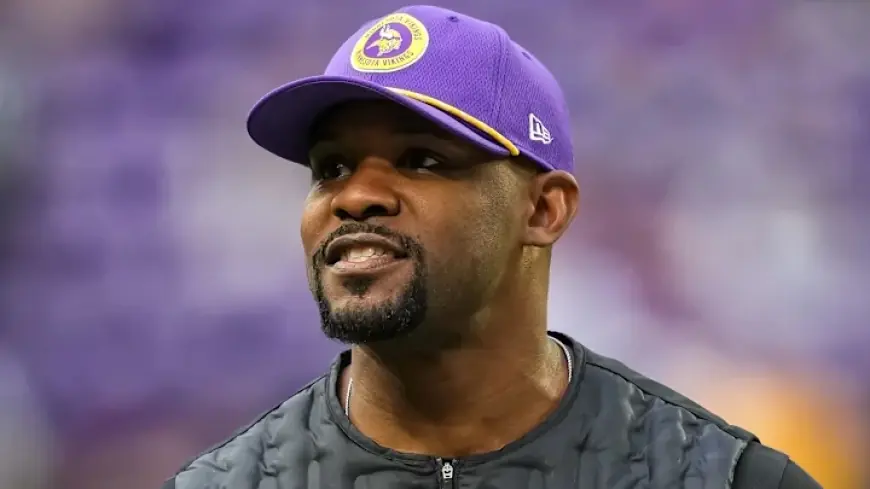
Keeping Brian Flores in Minnesota isn’t a feel-good headline—it’s a roster-and-identity decision with immediate consequences. The Vikings have built a defense that relies on confusion, pressure, and constant recalculation at the line of scrimmage. When that kind of system changes hands, it rarely stays the same, even if the playbook looks similar on paper. By locking Flores in now, Minnesota stabilizes one of its clearest competitive edges for 2026, even as veteran assistant Mike Pettine’s retirement hints that the staff room wasn’t always as aligned as the scoreboard made it look.
A defense that can’t be “copy-pasted” without the person
Flores’ calling card isn’t a single scheme—it’s the weekly remapping of roles. One week a safety is your nickel linebacker. The next week a corner is playing with inside leverage as if he’s baiting a throw. The pressure packages are the visible part; the real engine is how quickly the unit adjusts and how comfortable players are living in ambiguity.
That’s why Minnesota’s choice to keep Flores matters more than the standard coordinator retention story. This isn’t a plug-and-play system where the next coach can simply “keep the terminology.” The Vikings have recruited, rotated, and developed defenders in a way that assumes Flores’ preferences: corners who can survive on an island, linebackers who can trigger downhill, and a front that can threaten pressure from multiple angles without telegraphing it.
There’s also a second-order effect: continuity changes the offseason. When a coordinator is secure, the front office can make targeted moves instead of hedging—adding specific pieces that fit the current plan rather than “versatile” insurance in case the philosophy changes.
The news, the dates, and why the timing was the point
Minnesota announced Flores’ contract extension on January 21, 2026, after his previous deal had reached its end earlier in the month. That detail matters: letting a coordinator drift into true lame-duck status invites distraction for everyone—players, agents, and potential suitors around the league.
Flores has remained a legitimate head-coaching candidate, and the extension doesn’t magically erase that possibility. What it does is remove the easy uncertainty: the Vikings no longer have to operate like they’re one phone call away from starting over on defense. If another team hires him as a head coach, the Vikings deal becomes a footnote. If not, Minnesota has its defensive architect in place.
A short timeline of the Vikings’ defensive staff pivot
-
Jan. 13, 2026: Assistant head coach Mike Pettine’s retirement is announced, ending a long NFL coaching run and opening a leadership hole on the staff.
-
Mid-January 2026: Flores’ prior contract window closes, turning “talks” into a genuine urgency moment.
-
Jan. 21, 2026: The Vikings finalize and announce a Flores extension, signaling commitment to the defensive direction.
-
This week: Pettine is asked publicly about Flores after stepping away; his blunt tone becomes its own storyline.
Pettine’s departure: retirement on paper, friction in the subtext
Pettine retiring can be interpreted two ways at once. The straightforward read is age, longevity, and the natural arc of a career that has included head-coaching and coordinating roles. The more revealing read is what followed: when Pettine was asked about Flores afterward, his comments were sharp enough to spark immediate speculation that the working relationship wasn’t smooth.
That doesn’t automatically mean a feud ran the building. Coaches disagree all the time. But it does suggest the Vikings may be choosing clarity over compromise: Flores is the defensive centerpiece, and the staff around him will be shaped accordingly.
The practical implication is less gossip and more operations. An assistant head coach often functions as a bridge—between head coach and position rooms, between game day and practice week, between philosophy and the realities of player usage. Replacing that kind of figure isn’t about finding another résumé; it’s about restoring internal rhythm. Pettine’s exit creates a vacuum in “adult-in-the-room” leadership even as Flores’ extension secures the schematic identity.
What this means for Minnesota’s 2026 defense—without pretending it’s guaranteed
Keeping Flores doesn’t guarantee the Vikings will improve. The league adjusts. Offenses spend entire offseasons designing answers to the pressure looks that embarrassed them in December. And a defense built on aggression can be punished if a pass rush slows by half a step.
But continuity gives Minnesota a strong starting position:
-
Install time shrinks: the defense can spend more camp time refining counters, not relearning basics.
-
Player development stays linear: young defenders don’t have to translate new language or rules.
-
Personnel decisions get sharper: draft and free agency can target specific roles in Flores’ structure.
The tension point is leadership composition. With Pettine gone, Minnesota must decide whether to replace that veteran stabilizer with another experienced voice—or double down on Flores’ preferred ecosystem of lieutenants. Either way, the Vikings have made the core call: the defense will remain Flores-shaped, and any staff turnover will orbit around that center.
In a league where “continuity” is often just a slogan, Minnesota has treated it like a strategy. Keeping Brian Flores is the cleanest signal the Vikings could send about who they want to be in 2026—fast, aggressive, and hard to predict—while Mike Pettine’s exit is a reminder that even successful staffs can have fault lines.