

























US Loses Advantage in Rare-Earths as China Dominates

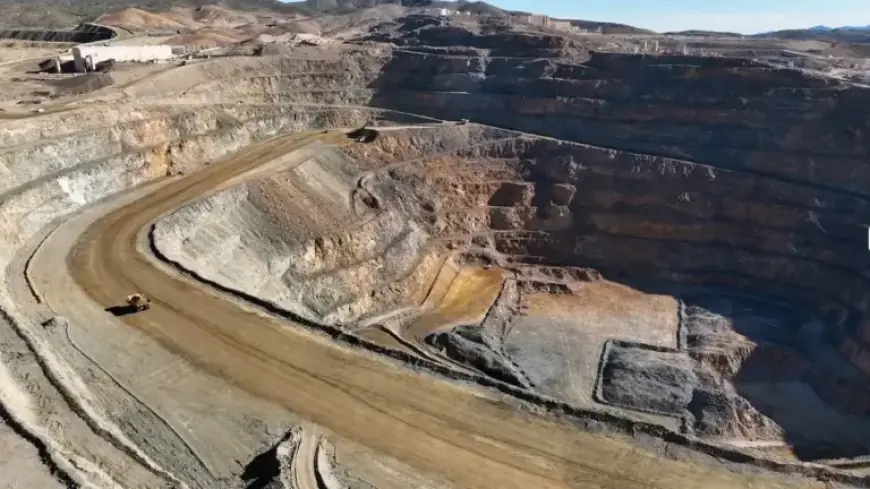
The competition for rare earth elements is intensifying. Currently, the United States is losing its edge in this crucial area, as China asserts its dominance. Major advancements in technology rely heavily on these minerals, which play a vital role in producing everything from smartphones to military equipment.
China’s Dominance in Rare Earth Elements
Rare earth elements (REEs) are a group of 17 metallic elements crucial to modern technology. While they are called “rare,” they are not scarce in nature. Instead, these minerals are usually found dispersed or mixed with other elements, complicating the extraction process. China has positioned itself as the world leader in this area, controlling approximately 70% of global mining production, 85% of refining, and 98% of processing capabilities.
Historical Context
Historically, the United States was the leading producer of rare earth elements until the 1980s. Due to tighter regulations and rising costs, many companies began relocating production to China, attracted by its lower labor costs and lax environmental standards. By 1996, the shift was so profound that the U.S. Bureau of Mines was shut down, ceding ground to China.
Strategic Importance
The significance of rare earths goes beyond mere industrial usage. They are essential for various sectors, including defense and advanced technologies. A recent study from the RAND Corporation highlighted that a 90-day disruption of rare earth supplies could halt production lines for 78% of U.S. defense contractors. Concerns were raised when China implemented export controls on key rare earth materials in April 2025 as retaliation against U.S. tariffs. This maneuver underscored China’s capability to dictate the pace of innovation in the U.S.
Impact on U.S. Technology and Defense
Dependency on Chinese rare earths has substantial implications for U.S. technological advancements, especially in fields like quantum computing and robotics. The ability of U.S. companies to access these materials is now influenced by Chinese government policies, granting China a strategic lever in international negotiations.
Strategies for Future Supply
The U.S. is aware of the need for a self-sufficient rare earth supply chain. Recent surveys reveal that Greenland holds significant deposits of critical minerals like dysprosium and terbium, which could be pivotal for American industrial needs. However, creating a sustainable supply chain may require substantial investments and over a decade to implement effectively.
- China holds 44 million metric tons of rare earth reserves.
- China controls 80% of rare earth patents.
- Efforts in the U.S. to develop the industry are lagging significantly behind China.
Conclusion: The Race for Rare Earths
As the global economy increasingly depends on rare earth minerals, the competition for control of these resources will shape the technological landscape. Nations recognize that securing a reliable rare earth supply chain is crucial for economic stability and national security. The path that the U.S. takes in the coming years will significantly influence its position in this strategic arena.